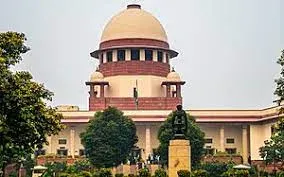
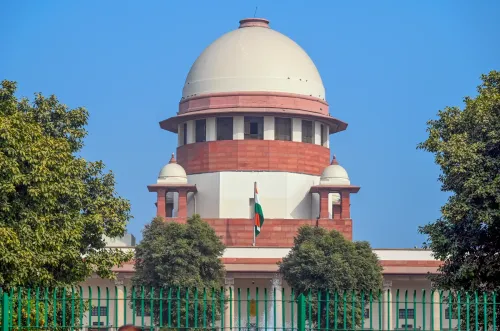
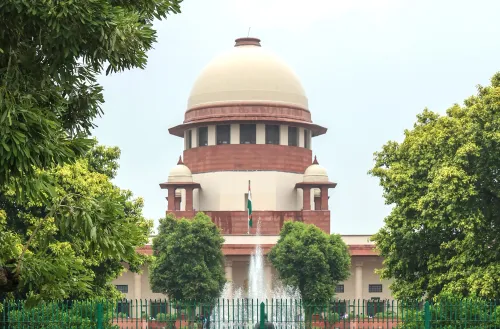
Supreme Court verdict on ECI Special Intensive Revision of electoral rolls on May 27
Synopsis
The Supreme Court's 27 May ruling on the ECI's Special Intensive Revision could redefine how India cleans up its electoral rolls. At stake: whether requiring voters to prove ancestral links to 2002 records is a legitimate safeguard or an unconstitutional barrier that risks disenfranchising millions of marginalised and migrant voters.
Key Takeaways
The Supreme Court will deliver its verdict on 27 May on petitions challenging the ECI's Special Intensive Revision (SIR) of electoral rolls.
The Bench is led by CJI Surya Kant and Justice Joymalya Bagchi , who reserved judgment on 29 January .
The SIR requires voters absent from 2002 electoral rolls to prove ancestral linkage — a condition petitioners say could disenfranchise marginalised and migrant communities.
The exercise began in Bihar and was extended to West Bengal , Kerala , Tamil Nadu , and other states and UTs.
The apex court directed Aadhaar to be added to the ECI's original list of 11 acceptable documents during interim proceedings.
The ruling could set a nationwide precedent for how electoral roll revisions are conducted in India.
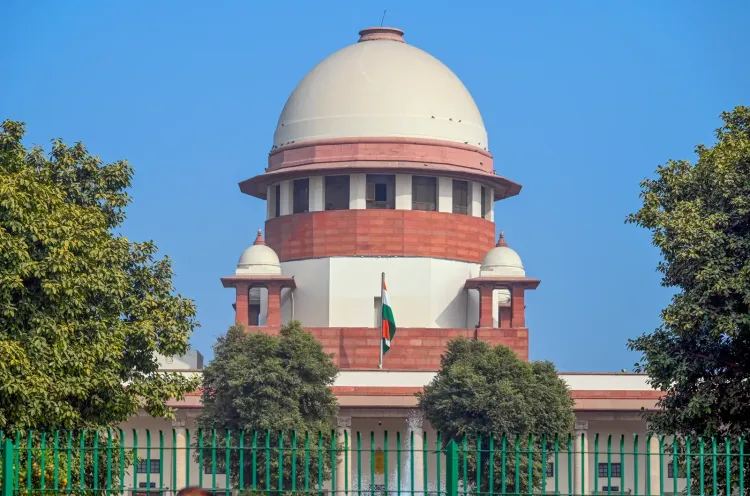
The Supreme Court of India is set to deliver its verdict on Wednesday, 27 May on a batch of petitions challenging the Election Commission of India's (ECI) decision to conduct a Special Intensive Revision (SIR) of electoral rolls — a ruling that could have far-reaching consequences for voter registration across multiple states and union territories.
What the Case Is About
A Bench comprising Chief Justice of India (CJI) Surya Kant and Justice Joymalya Bagchi reserved its judgment on 29 January following extensive hearings. The petitions question whether the SIR exercise exceeds the powers vested in the ECI under Article 326 of the Constitution, the Representation of the People Act, 1950, and the rules framed thereunder.
At the heart of the dispute is the ECI's requirement that voters whose names did not appear in the 2002 electoral rolls — or the 2003 rolls in certain states — must establish ancestral linkage to a person already enrolled in those records. Critics of the exercise argued this condition could effectively strip genuine voters of their franchise.
Who Could Be Affected
Petitioners contended before the apex court that the ancestral-linkage requirement poses a disproportionate burden on marginalised communities and migrant populations, who may lack documentary evidence tracing their lineage to decades-old electoral records. This concern gained particular urgency given that the SIR was first launched in Bihar in June last year before being extended to West Bengal, Kerala, Tamil Nadu, and several other states and union territories.
Interim Directions and Document Rules
During the course of proceedings, the Supreme Court issued interim directions aimed at improving transparency and reducing hardship for affected voters. Notably, while the ECI had initially prescribed 11 documents for verification, the apex court directed that Aadhaar be added as an additional acceptable document — a significant concession that broadened the scope for voter identification.
ECI's Defence
The poll body defended the SIR before the court, arguing the exercise was necessary to ensure the purity of electoral rolls and to prevent duplication or the inclusion of ineligible voters. The ECI maintained that the revision process falls squarely within its constitutional mandate to maintain accurate and credible voter lists.
What Happens Next
The verdict, expected on 27 May, will determine whether the SIR — as currently designed — can continue, must be modified, or must be struck down. A ruling against the ECI could prompt a fundamental rethink of how voter roll revisions are conducted across India, while a ruling in its favour would validate the ancestral-linkage approach. Either way, the judgment is likely to set a precedent for future electoral roll exercises nationwide.
Point of View
Kerala, and Tamil Nadu — a sequencing that drew immediate suspicion about selective application. The ancestral-linkage requirement is the crux: it is a reasonable anti-duplication tool on paper, but its implementation places the burden of proof on the voter rather than the state, inverting the democratic presumption of eligibility. If the court upholds the SIR without modification, it legitimises a verification model that could become a template for future roll revisions — one that structurally disadvantages those with the least institutional access. The interim Aadhaar inclusion was a partial corrective, but the deeper question of whether the ECI overreached its constitutional mandate under Article 326 remains unresolved until Wednesday.
NationPress
12 Oct 2026
Frequently Asked Questions
What is the Supreme Court verdict on 27 May about?
The Supreme Court will rule on petitions challenging the Election Commission of India's Special Intensive Revision (SIR) of electoral rolls. The core question is whether the ECI's requirement for voters to prove ancestral linkage to 2002 electoral records is legally valid under the Constitution and the Representation of the People Act, 1950.
What is the Special Intensive Revision (SIR) of electoral rolls?
The SIR is an exercise initiated by the ECI to verify and clean up voter lists by requiring voters not found in the 2002 (or 2003 in some states) electoral rolls to establish a family link to someone who was enrolled then. It began in Bihar and was later extended to West Bengal, Kerala, Tamil Nadu, and other states and union territories.
Why have petitioners challenged the SIR in the Supreme Court?
Petitioners argue the ancestral-linkage condition could disenfranchise genuine voters — especially marginalised communities and migrants — who lack documentary proof tracing their ancestry to decades-old records. They contend the requirement exceeds the ECI's powers under Article 326 of the Constitution.
What interim relief did the Supreme Court provide during hearings?
The Supreme Court issued directions to improve transparency and reduce hardship for affected voters. Significantly, it directed the ECI to accept Aadhaar as an additional verification document, supplementing the 11 documents the poll body had originally prescribed.
What will the verdict mean for future elections?
A ruling against the SIR could force the ECI to overhaul its voter roll revision methodology, while a ruling in its favour would validate the ancestral-linkage model as a constitutional tool. Either outcome is expected to set a binding precedent for how electoral roll exercises are conducted across India.