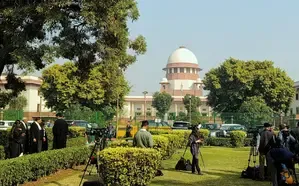
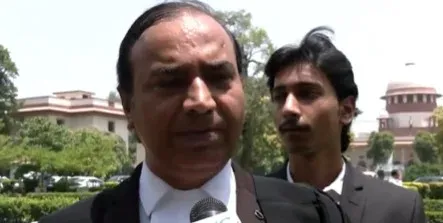
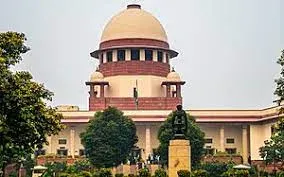
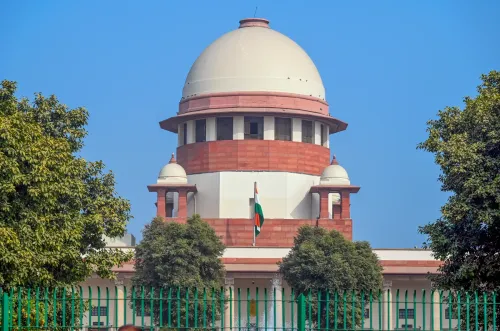
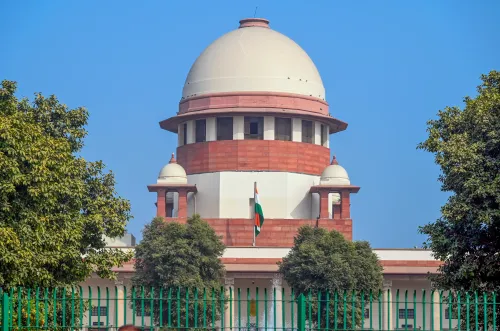
Supreme Court verdict today on pleas challenging ECI's electoral roll SIR
Synopsis
The Supreme Court's verdict on the ECI's Special Intensive Revision of electoral rolls could redraw the boundaries of the poll body's authority. The ancestral-linkage condition at the centre of the dispute has raised pointed questions about whether a procedural safeguard is inadvertently — or structurally — excluding the very voters it is meant to verify.
Key Takeaways
The Supreme Court is set to pronounce its verdict on 28 May 2025 on petitions challenging the ECI's Special Intensive Revision (SIR) of electoral rolls.
The Bench is led by CJI Surya Kant and Justice Joymalya Bagchi ; judgment was reserved on 29 January 2025 .
Petitioners argue the SIR's ancestral-linkage requirement could disenfranchise marginalised and migrant voters lacking documentary proof.
The ECI originally listed 11 verification documents ; the court directed Aadhaar be added as an additional option.
The SIR began in Bihar in June 2024 and was later extended to West Bengal , Kerala , Tamil Nadu , and other states and UTs.
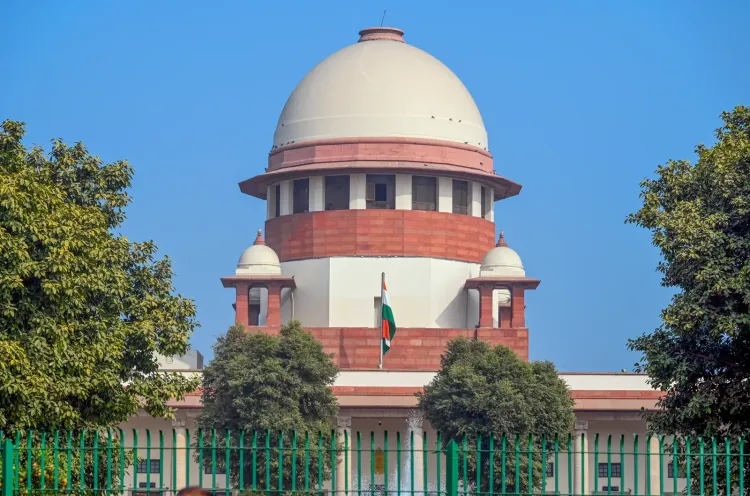
The Supreme Court of India is set to deliver its verdict on Wednesday, 28 May 2025, on a batch of petitions challenging the Election Commission of India's (ECI) decision to conduct a Special Intensive Revision (SIR) of electoral rolls. The ruling, to be pronounced by a Bench led by Chief Justice of India (CJI) Surya Kant and Justice Joymalya Bagchi, follows extensive hearings and the reservation of judgment on 29 January 2025.
What the Petitions Challenge
The petitions contest the legal validity of the SIR exercise, arguing that the ECI has overstepped the powers granted to it under Article 326 of the Constitution, the Representation of the People Act, 1950, and the rules framed thereunder. At the heart of the dispute is a specific requirement imposed by the poll body: voters whose names do not appear in the 2002 electoral rolls — or the 2003 rolls in certain states — must establish an ancestral link to someone whose name does appear in those records.
Concerns Over Voter Disenfranchisement
Petitioners argued before the apex court that the ancestral linkage condition could effectively disenfranchise genuine voters, particularly those from marginalised communities and migrant populations who may lack documentary proof tracing their lineage to decades-old electoral records. Critics contend the burden of proof is disproportionately heavy for vulnerable sections of the electorate.
Notably, most petitions were filed in June 2024, shortly after the ECI announced the SIR exercise in Bihar. The revision was subsequently extended to several other states and union territories, including West Bengal, Kerala, and Tamil Nadu.
Interim Directions and Document Expansion
During the course of proceedings, the Supreme Court issued interim directions aimed at ensuring transparency and reducing hardship for affected voters. While the ECI had initially prescribed 11 documents for verification, the apex court directed that Aadhaar be accepted as an additional valid document for the SIR process — a significant concession that broadened the evidentiary options available to voters.
ECI's Defence of the Exercise
The Election Commission defended the SIR before the court, maintaining that the exercise was designed to uphold the integrity of electoral rolls by eliminating duplication and weeding out ineligible voters. The poll body argued that a clean and accurate voter list is fundamental to free and fair elections — a position that the petitioners did not dispute in principle, though they challenged the specific methodology adopted.
What the Verdict Could Mean
The Supreme Court's ruling is expected to have far-reaching implications for how electoral rolls are revised across India, particularly in states with large migrant and informal-sector populations. A ruling against the SIR methodology could compel the ECI to redesign its verification framework before any future revision exercise. Conversely, an endorsement of the process would set a judicial precedent for the commission's authority to impose documentary conditions on voter eligibility verification.
Point of View
At its core, a question about who bears the burden of proof in a democracy — the state or the citizen. The ancestral-linkage condition effectively asks voters to prove a negative: that their family was enrolled decades ago, in records that were themselves imperfect. The ECI's goal of clean rolls is legitimate, but the mechanism chosen disproportionately burdens those with the least institutional access. The Supreme Court's ruling will either discipline the commission's methodology or greenlight a template that could be replicated in every state revision cycle — making today's verdict consequential well beyond Bihar.
NationPress
21 Oct 2026
Frequently Asked Questions
What is the Supreme Court verdict on ECI's Special Intensive Revision about?
The Supreme Court is ruling on petitions that challenge the legality of the Election Commission of India's Special Intensive Revision (SIR) of electoral rolls. The core dispute concerns a requirement that voters not listed in the 2002 or 2003 electoral rolls must prove ancestral linkage to someone who was — a condition petitioners argue could disenfranchise genuine voters.
Why do petitioners say the SIR process is problematic?
Petitioners argue the ancestral-linkage condition disproportionately burdens marginalised communities and migrant populations who may not possess documentary evidence tracing their ancestry to rolls from over two decades ago. They contend this risks excluding legitimate voters from the electoral process.
Where did the SIR exercise begin and how far has it spread?
The ECI first announced the SIR in Bihar in June 2024. It was subsequently extended to multiple states and union territories, including West Bengal, Kerala, and Tamil Nadu.
What interim directions did the Supreme Court issue during the hearings?
The Supreme Court directed that Aadhaar be accepted as an additional verification document for the SIR process, beyond the 11 documents initially prescribed by the ECI. The court also issued interim directions to promote transparency and reduce hardship for affected voters.
What could the Supreme Court ruling mean for future elections?
A ruling against the SIR methodology could require the ECI to redesign its voter verification framework before conducting future revision exercises. An endorsement of the process would establish a judicial precedent for the commission's authority to impose documentary conditions during electoral roll revisions.