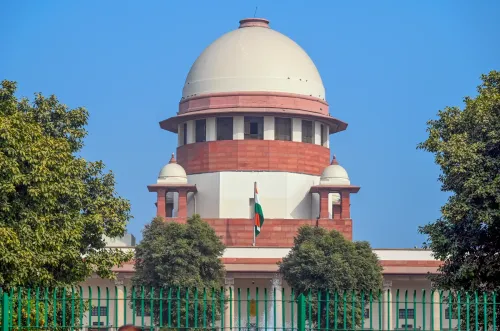
Supreme Court upholds ECI's SIR powers, dismisses electoral roll challenges
Synopsis
The Supreme Court has put its stamp of approval on the Election Commission's most contested administrative tool — the Special Intensive Revision of electoral rolls. With some 20 petitions dismissed and the ECI's Article 324 powers reaffirmed, the ruling draws a clear legal boundary around challenges to the poll body's authority over voter list management.
Key Takeaways
The Supreme Court on 27 May upheld the ECI's authority to conduct a Special Intensive Revision (SIR) of electoral rolls.
A Bench of CJI Surya Kant and Justice Joymalya Bagchi ruled the SIR valid under Article 324 of the Constitution and Section 21(3) of the RPA, 1950.
Around 20 petitions challenging the SIR process, including allegations of 'vote theft', were dismissed.
The Court clarified that deletion of a name from electoral rolls does not prove foreign nationality; affected persons must submit citizenship documents.
Even the petitioners' advocate acknowledged the Court had 'appreciated' the ECI for conducting the SIR in a fair and impartial manner.
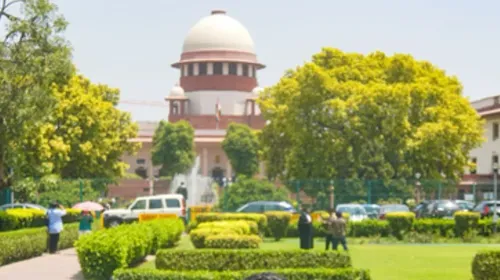
The Supreme Court of India on Wednesday, 27 May upheld the Election Commission of India's (ECI) authority to conduct a Special Intensive Revision (SIR) of electoral rolls, ruling that the exercise fell squarely within the poll body's constitutional and statutory powers. The verdict effectively dismissed a batch of petitions that had challenged the legality and fairness of the SIR process.
What the Court Ruled
A Bench comprising Chief Justice of India (CJI) Surya Kant and Justice Joymalya Bagchi held that the SIR exercise did not violate the Representation of the People Act (RPA), 1950 or its associated rules. The Bench further ruled that the ECI was empowered to undertake such a revision under Article 324 of the Constitution read with Section 21(3) of the RPA.
The apex court framed three principal issues for determination: whether the ECI had the power to conduct the exercise; whether the enquiry was founded on a legitimate purpose and satisfied the test of proportionality; and whether the procedure adopted violated the statutory framework governing electoral rolls. All three were answered in favour of the poll body.
Key Observations from the Bench
On the question of the ECI's powers, the Court observed that the SIR exercise did not supplant the statutory scheme governing electoral roll revisions. 'When the statute itself authorises a special revision at any time, for reasons to be recorded and in such manner as the Election Commission may deem fit, the impugned exercise cannot be invalidated merely because it does not conform in every respect to the ordinary modalities contemplated for routine revision,' the apex court stated.
The Court also clarified that the deletion or omission of a name from the electoral rolls does not, by itself, prove that the concerned individual is a foreign national. Such persons, it noted, should submit relevant documents on the basis of which their citizenship can be confirmed.
What Advocates Said
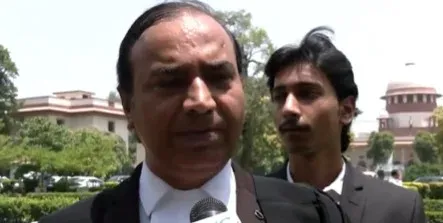
Advocate Ashwini Upadhyay, who appeared in the matter, said the verdict comprehensively rejected all allegations against the SIR process. 'The Supreme Court has dismissed all allegations made against the Special Intensive Revision (SIR) process and the Election Commission, including claims of 'vote theft.' The Court observed that the SIR procedure is valid and carried out in accordance with the rules, law, and Constitution,' he said. He added that around 20 petitions had challenged the fairness of the exercise, all of which were denied.
Advocate Ashwani Singh, who represented the petitioners, also acknowledged the significance of the ruling. 'Supreme Court has, in a way, appreciated the Election Commission for carrying out the SIR process in a very fair and impartial manner,' he said.
Why This Verdict Matters
The SIR has been a contentious exercise, with critics alleging that the intensive revision could lead to legitimate voters being dropped from rolls — a concern the Court addressed directly by clarifying the citizenship-documentation pathway. Notably, this ruling reaffirms the ECI's broad discretionary powers under Article 324, which grants the poll body superintendence, direction, and control over the preparation of electoral rolls. The decision is likely to have bearing on future challenges to the ECI's administrative decisions ahead of upcoming state and general elections.
Point of View
However, is the ground-level concern: whether the SIR's document-submission pathway is practically accessible to marginalised voters whose names were dropped. A legal green light for the process is not the same as an administrative guarantee of fairness in its execution.
NationPress
11 Oct 2026
Frequently Asked Questions
What is the Special Intensive Revision (SIR) of electoral rolls?
The SIR is a targeted exercise conducted by the Election Commission of India to comprehensively update and verify electoral rolls in a given area or across constituencies. It goes beyond routine revision and involves door-to-door verification and documentation checks to ensure the rolls accurately reflect eligible voters.
What did the Supreme Court decide about the SIR?
The Supreme Court upheld the ECI's SIR as legally valid on 27 May, ruling it was within the poll body's powers under Article 324 of the Constitution and Section 21(3) of the Representation of the People Act, 1950. The Court dismissed all petitions — roughly 20 in number — that had challenged the exercise.
Does removal from the electoral roll mean a person is a foreigner?
No. The Supreme Court explicitly clarified that the omission or deletion of a name from electoral rolls does not, by itself, prove that the individual is a foreign national. Such persons are required to submit relevant documents to confirm their citizenship.
Who challenged the SIR process and why?
Around 20 petitions were filed in the Supreme Court challenging the SIR, with petitioners alleging the process was unfair and amounted to 'vote theft' — the concern being that legitimate voters, particularly from marginalised communities, could be wrongly dropped from rolls. The Court rejected all these allegations.
What are the implications of this verdict for future elections?
The ruling reaffirms the ECI's broad discretionary authority to conduct special revisions of electoral rolls at any time, making it harder to legally challenge such exercises in future. It is expected to have bearing on electoral roll management ahead of upcoming state and general elections in India.