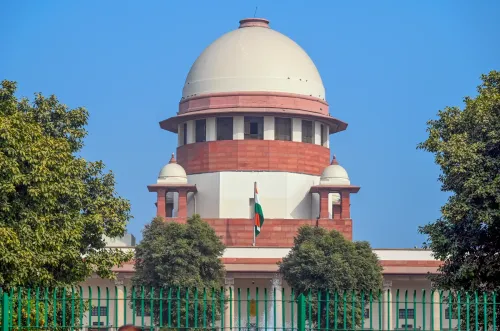
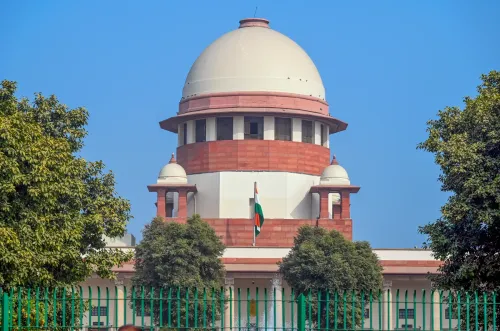
SC upholds ECI's SIR of electoral rolls; Muslim leaders back verdict

Synopsis
The Supreme Court has shut the legal door on challenges to the ECI's Special Intensive Revision of electoral rolls, ruling it constitutionally valid. Prominent Muslim scholars — often seen as a barometer of minority community sentiment — have publicly backed the verdict, calling for an end to objections. The ruling strengthens the ECI's hand in future roll-revision exercises.
Key Takeaways
The Supreme Court upheld the ECI 's Special Intensive Revision (SIR) of electoral rolls on 28 May 2025 .
The bench of CJI Surya Kant and Justice Joymalya Bagchi ruled the SIR valid under Article 324 of the Constitution and Section 21(3) of the RPA, 1950 .
All India Muslim Jamaat President Maulana Shahabuddin Razvi Bareilvi said there are 'no grounds of any objection' against the ECI.
All India Shia Personal Law Board General Secretary Maulana Mirza Mohammad Yasoob Abbas warned against casting aspersions on the Supreme Court's judgment.
The ECI is now expected to proceed with the SIR exercise; the ruling sets a precedent for future electoral roll revision challenges.
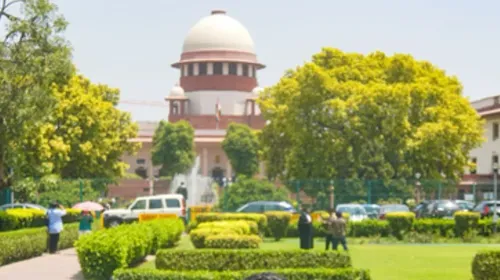
The Supreme Court of India on Wednesday, 28 May 2025, upheld the Election Commission of India (ECI)'s authority to conduct a Special Intensive Revision (SIR) of electoral rolls, ruling that the exercise falls squarely within the constitutional and statutory powers of the poll body. The verdict has drawn broad endorsement from prominent Islamic religious scholars, who called on all stakeholders to accept the outcome without reservation.
What the Supreme Court Ruled
A bench comprising Chief Justice of India Surya Kant and Justice Joymalya Bagchi held that the SIR exercise did not violate the provisions of the Representation of the People Act (RPA), 1950, or the rules framed thereunder. The bench further ruled that the ECI was empowered to undertake such a revision under Article 324 of the Constitution read with Section 21(3) of the RPA, affirming that the exercise was aimed at preserving the integrity of the electoral process.
Muslim Leaders Welcome the Verdict
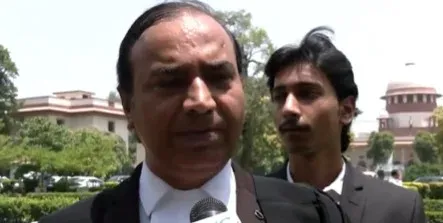
All India Muslim Jamaat President Maulana Shahabuddin Razvi Bareilvi welcomed the judgment, pointing to recent Assembly elections in Assam, West Bengal, Puducherry, Kerala, and Tamil Nadu as evidence of the ECI's impartiality. 'There is no question of any discrepancy by the Election Commission of India in this. There are no grounds of any objection by anyone,' he said.
Maulana Bareilvi also underscored the practical necessity of the SIR, noting that electoral rolls often carry the names of voters who are either deceased or have relocated, making a thorough revision essential for clean and accurate rolls.
All India Shia Personal Law Board Responds
All India Shia Personal Law Board General Secretary Maulana Mirza Mohammad Yasoob Abbas urged restraint in public commentary. 'There is no need for anyone to cast aspersions on the judgment of the country's apex court. There is no point in commenting on it now,' he said. He added that raising objections against the highest court of the land amounts to questioning the nation's entire judicial system — a line, he argued, no responsible voice should cross.
Why the SIR Became Contentious
The SIR had drawn political controversy before reaching the Supreme Court, with critics questioning whether the revision exercise could be used to selectively alter voter lists. The apex court's unambiguous ruling closes that debate at the legal level, though political discourse around electoral roll accuracy is likely to continue. Notably, this verdict reinforces a broader pattern of the Supreme Court affirming the ECI's constitutional autonomy in managing the electoral process.
What Comes Next
With the Supreme Court's endorsement now on record, the ECI is expected to proceed with the SIR exercise across the relevant constituencies. Religious and civil society voices that had expressed reservations now face pressure to engage constructively with the revision process rather than contest its legitimacy. The ruling is likely to be cited in any future legal challenges to ECI-initiated electoral roll exercises.
Point of View
And courts have historically been reluctant to second-guess the poll body on procedural matters. What is notable here is the speed with which prominent Muslim religious leaders moved to endorse the verdict publicly, signalling a deliberate effort to de-escalate community anxieties around electoral roll integrity. The harder question — whether the SIR's on-ground implementation will be uniform and free from administrative bias — remains unanswered by this judgment. Legal validity and operational fairness are not the same thing, and civil society groups would do well to shift their scrutiny from the courtroom to the field.
NationPress
11 Oct 2026
Frequently Asked Questions
What is the Special Intensive Revision (SIR) of electoral rolls?
The Special Intensive Revision (SIR) is an exercise conducted by the Election Commission of India to comprehensively update voter lists by removing deceased or relocated voters and adding eligible new ones. The Supreme Court ruled on 28 May 2025 that it is constitutionally valid under Article 324 and Section 21(3) of the Representation of the People Act, 1950.
Why did the SIR face legal challenges?
Critics had raised concerns that the SIR could be used to selectively alter voter lists, potentially disenfranchising certain communities. The matter was brought before the Supreme Court, which has now upheld the ECI's authority to conduct the exercise.
What did the Supreme Court say in its verdict?
The bench of CJI Surya Kant and Justice Joymalya Bagchi ruled that the SIR did not violate the Representation of the People Act, 1950, and that the ECI was empowered to undertake such a revision under Article 324 of the Constitution read with Section 21(3) of the RPA.
Why have Muslim religious leaders welcomed the SC verdict?
Prominent scholars including Maulana Shahabuddin Razvi Bareilvi and Maulana Mirza Mohammad Yasoob Abbas have welcomed the verdict, arguing that the ECI has demonstrated impartiality in past elections and that challenging the Supreme Court's ruling amounts to questioning India's judicial system.
What happens next after the Supreme Court's ruling?
The ECI is expected to proceed with the SIR exercise following the court's endorsement. The ruling also sets a legal precedent that is likely to be cited in any future challenges to ECI-initiated electoral roll revision exercises.