CM Bhajan Lal Backs Vocal for Local, Artisan Schemes
Synopsis
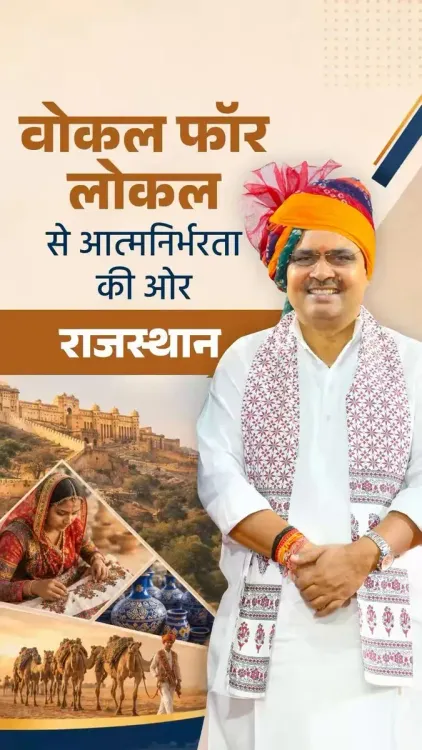
Rajasthan Chief Minister Bhajan Lal Sharma on 12 July 2026 reaffirmed state support for traditional artisans and local products, citing PM Vishwakarma Yojana, Panch Gaurav Yojana, and Bunakar Puraskar Yojana as vehicles for aligning Rajasthan's policy with Prime Minister Modi's Atmanirbhar Bharat vision.
Key Takeaways
CM Bhajan Lal Sharma publicly committed to promoting local products and empowering artisans on 12 July 2026 .
The state government is implementing Panch Gaurav Yojana and Bunakar Puraskar Yojana alongside the central PM Vishwakarma Yojana .
PM Vishwakarma Yojana was launched by the Union government in September 2023 to provide skill training, credit, and market linkages to traditional craftspeople.
The Atmanirbhar Bharat initiative, announced in May 2020 , forms the national policy backbone for these state-level efforts.
The CM called on citizens to adopt local and indigenous goods as active participants in Rajasthan 's development.
Key metrics to watch: artisan registration and scheme utilisation under PM Vishwakarma Yojana in Rajasthan in the current financial year.
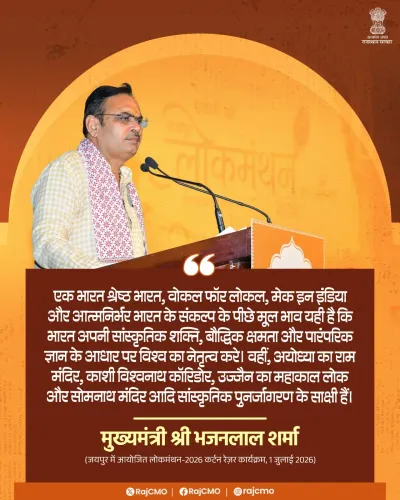
Rajasthan Chief Minister Bhajan Lal Sharma on Sunday, 12 July 2026, reaffirmed his government's commitment to promoting local products and empowering traditional artisans, invoking Prime Minister Narendra Modi's 'Vocal for Local' and Atmanirbhar Bharat vision as the guiding framework for state policy.
In his post, the Chief Minister wrote: 'Panch Gaurav Yojana, PM Vishwakarma Yojana aur Bunakar Puraskar Yojana jaise neetigat prayason ke madhyam se hum apne paramparik udyogon ko vaishvik bazaar aur nayi urja pradan kar rahe hain' — ('Through policy efforts such as the Panch Gaurav Yojana, PM Vishwakarma Yojana, and Bunakar Puraskar Yojana, we are providing our traditional industries with access to global markets and fresh energy.')
Context
Prime Minister Modi first articulated the 'Vocal for Local' call in 2020, urging citizens to prefer domestically made goods. The Atmanirbhar Bharat initiative, announced in May 2020, formalised this into a national economic programme aimed at reducing import dependence and strengthening domestic manufacturing and cottage industries.
State governments across India have since been expected to align their own welfare and industry schemes with this central mission, particularly for artisan clusters, handloom weavers, and micro-enterprises that form the backbone of informal-sector employment.
Policy Backdrop
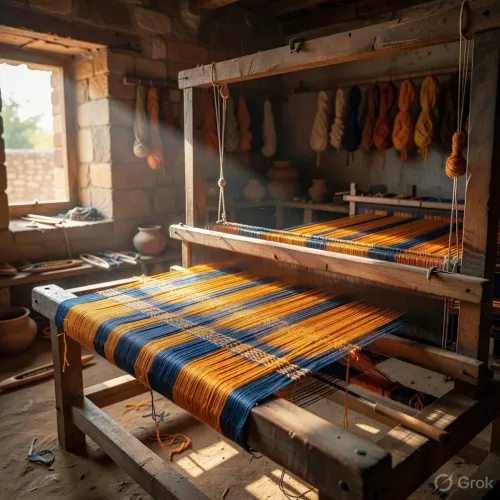
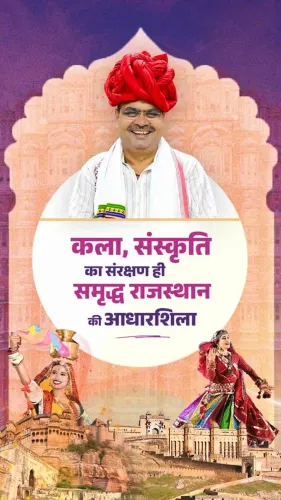
The PM Vishwakarma Yojana, launched by the Union government in September 2023, is a central scheme designed to formalise and upgrade traditional artisan occupations by providing skill training, credit support, and market linkages to craftspeople across recognised trades. Rajasthan, with its rich heritage of handicrafts, handlooms, blue pottery, and block printing, is among the states with a significant artisan population that stands to benefit from the scheme.
The Panch Gaurav Yojana and the Bunakar Puraskar Yojana are state-level initiatives cited by the Chief Minister as complementary efforts to uplift weavers and recognise excellence in traditional crafts. The broader pattern since 2020 has been to combine financial assistance, skill upgradation, and branding — including promotion of Geographical Indication-tagged products — to integrate informal-sector producers into domestic and export value chains.
Stakeholders and Impact
The primary beneficiaries of these converging central and state schemes are Rajasthan's traditional artisans, handloom weavers, and craftspeople, as well as small and micro enterprises producing local goods. The Chief Minister's appeal to citizens — 'Let us all together adopt local products, promote indigenous goods, and ensure our participation in Rajasthan's development' — also targets consumers as active stakeholders in the self-reliance agenda.
For Rajasthan's artisan communities, enhanced market access and government recognition translate into more stable livelihoods and greater integration into both domestic retail and export channels. MSMEs producing handicrafts and textiles stand to gain from the branding and credit-support components of these schemes.
What's Next
Attention will now turn to the state government's actual delivery on these commitments — specifically, registration numbers and utilisation reports under the PM Vishwakarma Yojana in Rajasthan for the current financial year. The effectiveness of the Panch Gaurav Yojana and Bunakar Puraskar Yojana in reaching artisans at the grassroots will be a key measure of whether the state's alignment with the central self-reliance mission translates into tangible economic uplift.
If the schemes achieve meaningful scale, Rajasthan could emerge as a model for how state governments can operationalise the Vocal for Local mandate through targeted, sector-specific interventions for traditional industries.
Point of View
Though the real test will be ground-level utilisation data. Broader pattern: since 2020, state BJP governments have consistently used the Vocal for Local framework as a politically safe, economically populist vehicle to court artisan and MSME constituencies.
NationPress
11 Oct 2026
Frequently Asked Questions
What is PM Vishwakarma Yojana and how does it help Rajasthan artisans?
PM Vishwakarma Yojana is a central government scheme launched in September 2023 that provides traditional artisans with skill training, credit support, and market linkages. In Rajasthan, artisans in crafts such as handloom, block printing, and pottery can register under the scheme to access these benefits and integrate into formal value chains.
What is the Panch Gaurav Yojana in Rajasthan?
Panch Gaurav Yojana is a state-level policy initiative cited by Chief Minister Bhajan Lal Sharma as part of Rajasthan's effort to promote local products and traditional industries. Specific operational details of the scheme are subject to official state government announcements.
What does Vocal for Local mean in the context of Indian government policy?
Vocal for Local is a call to action by Prime Minister Narendra Modi, urging Indian citizens and institutions to prefer domestically produced goods over imports. It forms part of the broader Atmanirbhar Bharat initiative announced in May 2020 to strengthen domestic manufacturing and cottage industries.
What is the Bunakar Puraskar Yojana mentioned by CM Bhajan Lal Sharma?
Bunakar Puraskar Yojana is a state scheme referenced by Chief Minister Bhajan Lal Sharma aimed at recognising and rewarding weavers in Rajasthan. It is cited as part of the government's broader effort to empower the handloom sector and align with central self-reliance programmes.
How is Rajasthan aligning with Atmanirbhar Bharat?
The Rajasthan government under Chief Minister Bhajan Lal Sharma is implementing state schemes such as Panch Gaurav Yojana and Bunakar Puraskar Yojana alongside central programmes like PM Vishwakarma Yojana to promote local products, support artisans, and integrate traditional industries into domestic and global markets.