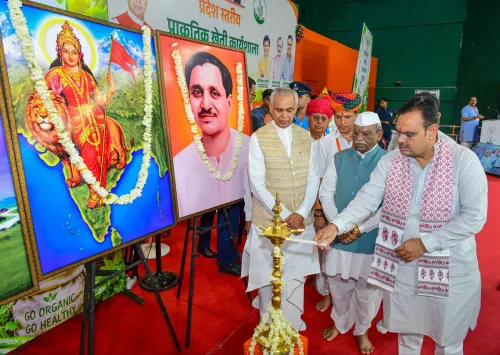
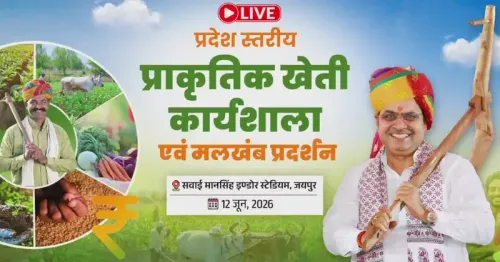
CM Bhajan Lal attends natural farming workshop in Jaipur
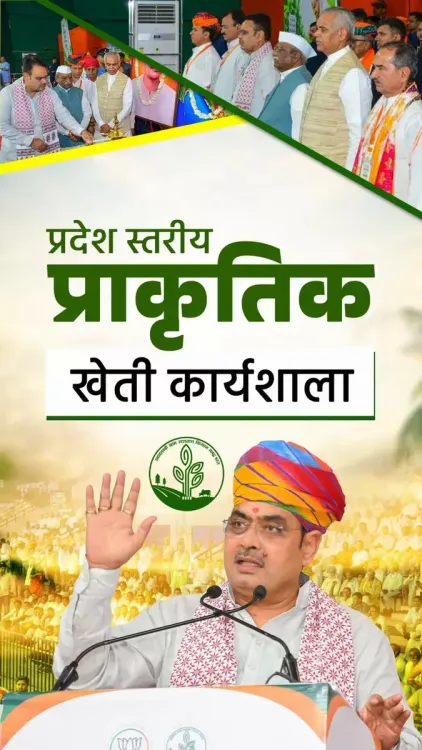
Synopsis
Rajasthan Chief Minister Bhajan Lal Sharma attended a natural farming workshop in Jaipur on June 12, 2026, engaging progressive farmers and linking chemical-free agriculture to PM Modi's Atmanirbhar Bharat vision. The event reflects a broader BJP-state push to scale sustainable farming and reduce input costs for farmers.
Key Takeaways
CM Bhajan Lal Sharma attended a natural farming workshop in Jaipur on June 12, 2026 .
He interacted directly with progressive farmers from across Rajasthan .
The event was framed around PM Modi 's Atmanirbhar Bharat initiative, launched in May 2020 .
The Paramparagat Krishi Vikas Yojana (2015) provides the central policy framework for such natural farming clusters.
Rajasthan has been expanding farmer outreach on chemical-free cultivation since the BJP government took office in December 2023 .
District-level training programmes and 2026-27 budget allocations for chemical-free clusters are the key developments to watch.
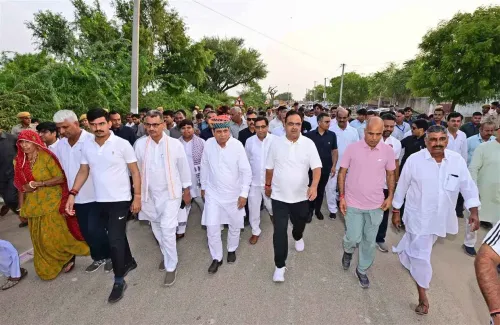
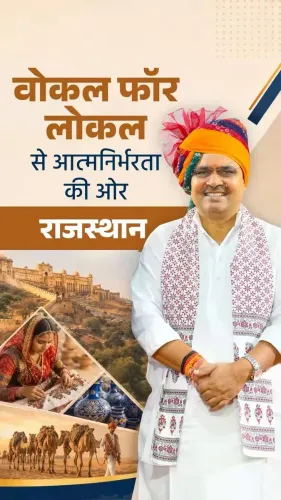
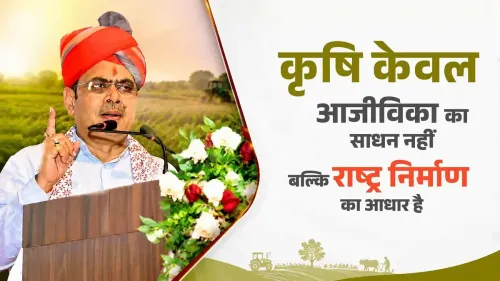
Rajasthan Chief Minister Bhajan Lal Sharma attended a natural farming workshop in Jaipur on Friday, June 12, 2026, engaging in dialogue with progressive farmers from across the state. The Chief Minister underscored the central role of farmers in realising Prime Minister Narendra Modi's vision of an Aatmanirbhar Bharat (self-reliant India).
Context
Posting on X, CM Sharma wrote: 'Aaj Jaipur mein aayojit prakritik kheti karyashala mein upasthit hokar pradesh ke pragatisheel kisanon ke saath samvad kiya' — 'Today I participated in the natural farming workshop organised in Jaipur and interacted with the progressive farmers of the state.' He added that farmers are the most important contributors to fulfilling PM Modi's dream of a self-reliant India.
The workshop brought together farmers engaged in or transitioning to chemical-free cultivation methods. Such state-level gatherings have become a regular feature of Rajasthan's agricultural outreach since CM Sharma assumed office in December 2023.
Policy Backdrop
Natural farming advocacy in India has strong roots in central policy. The Paramparagat Krishi Vikas Yojana, launched by the Ministry of Agriculture in 2015, established organic and natural farming clusters across states with financial and technical support. PM Modi reinforced this push at the National Conference on Natural Farming in 2022, calling on states to scale up chemical-free cultivation to improve soil health and raise farmer incomes.
The Atmanirbhar Bharat initiative, launched in May 2020, identifies agriculture as a key pillar for reducing import dependence and strengthening domestic food systems. Natural farming aligns with this goal by lowering input costs and improving the export competitiveness of Indian produce through eco-friendly methods.
Stakeholders and Impact
Progressive farmers in Rajasthan stand to benefit directly from such workshops, which typically offer training in low-cost, chemical-free techniques such as cow-dung-based formulations and intercropping. The Rajasthan agriculture department has been expanding this outreach since the change of government in late 2023, aiming to reduce farmers' dependence on expensive chemical inputs.
Broader stakeholders include rural communities dependent on soil-intensive agriculture, consumers who gain access to residue-free produce, and the state's export ecosystem, which can leverage chemical-free certification for premium markets. BJP-governed states have increasingly used such events to demonstrate alignment with the Centre's sustainable agriculture agenda.
What's Next
The Rajasthan government is expected to follow up with district-level natural farming training programmes to extend the reach of workshops beyond Jaipur. Observers will watch for any dedicated budget allocations for chemical-free farming clusters in the 2026-27 state budget, which would signal a move from awareness events to institutionalised policy support.
If Rajasthan scales its natural farming clusters in line with central guidelines, it could position the state as a significant contributor to India's broader goal of reducing agricultural chemical dependence — a metric increasingly tied to both soil health outcomes and international trade opportunities.
Point of View
The Chief Minister positions Rajasthan's farmers as active agents in a national economic project rather than passive beneficiaries of subsidy. This fits a pattern seen across BJP-governed states of using grassroots agricultural events to build political capital among the farming community while simultaneously demonstrating ideological coherence with New Delhi. The real test will be whether workshop momentum translates into measurable budget commitments and cluster-level outcomes.
NationPress
29 Jul 2026
Frequently Asked Questions
What is the natural farming workshop that CM Bhajan Lal Sharma attended in Jaipur?
It is a state-level workshop organised in Jaipur on June 12, 2026, where Rajasthan Chief Minister Bhajan Lal Sharma interacted with progressive farmers to promote chemical-free, natural farming practices aligned with the central government's sustainable agriculture agenda.
What is Atmanirbhar Bharat and how does it relate to farming?
Atmanirbhar Bharat is a self-reliance initiative launched by PM Modi in May 2020, with agriculture as a key pillar. Natural farming supports this goal by reducing costly chemical input imports and strengthening domestic food systems.
What is the Paramparagat Krishi Vikas Yojana?
The Paramparagat Krishi Vikas Yojana is a central government scheme launched in 2015 to promote organic and natural farming clusters across Indian states, providing financial and technical support to farmers transitioning away from chemical inputs.
What has Rajasthan done for natural farming since the BJP came to power?
Since CM Bhajan Lal Sharma took office in December 2023, Rajasthan has been expanding farmer outreach on chemical-free cultivation through state-level and district-level workshops, in line with the Centre's emphasis on sustainable agriculture.
What should we expect next from Rajasthan on natural farming?
Observers are watching for district-level natural farming training programmes and potential budget allocations for chemical-free farming clusters in Rajasthan's 2026-27 state budget, which would mark a shift from awareness events to formal policy support.