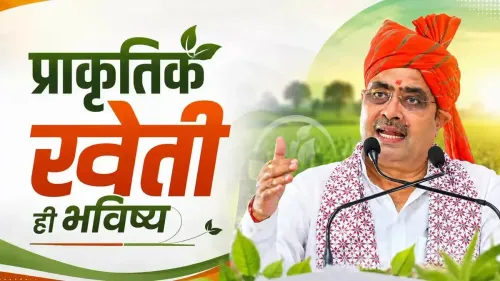
CM Bhajan Lal chairs state natural farming workshop in Jaipur
Synopsis
Rajasthan Chief Minister Bhajan Lal Sharma chaired a state-level natural farming workshop and Malkhamb demonstration in Jaipur on June 12, 2026, advancing the state's push for sustainable agriculture and indigenous cultural revival among farmers and rural youth.
Key Takeaways
Rajasthan Chief Minister Bhajan Lal Sharma addressed the state-level natural farming workshop in Jaipur on June 12, 2026 .
The event combined a natural farming workshop with a Malkhamb (traditional pole gymnastics) demonstration, linking sustainable agriculture with indigenous physical culture.
The Central government's Paramparagat Krishi Vikas Yojana , launched in 2015 , provides the policy framework under which such state-level workshops are conducted.
Primary beneficiaries are Rajasthan's farming communities , with the workshops aimed at reducing chemical fertiliser dependence and restoring soil health.
District-level rollout of natural farming clusters and possible state budget allocations are expected to follow the Jaipur event.
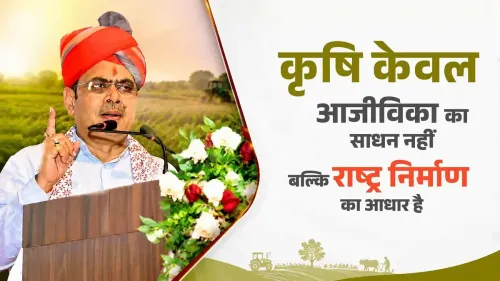
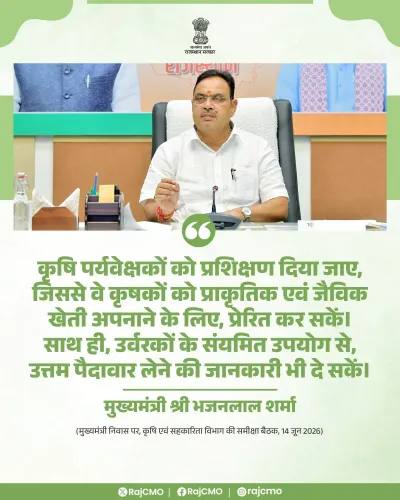
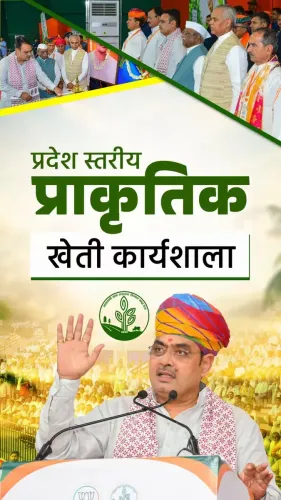
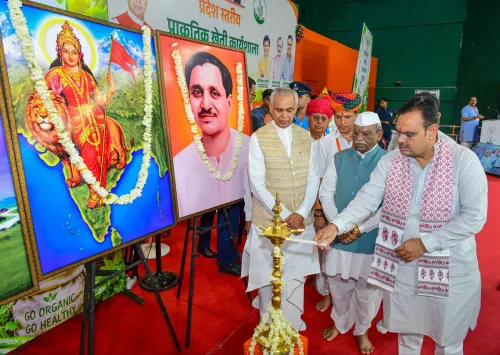
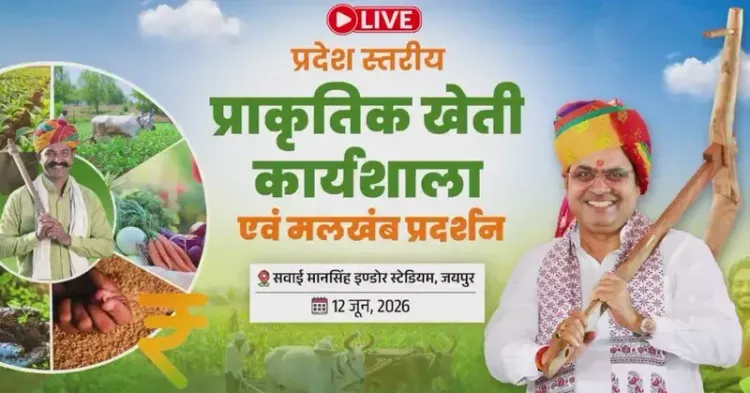
Rajasthan Chief Minister Bhajan Lal Sharma addressed a state-level natural farming workshop and Malkhamb demonstration in Jaipur on Friday, June 12, 2026, signalling the state government's push to mainstream sustainable agriculture and indigenous physical culture among rural communities.
Context
The event, titled 'Pradesh Stariya Prakritik Kheti Karyashala evam Malkhamb Pradarshan' (State-Level Natural Farming Workshop and Malkhamb Demonstration), was held in the state capital. Chief Minister Sharma shared a live broadcast of the proceedings on his official social media handle, underlining the government's intent to amplify outreach around natural farming.
Natural farming — broadly defined as chemical-free cultivation rooted in indigenous agronomic practices — has gained policy traction across Indian states as a response to rising input costs and soil degradation. Rajasthan, India's largest state by area, has a substantial farming population that stands to be directly affected by any shift in cultivation practices.
Policy Backdrop
The Central government's Paramparagat Krishi Vikas Yojana (PKVY), launched in 2015 by the Ministry of Agriculture, laid the groundwork for cluster-based organic and natural farming promotion across states, including Rajasthan. State-level workshops of this kind are a key delivery mechanism under that broader framework, bringing together farmers, extension workers, and officials to share knowledge and set implementation targets.
Indian states have progressively scaled up such training initiatives to reduce dependence on chemical fertilisers, restore soil health, and improve farmer incomes. The pairing of a natural farming workshop with a Malkhamb demonstration reflects a recurring pattern in Rajasthan, where sustainable agriculture outreach is linked with the revival of indigenous physical and cultural traditions.
Malkhamb — the traditional Indian pole gymnastics discipline — has seen renewed state patronage in recent years as part of efforts to promote indigenous sports alongside mainstream physical education among rural youth.
Stakeholders and Impact
Farmers across Rajasthan's districts are the primary audience for workshops of this nature, where practical guidance on transitioning away from chemical inputs is disseminated. Rural youth form the secondary constituency, with Malkhamb demonstrations serving as both a cultural showcase and a recruitment tool for indigenous sports programmes.
Sustained adoption of natural farming practices has implications for input subsidy expenditure at the state level, as well as for long-term soil productivity across Rajasthan's arid and semi-arid agricultural zones. Workshops at the state capital level are typically followed by district-level cluster formation and training cascades.
What's Next
Attention will now turn to whether the Jaipur workshop produces concrete district-level rollout targets or fresh state budget allocations for natural farming clusters. Any training benchmarks or scheme integration announcements made at the event would indicate the government's seriousness in converting the workshop into on-ground policy action.
The broader trajectory of Rajasthan's sustainable agriculture agenda under Chief Minister Bhajan Lal Sharma will be tested by how quickly the workshop's outputs translate into measurable farmer enrolment and reduced chemical fertiliser use at the block and panchayat level.
Point of View
Top-down mobilisation — a pattern seen in other BJP-governed states that have used such events to build political capital among agrarian constituencies. Pairing it with a Malkhamb demonstration is a deliberate cultural signalling exercise, aligning sustainable agriculture with 'indigenous revival' — a recurring motif in the current political dispensation's public communications. The real test will be whether district-level follow-through materialises in measurable enrolment numbers and reduced input subsidy demand. Without concrete targets emerging from the Jaipur workshop, the event risks being catalogued as mobilisation theatre rather than policy action.
NationPress
19 Sept 2026
Frequently Asked Questions
What was the natural farming workshop in Jaipur about?
The state-level natural farming workshop in Jaipur on June 12, 2026 aimed to promote chemical-free, sustainable cultivation practices among Rajasthan's farming communities, in line with the Central government's Paramparagat Krishi Vikas Yojana framework.
What is Malkhamb and why was it part of the event?
Malkhamb is a traditional Indian pole gymnastics discipline. Its inclusion in the Jaipur event reflects Rajasthan's practice of combining sustainable agriculture outreach with the promotion of indigenous physical and cultural traditions, particularly for rural youth.
What is Bhajan Lal Sharma's role in Rajasthan?
Bhajan Lal Sharma is the Chief Minister of Rajasthan and a BJP leader who took office in December 2023 following the state assembly elections.
What is Paramparagat Krishi Vikas Yojana?
Paramparagat Krishi Vikas Yojana (PKVY) is a Central government scheme launched in 2015 by the Ministry of Agriculture to promote organic and natural farming through cluster-based approaches across Indian states, including Rajasthan.
What happens after such natural farming workshops in Rajasthan?
State-level workshops are typically followed by district-level cluster formation, farmer training cascades, and potential budget allocations — though specific targets from the June 12 Jaipur event are yet to be officially announced.