CM Bhajan Lal Urges Rajasthan Farmers to Embrace Organic Farming
Synopsis
Rajasthan Chief Minister Bhajan Lal Sharma on 2 August 2026 appealed to farmers to abandon excessive chemical fertiliser use and adopt organic and natural farming methods using cow-dung compost and green manure, framing soil health as a generational responsibility.
Key Takeaways
Bhajan Lal Sharma posted a direct appeal to Rajasthan farmers on 2 August 2026 urging a shift away from chemical fertilisers.
He specifically recommended cow-dung compost and green manure as natural alternatives for soil enrichment.
The appeal frames soil fertility as a collective duty toward future generations , not merely an agronomic choice.
The Centre's Paramparagat Krishi Vikas Yojana (2015) provides the existing policy framework for organic-farming clusters in Rajasthan and other states.
The timing coincides with the kharif sowing season , when input decisions have the most immediate impact on soil and crop outcomes.
No new Rajasthan-specific scheme or subsidy has been announced alongside the appeal; follow-up policy action remains the key variable to watch.
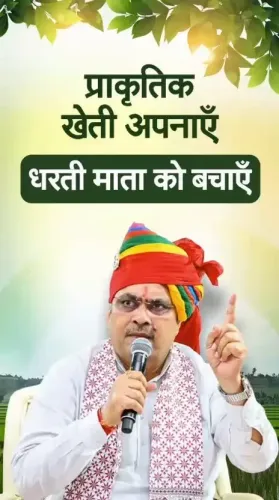
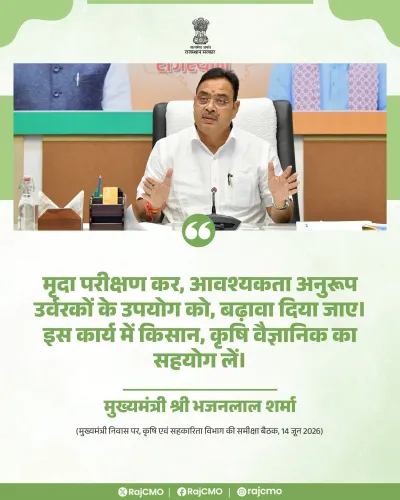
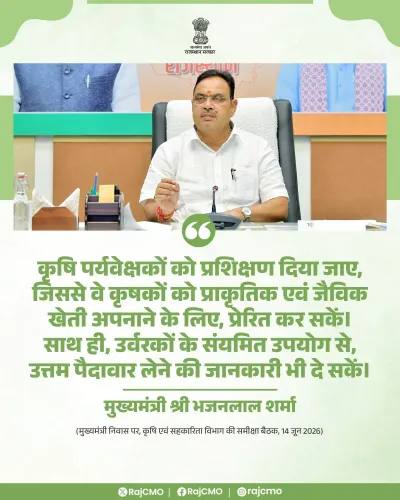
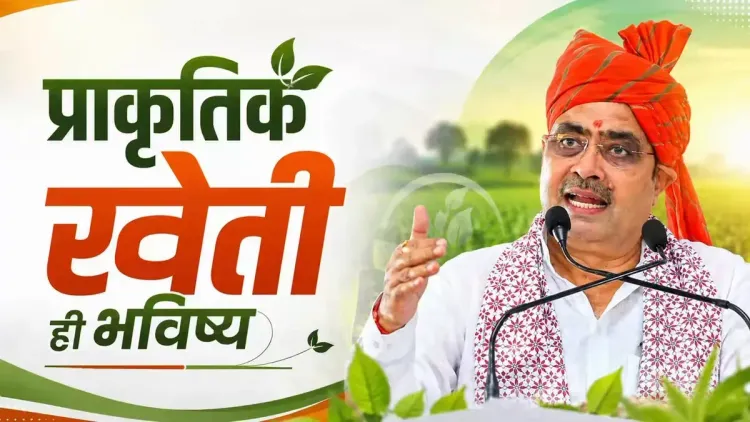
The health of the soil, Rajasthan Chief Minister Bhajan Lal Sharma argued on Sunday, 2 August 2026, is not a farmer's personal concern — it is a debt owed to every generation that follows. In a direct appeal posted on X, the Chief Minister called on farmers across the state to cut back on chemical fertilisers and turn instead to cow-dung compost and green manure as the foundation of organic and natural farming.
Sharma's message, delivered in Hindi, was unambiguous: 'रासायनिक उर्वरकों का अत्यधिक उपयोग करने से बचें' ('avoid excessive use of chemical fertilisers') and embrace 'जैविक एवं प्राकृतिक खेती' — organic and natural farming — using cow-dung and green manure inputs. He framed soil fertility and the health of the earth as a collective responsibility toward future generations.
Decades of Chemical Dependency and a Fraying Soil
The appeal lands against a well-documented backdrop. Since the Green Revolution, Rajasthan — like much of India — has seen steadily rising dependence on urea and synthetic pesticides, with soil organic-carbon levels declining in many districts as a result. Indian states began pushing back in earnest from the mid-2010s, running awareness campaigns alongside the central government's Paramparagat Krishi Vikas Yojana (PKVY), launched in 2015, which funds organic-farming clusters, trains farmers in traditional methods, and incentivises the shift away from chemical inputs. Rajasthan has been among the participating states under that scheme.Cow-Dung and Green Manure: The Inputs at the Centre of the Push
Sharma's specific mention of cow-dung (gobhar) and green manure is deliberate — both are low-cost, locally available inputs that small and marginal farmers can adopt without significant capital. Cow-dung-based compost improves soil microbial activity and water retention, while green manuring — ploughing nitrogen-fixing crops back into the field — reduces the need for synthetic nitrogen fertilisers. The kharif sowing season, which runs through the monsoon months, is precisely the window when such inputs make the most agronomic difference.What Farmers and Policymakers Will Be Watching
An appeal from a sitting Chief Minister carries political weight, but farmers will be looking for what follows: subsidised bio-inputs, state-run training camps, or revised procurement incentives that make the economics of organic farming viable at scale. Whether the Rajasthan government backs this public call with formal orders or budgetary support in the coming weeks will determine whether Sunday's post is the start of a policy push or a seasonal reminder. The soil does not wait for policy cycles — and neither, as Sharma's post implies, does the obligation to protect it.Point of View
Rather than a purely economic argument, signals an attempt to shift farmer psychology alongside policy. However, without accompanying subsidy structures or procurement guarantees, such appeals have historically struggled to move the needle on actual chemical-fertiliser consumption in large agrarian states like Rajasthan. The post's real significance may lie in what policy instruments follow it into the next budget cycle.
NationPress
17 Sept 2026
Frequently Asked Questions
What did Rajasthan CM Bhajan Lal Sharma say about organic farming?
On 2 August 2026 , Sharma appealed to farmers to avoid excessive chemical fertilisers and adopt organic and natural farming using cow-dung compost and green manure, calling soil health a responsibility toward future generations.
What is Paramparagat Krishi Vikas Yojana and does it apply to Rajasthan?
Paramparagat Krishi Vikas Yojana (PKVY) is a central government scheme launched in 2015 to promote organic farming clusters and reduce chemical fertiliser use. Rajasthan is among the states that have participated in the scheme.
Why is cow-dung and green manure recommended over chemical fertilisers?
Cow-dung compost improves soil microbial activity and water retention, while green manure reduces dependence on synthetic nitrogen. Both inputs are low-cost and locally available, making them accessible to small and marginal farmers.
Has the Rajasthan government announced any new organic farming scheme in 2026?
As of this report, no new Rajasthan-specific organic farming scheme or subsidy has been formally announced alongside the Chief Minister's appeal. Any follow-up policy orders or budget allocations would be the next indicator to watch.
What is the significance of the timing of this appeal during the kharif season?
The kharif season — the monsoon-driven sowing window — is when farmers make critical input decisions. An appeal at this stage, if backed by practical support, can directly influence which fertilisers and soil amendments are applied to the current crop cycle.