CM Bhajan Lal Orders Fertilizer Supply Review for Kharif Season
Synopsis
Rajasthan CM Bhajan Lal Sharma on 14 June 2026 chaired an Agriculture Department review, ordering smooth fertilizer supply for the kharif season, strict action against black-marketing and hoarding, and a roadmap for natural and organic farming driven by technology.
Key Takeaways
CM Bhajan Lal Sharma held a review meeting of the Agriculture and Cooperation Department on 14 June 2026 .
Officials were directed to ensure smooth supply of fertilizers ahead of the upcoming crop season .
Strict action was ordered against black-marketing and illegal stockpiling of fertilizers.
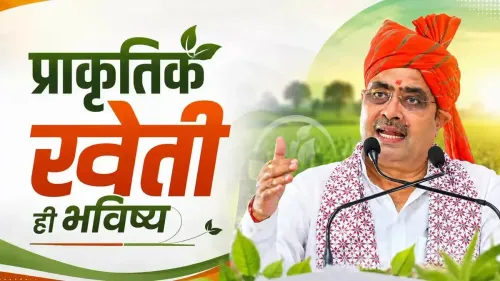
The department was asked to prepare an effective roadmap for natural and organic farming and balanced fertilizer use.
Delivering scheme benefits to farmers through technology and innovation was described as the government's top priority.
The directives align with central schemes including the Soil Health Card Scheme and Paramparagat Krishi Vikas Yojana .
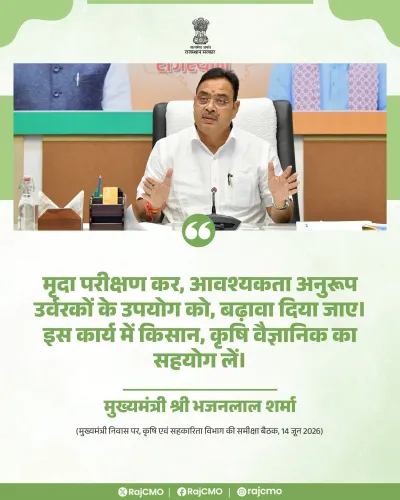
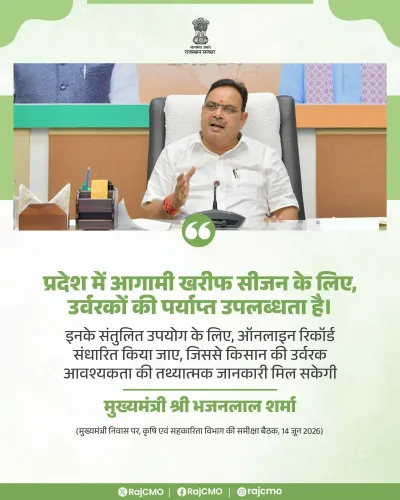
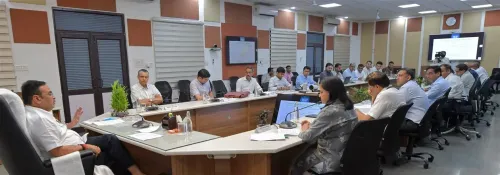
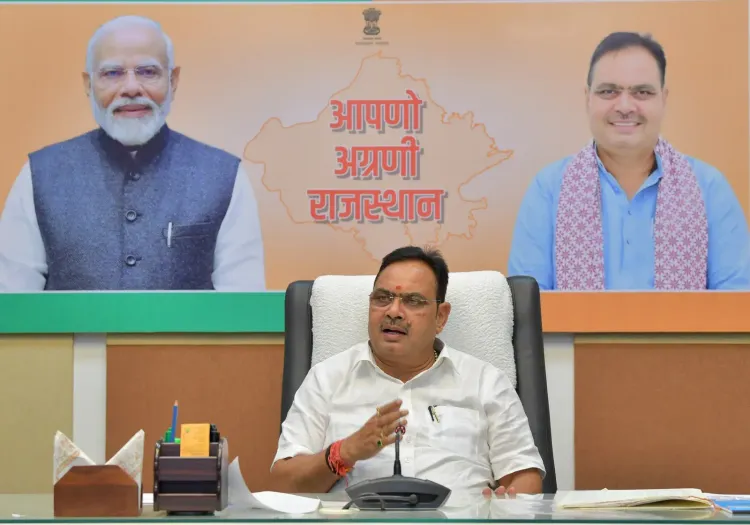
Rajasthan Chief Minister Bhajan Lal Sharma chaired a review meeting of the Agriculture and Cooperation Department on Sunday, 14 June 2026, directing officials to ensure smooth fertilizer supply ahead of the upcoming crop season while ordering strict action against black-marketing and illegal stockpiling of fertilizers.
Context
Posting on X, CM Sharma stated — 'आगामी फसल सीजन के लिए खाद-उर्वरक की सुचारू आपूर्ति सुनिश्चित करने के निर्देश दिए' ['directed officials to ensure smooth supply of fertilizers for the upcoming crop season']. He further directed the preparation of an effective roadmap to promote natural and organic farming alongside balanced and judicious use of chemical fertilizers. The Chief Minister added that reaching the state's farmers — 'अन्नदाताओं' ['food providers'] — through technology and innovation is the government's 'top priority.'
The meeting comes as Rajasthan prepares for the 2026 kharif sowing season, when demand for urea and di-ammonium phosphate (DAP) rises sharply across the state's agricultural districts.
Policy Backdrop
Pre-season fertilizer review meetings are a standard governance exercise for Indian states, reflecting the dependence of farmers on both imported nutrients and domestically produced fertilizers that are distributed through cooperative and retail networks. Rajasthan's agrarian economy — centred on crops such as wheat, mustard, and pulses — makes timely and adequate fertilizer availability a critical administrative concern each season.
The emphasis on balanced fertilizer use aligns with the central government's Soil Health Card Scheme, launched in 2015, which advises farmers on crop-specific nutrient requirements to prevent over-application of chemicals. Similarly, the Paramparagat Krishi Vikas Yojana, also launched in 2015, has supported organic farming clusters nationwide, providing the policy lineage for the organic-farming roadmap CM Sharma has now directed his department to formulate.
The directive against black-marketing and illegal hoarding of fertilizers targets a recurring problem in Indian agriculture, where artificial scarcity created by unscrupulous traders inflates input costs for small and marginal farmers at the start of each sowing window.
Stakeholders and Impact
Rajasthan's farming community — among the largest stakeholder groups in the state — stands to benefit directly from assured fertilizer supply chains and crackdowns on hoarding. Fertilizer cooperatives and licensed dealers will face heightened scrutiny under the anti-black-marketing directive. Officials from the Agriculture and Cooperation Department have been tasked with translating these directions into an actionable roadmap.
The parallel push for natural and organic farming carries longer-term implications for soil health and input-cost reduction, though a shift at scale requires sustained extension support and market linkages for organic produce. CM Sharma's reference to technology and innovation signals an intent to leverage digital platforms — consistent with the broader national Digital Agriculture push — to deliver scheme benefits directly to farmers.
What's Next
The Agriculture and Cooperation Department is expected to submit a roadmap covering fertilizer distribution logistics, enforcement protocols against black-marketing, and a framework for expanding organic and natural farming across the state. Enforcement actions under the anti-hoarding directive, and any registration of cases against illegal stockpilers, will be the near-term indicators of follow-through. Progress on the organic-farming roadmap will be a key metric to watch as the 2026 kharif season advances.
Point of View
Using high-visibility directives to demonstrate proactive farmer outreach ahead of a politically sensitive sowing season. The twin emphasis on supply-chain enforcement and organic farming reflects a balancing act between immediate input-security demands and the longer-term national narrative of reducing chemical dependency in agriculture. The explicit invocation of technology delivery echoes the Centre's Digital Agriculture agenda, positioning the state government as aligned with — and amplifying — a flagship federal policy direction. Whether the anti-black-marketing crackdown translates into measurable enforcement outcomes will determine how substantive this intervention proves to be.
NationPress
19 Sept 2026
Frequently Asked Questions
What did Rajasthan CM Bhajan Lal Sharma announce for farmers?
CM Bhajan Lal Sharma directed the Agriculture and Cooperation Department on 14 June 2026 to ensure smooth fertilizer supply for the upcoming crop season, crack down on black-marketing and illegal hoarding, and prepare a roadmap for natural and organic farming.
Why is fertilizer supply important for Rajasthan's kharif season?
Rajasthan's agrarian economy depends heavily on timely fertilizer availability for kharif crops such as pulses and oilseeds. Delays or artificial scarcity caused by hoarding can raise input costs and disrupt sowing schedules for small and marginal farmers.
What action is being taken against fertilizer black-marketing in Rajasthan?
CM Sharma has directed officials to take strict action against black-marketing and illegal stockpiling of fertilizers, though specific enforcement cases or penalties had not been publicly detailed as of the meeting on 14 June 2026.
What is the Soil Health Card Scheme and how does it relate to this directive?
The Soil Health Card Scheme, launched by the central government in 2015, tests soil samples and advises farmers on balanced fertilizer use. CM Sharma's directive for balanced and judicious fertilizer application directly aligns with this scheme's objectives.
What is Rajasthan's plan for natural and organic farming?
The Agriculture and Cooperation Department has been directed to prepare an effective roadmap for promoting natural and organic farming in Rajasthan, building on the framework of the central government's Paramparagat Krishi Vikas Yojana launched in 2015.