Rajasthan CM Office: Ample Fertiliser Stock for Kharif 2026
Synopsis
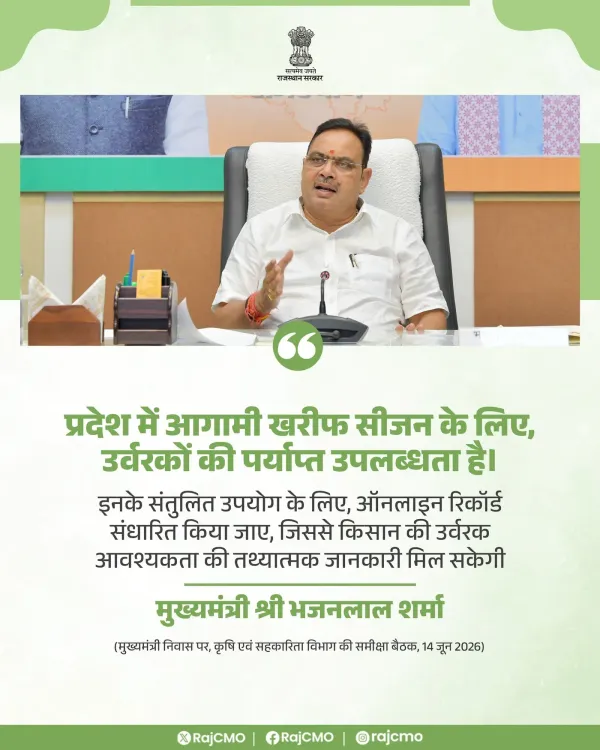
The Chief Minister's Office of Rajasthan declared on 15 June 2026 that adequate fertiliser supplies are secured for the Kharif season, reassuring farmers ahead of monsoon sowing and reinforcing CM Bhajan Lal Sharma's agricultural governance agenda.
Key Takeaways
The Chief Minister's Office of Rajasthan confirmed adequate fertiliser availability for the Kharif 2026 season on 15 June 2026 .
The announcement was addressed to CM Bhajan Lal Sharma and shared under the #आपणो_अग्रणी_राजस्थान governance campaign.
Rajasthan is India's largest state by area, making pre-season fertiliser logistics a significant operational challenge.
India's fertiliser subsidy framework, in place since the 1970s , supports state-level distribution each Kharif and Rabi cycle.
District-level stock reports from the Rajasthan Agriculture Department are expected in the coming weeks as sowing intensifies.
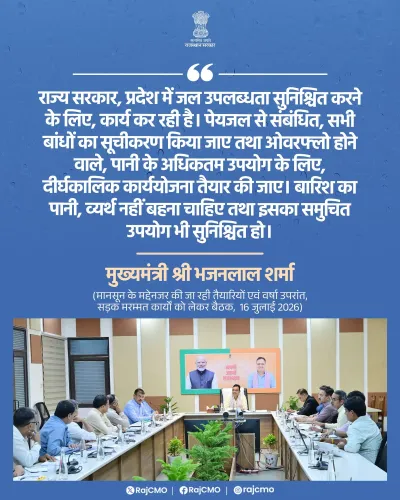
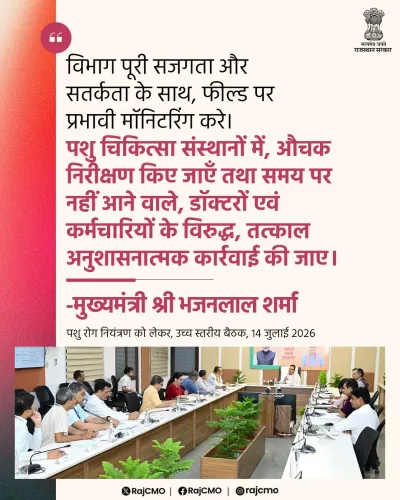
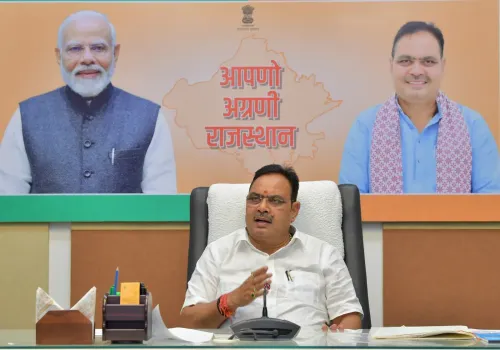
The Chief Minister's Office of Rajasthan announced on Monday, 15 June 2026 that adequate fertiliser supplies are in place across the state ahead of the upcoming Kharif season, offering reassurance to the farming community as the monsoon planting window approaches. The post, addressed to Chief Minister Bhajan Lal Sharma, was shared under the hashtag #आपणो_अग्रणी_राजस्थान ('Our Pioneering Rajasthan'), the Rajasthan government's flagship governance branding.
Context
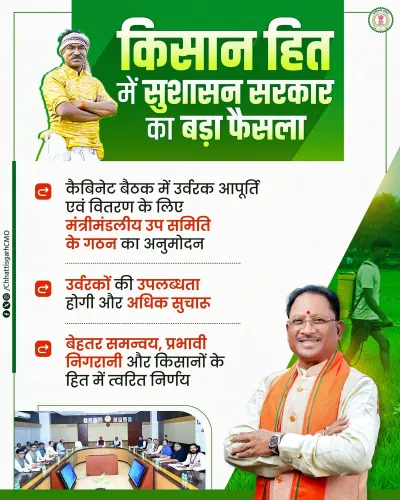
The CMO's post, in Hindi, states: 'प्रदेश में आगामी खरीफ सीजन के लिए, उर्वरकों की पर्याप्त उपलब्धता है' — 'Adequate availability of fertilisers exists in the state for the upcoming Kharif season.' The announcement comes at a critical juncture when farmers across Rajasthan begin preparing fields for sowing crops such as bajra, moong, and guar, all of which are heavily dependent on the southwest monsoon.
Pre-season fertiliser assurances are a standard governance practice in agrarian states. State governments typically coordinate with the central Department of Fertilizers to ensure urea, DAP (diammonium phosphate), and other nutrients are stocked at district warehouses before the sowing rush begins in June–July.
Policy Backdrop
India's fertiliser subsidy framework, operational since the 1970s, underpins state-level distribution. The central government reviews nutrient-based subsidies before each Kharif season to align procurement and supply logistics with state demand projections. Rajasthan, as India's largest state by area, presents a significant logistical challenge given the geographic spread of its agricultural districts.
Chief Minister Bhajan Lal Sharma, who took office in December 2023 following the BJP's victory in the Rajasthan assembly elections, has positioned agricultural welfare as a core pillar of his administration's agenda. Communications from the CMO under the #आपणो_अग्रणी_राजस्थान banner are part of a broader effort to project proactive governance to the state's farming constituency.
Stakeholders and Impact
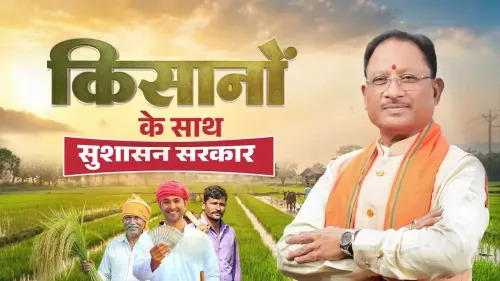
Rajasthan's agrarian economy supports millions of farming households, many of whom depend on timely access to subsidised fertilisers to manage input costs during the Kharif cycle. Delays or shortages in fertiliser supply at the district level can directly affect sowing decisions and, by extension, foodgrain and oilseed output for the season.
The government's assurance is aimed at preventing panic buying or hoarding — behaviours that historically emerge when supply uncertainty is perceived. By signalling stock adequacy early, the state administration seeks to stabilise market conditions at the primary agricultural cooperative and retail level across its districts.
What's Next
The immediate follow-through will be visible in district-level allocation data and logistics updates from the Rajasthan Agriculture Department in the weeks ahead. Field-level distribution efficiency — particularly in remote western and southern districts — will determine whether the state's assurance translates into tangible on-ground availability for farmers. Analysts and farmer groups will watch for any district-wise stock disclosures as the Kharif sowing season intensifies through July.
Point of View
Such announcements serve a dual purpose: they reinforce the party's agrarian-welfare credentials in a state where rural voters are decisive, and they preempt opposition criticism of supply-chain failures. The use of the #आपणो_अग्रणी_राजस्थान tag signals an attempt to build a consistent governance brand. Whether the on-ground distribution matches the confidence of the announcement will be the real test as the monsoon sowing window opens.
NationPress
20 Sept 2026
Frequently Asked Questions
Is there enough fertiliser in Rajasthan for Kharif 2026?
Yes, the Chief Minister's Office of Rajasthan confirmed on 15 June 2026 that adequate fertiliser supplies are available across the state for the upcoming Kharif season.
What is the Kharif season in Rajasthan?
The Kharif season is the monsoon-dependent summer cropping cycle, typically running from June to October. In Rajasthan, key Kharif crops include bajra, moong, guar, and moth.
Who is the Chief Minister of Rajasthan in 2026?
Bhajan Lal Sharma of the BJP has been serving as Chief Minister of Rajasthan since December 2023, following the party's victory in the state assembly elections.
What fertilisers are important for Kharif crops in India?
Urea and DAP (diammonium phosphate) are the two most widely used fertilisers for Kharif crops. Both are subsidised under India's central government nutrient-based subsidy framework.
What is the hashtag Aapno Agrani Rajasthan about?
'Aapno Agrani Rajasthan' — meaning 'Our Pioneering Rajasthan' — is a governance branding campaign used by the Rajasthan government to highlight development and policy initiatives under CM Bhajan Lal Sharma's administration.