CM Sai's Office Ensures Fertiliser Supply for Kharif Season
Synopsis
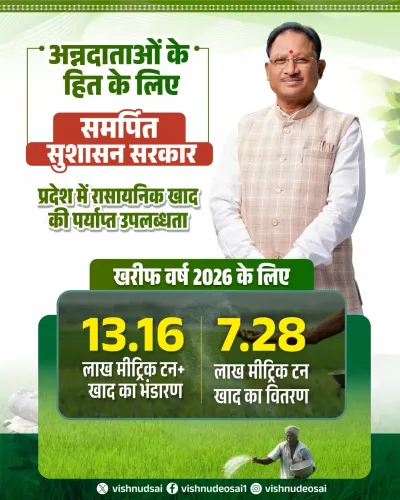
The Chief Minister's Office of Chhattisgarh announced on 7 July 2026 that CM Vishnu Dev Sai's administration has secured adequate fertiliser supply for the Kharif season, positioning farmer welfare as the government's top priority under its 'Sushasan Sarkar' mandate.
Key Takeaways
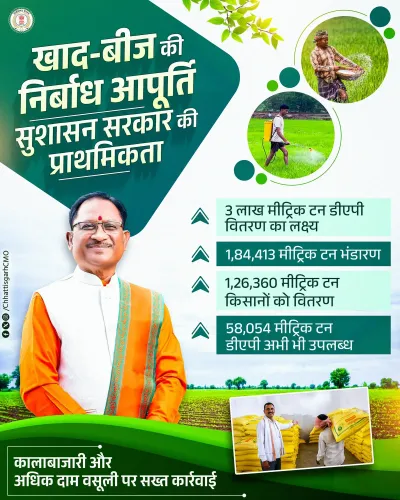
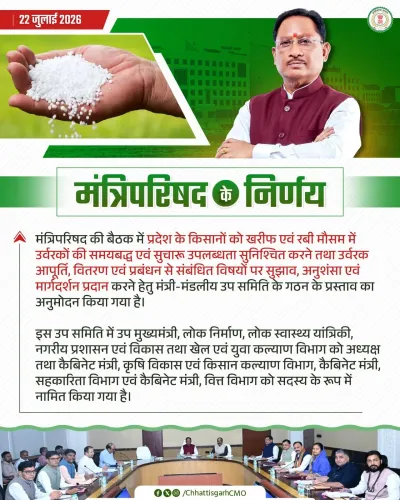
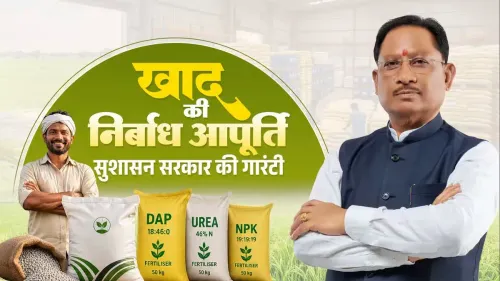
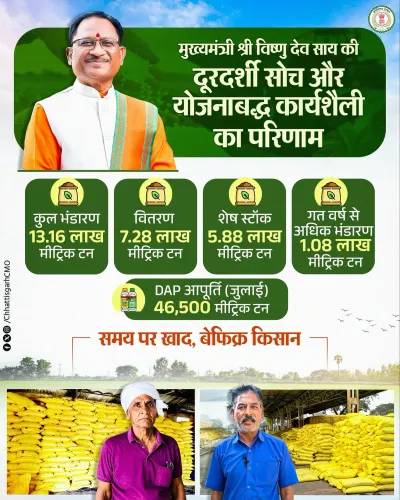
The Chief Minister's Office of Chhattisgarh announced on 7 July 2026 that sufficient fertiliser has been ensured for the Kharif season .
CM Vishnu Dev Sai , in office since December 2023 , is credited with the initiative under the state's 'Sushasan Sarkar' (good governance) framework.
The announcement targets Chhattisgarh's farming communities , who rely on timely input access during the narrow pre-monsoon sowing window.
Paddy is the dominant Kharif crop in Chhattisgarh, making fertiliser availability a high-stakes issue for the state's rural economy.
Specific fertiliser stock figures and distribution timelines cited in the post have not been independently verified.
On-ground distribution outcomes and farmer feedback during sowing will determine whether the supply assurance is fulfilled.
The Chief Minister's Office of Chhattisgarh announced on Tuesday, 7 July 2026 that the state government has ensured adequate fertiliser availability for the Kharif season, framing it as a top priority of Chief Minister Vishnu Dev Sai's administration under its 'good governance' mandate.
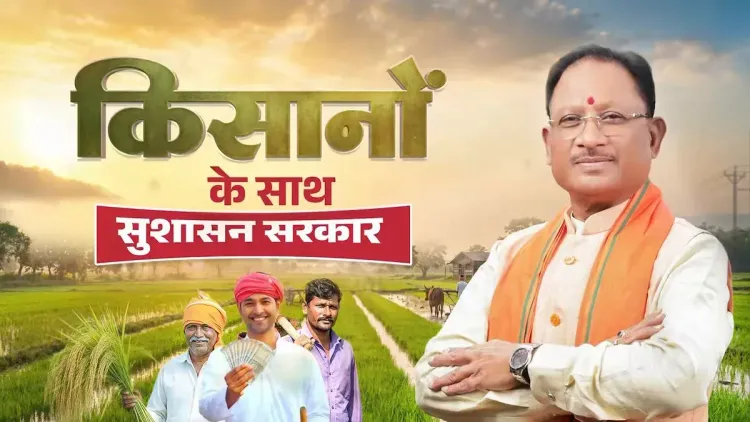
The post, shared in Hindi, states: 'Kisanon ke saath Sushasan Sarkar' ('Good governance government with farmers'), adding that 'farmers' welfare is the highest priority of the Sushasan government' and that 'sufficient fertiliser availability has been ensured for the Kharif season as a result of Chief Minister Vishnu Dev Sai's far-sighted vision, with essential resources being made available to farmers on time.'
Context
The Kharif cropping cycle, which covers major crops such as paddy, soybean, and maize, is critically dependent on timely access to fertilisers and other agricultural inputs before and during the monsoon sowing window. A delay in fertiliser supply at this stage can directly affect planting decisions and eventual yields for millions of farm households.
Chhattisgarh is a predominantly agrarian state in central India where paddy cultivation during the Kharif season forms the backbone of the rural economy. Timely government intervention in input supply is therefore a politically and economically significant signal ahead of the sowing season.
Policy Backdrop
The Bharatiya Janata Party government in Chhattisgarh, led by Chief Minister Vishnu Dev Sai since his swearing-in in December 2023, has consistently positioned agricultural support as a centrepiece of its governance agenda. The administration has branded its approach as 'Sushasan Sarkar' — 'good governance government' — with farmer welfare cited as a defining pillar.
State governments across India routinely issue pre-monsoon communications on fertiliser and seed availability to signal administrative readiness. Chhattisgarh's announcement fits this established pattern, though the specific stock figures and distribution timelines referenced in the post have not been independently verified.
Stakeholders and Impact
The primary beneficiaries of this initiative are Chhattisgarh's farming communities, who depend on state-coordinated input distribution networks, particularly for subsidised fertilisers such as urea and DAP, which are allocated through central and state channels. Timely access reduces the risk of farmers resorting to open-market purchases at higher prices.
Small and marginal farmers, who constitute a significant share of Chhattisgarh's agricultural population, are especially sensitive to input availability during the narrow pre-sowing window. Disruptions in this period can lead to delayed planting, reduced acreage, or crop substitution.
What's Next
Actual on-ground distribution data and farmer feedback during the Kharif sowing period will be the real test of the government's claims. State agriculture department reviews and any announcements on input subsidy allocations in the coming weeks will indicate whether the supply assurance translates into measurable outcomes.
With the monsoon season underway, the Chhattisgarh government is likely to continue issuing updates on agricultural preparedness as part of its broader 'Viksit Chhattisgarh' development narrative heading into the rest of 2026.
Point of View
Farmer-centric messaging reinforces the 'Sushasan Sarkar' brand that underpinned the party's 2023 electoral campaign in the state. The move also fits a broader national pattern where state governments use input supply assurances to pre-empt farmer discontent during politically sensitive agricultural seasons. The real measure of this commitment will come from ground-level distribution data, not the announcement itself.
NationPress
6 Oct 2026
Frequently Asked Questions
What has the Chhattisgarh government announced for Kharif farmers in 2026?
The Chief Minister's Office of Chhattisgarh announced on 7 July 2026 that adequate fertiliser has been ensured for the Kharif season, with essential resources being made available to farmers on time under CM Vishnu Dev Sai's administration.
Who is the Chief Minister of Chhattisgarh in 2026?
Vishnu Dev Sai is the Chief Minister of Chhattisgarh, having been sworn in after the BJP's victory in the December 2023 state assembly elections.
What is the Kharif season in Chhattisgarh?
The Kharif season is the summer-monsoon cropping cycle, typically running from June to November, during which paddy is the dominant crop grown in Chhattisgarh.
What does 'Sushasan Sarkar' mean in the context of Chhattisgarh?
'Sushasan Sarkar' translates to 'good governance government' and is the branding used by the BJP administration in Chhattisgarh to describe its approach to public welfare and administrative efficiency.
Why is fertiliser availability important for Kharif farming in Chhattisgarh?
Fertilisers such as urea and DAP must be available before and during the monsoon sowing window; delays can force farmers to buy at higher open-market prices or reduce their planted acreage, directly affecting yields and rural incomes.