White House Marks National Fentanyl Awareness Day, Cites Border Crackdown
Synopsis
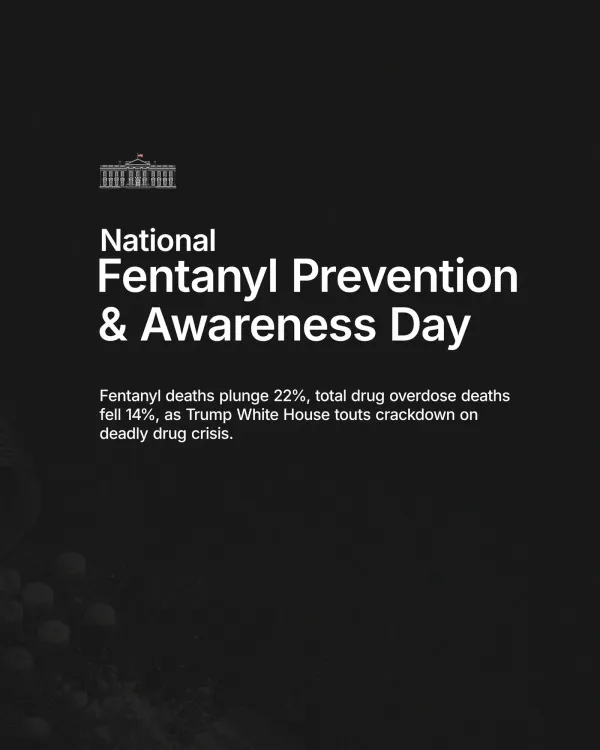
The White House marked National Fentanyl Prevention and Awareness Day on August 21, 2026, honouring overdose victims while crediting the Trump administration's border crackdown, anti-cartel campaign, and fentanyl trafficker arrests as key tools in the fight against the synthetic opioid epidemic.
Key Takeaways
The White House marked National Fentanyl Prevention and Awareness Day on August 21, 2026 , honouring overdose victims and pledging continued action.
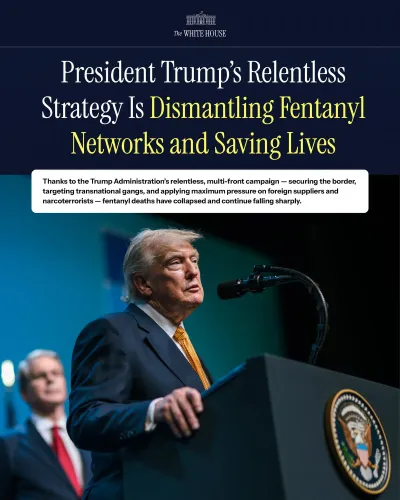
The post credits the Trump administration's border crackdown, campaign against drug cartels, and arrests of convicted fentanyl traffickers as key achievements.
The Trump administration first declared the opioid crisis a nationwide public health emergency in October 2017 , establishing border enforcement as the centrepiece of its fentanyl strategy.
The Sinaloa Cartel and Jalisco New Generation Cartel dominate fentanyl production and smuggling across the US-Mexico southwest border.
Updated CDC overdose data and potential new executive actions on precursor chemical controls are the next policy milestones to watch.
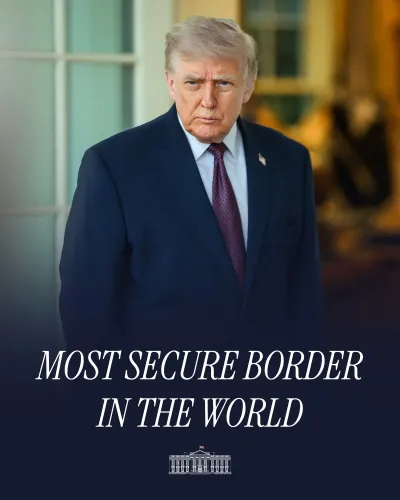
On National Fentanyl Prevention and Awareness Day, Friday, August 21, 2026, The White House issued a solemn pledge — to remember those already lost to the fentanyl crisis and to fight for the lives that can still be saved. The post tied that promise directly to the Trump administration's border enforcement push, cartel operations, and arrests of convicted fentanyl traffickers.
A crisis measured in lives, not just policy lines
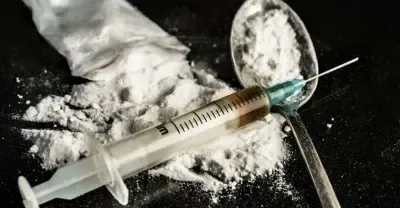
Fentanyl — a synthetic opioid estimated to be roughly 100 times more potent than morphine — has been the dominant driver of overdose deaths in the United States since the mid-2010s. Mexican criminal organisations, principally the Sinaloa Cartel and the Jalisco New Generation Cartel, control the bulk of fentanyl production and its smuggling routes across the southwest border. The drug's lethality at microscopic doses made it a public-health emergency long before it became a political flashpoint.
The Trump administration first declared the opioid crisis a nationwide public health emergency in October 2017, framing it as inseparable from border security. That supply-side logic — cut off the cartels, cut off the deaths — has remained the spine of Republican-led fentanyl strategy ever since.
Border enforcement as the White House's answer
The August 21 post credits three specific levers: a border crackdown, a campaign against drug cartels, and the arrests of convicted fentanyl traffickers. The White House's post trails off mid-sentence — 'fentanyl-related' — with a link, suggesting a data point or report was attached. What the framing makes clear is that the administration is presenting interdiction, not treatment expansion, as the headline achievement on this awareness day.
For the families of overdose victims — the most direct stakeholders in any fentanyl policy — National Fentanyl Prevention and Awareness Day is a moment of grief as much as advocacy. Law enforcement agencies, meanwhile, watch cartel adaptation closely: as border pressure mounts, trafficking networks have historically shifted routes and precursor sourcing strategies.
What the next data release will tell
The real test of any border-led fentanyl strategy is the overdose numbers. Updated CDC data on synthetic opioid deaths — expected in coming months — will either validate the administration's supply-side claims or complicate them. New executive actions or congressional funding tied to precursor chemical controls and cartel interdiction are also being watched by public-health advocates who argue demand-side treatment must run in parallel.
One awareness day will not resolve that debate. But the White House's choice to anchor its message in enforcement rather than treatment signals where the political weight of this administration's fentanyl legacy is being placed.
Point of View
Cartel campaigns, trafficker arrests — reflects a consistent Republican strategic choice to treat the opioid crisis primarily as a supply-side and border-security problem. This approach, rooted in the Trump administration's 2017 public health emergency declaration, sidelines demand-side interventions like treatment funding and harm reduction, a tension that has defined US fentanyl policy for nearly a decade. For an Indian audience, the post underscores how the US-Mexico border and Mexican cartel networks remain the central axis of American drug policy, with bilateral pressure on precursor chemical flows from China also a recurring diplomatic thread. Whether enforcement metrics translate into falling overdose numbers — the only statistic that ultimately matters — remains the open question heading into the next CDC data release.
NationPress
22 Aug 2026
Frequently Asked Questions
What is National Fentanyl Prevention and Awareness Day?
National Fentanyl Prevention and Awareness Day is observed annually in the United States to honour lives lost to fentanyl overdoses and to promote public education about the dangers of the synthetic opioid. It is marked by government statements, advocacy events, and calls for stronger prevention measures.
What is fentanyl and why is it so dangerous?
Fentanyl is a synthetic opioid roughly 100 times more potent than morphine . A dose as small as two milligrams can be lethal, making it the leading driver of overdose deaths in the United States since the mid-2010s. Most illicit fentanyl is produced by Mexican cartels using precursor chemicals and smuggled across the southwest border.
What has the Trump administration done about fentanyl?
The Trump administration has pursued a supply-side strategy centred on border enforcement, targeting Mexican drug cartels such as the Sinaloa and Jalisco New Generation Cartels, and arresting convicted fentanyl traffickers. The administration first declared the opioid crisis a public health emergency in October 2017 .
Which cartels are responsible for fentanyl smuggling into the US?
The Sinaloa Cartel and the Jalisco New Generation Cartel (CJNG) are the dominant organisations producing and smuggling fentanyl into the United States . They manufacture the drug using precursor chemicals largely sourced from China and move it across the southwest border.
How does the US fentanyl crisis affect India?
While India's domestic fentanyl overdose burden differs from the US, the crisis has diplomatic relevance: India is a significant producer of pharmaceutical-grade opioids and precursor chemicals, placing it within the global supply-chain conversation around synthetic drug control. US pressure on precursor flows also shapes international regulatory frameworks that affect Indian pharmaceutical exports.