India-China must unite on synthetic drug threat, says ex-White House drug chief

Synopsis
A former White House drug policy chief is calling out the uncomfortable truth: the fentanyl crisis is no longer just America's problem. Rahul Gupta's call for India-China cooperation — two nations that together account for every third person on earth — reframes synthetic drug trafficking as a civilisational challenge, not a bilateral US-China dispute.
Key Takeaways
Former White House drug policy director Rahul Gupta called on India and China to jointly combat the global synthetic drug threat on 11 June .
Gupta said fentanyl precursor flows from China to Mexico have dropped significantly since 2023 , contributing to fewer US overdose deaths.
He warned that recent gains are 'beginning to flatten,' urging governments to intensify efforts.
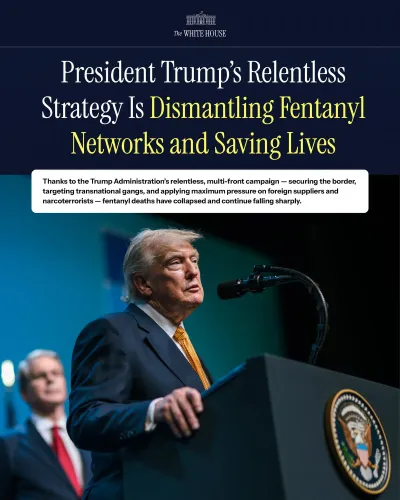
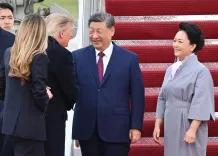
President Trump 's recent meeting with President Xi Jinping shows fentanyl remains a top US diplomatic priority, according to Gupta.
Gupta visited Punjab this year and met state health officials, calling them 'forward-leaning' on the drug crisis.
PM Modi has raised drug concerns at international forums; Gupta urged stronger Centre-state coordination in India.
Former White House drug policy director Rahul Gupta has called on India and China to jointly confront the escalating global synthetic drug crisis, warning that fentanyl trafficking networks could become 'the defining problem of the future for humanity.' Gupta, who served as Director of the White House Office of National Drug Control Policy under the Biden administration, made the remarks in an exclusive interview in Washington on 11 June.
The Case for India-China Cooperation
'No country is immune from the global synthetic threat,' Gupta said. 'Every third person walking the earth is either an Indian or a Chinese. So it's important for those two countries to work together on this particular problem, which may become the defining problem of the future for humanity.'
Gupta argued that the sheer demographic weight of the two nations — together accounting for roughly a third of the world's population — makes their coordinated response indispensable to any credible global counter-narcotics strategy.
What Has Driven Progress in the US
Gupta credited two key developments for the recent decline in overdose deaths in the United States. First, a measurable drop in the flow of fentanyl precursor chemicals from China to Mexico since approximately 2023. Second, a significant expansion of treatment, naloxone access, and telehealth-based overdose-prevention programmes.
'These things combined have been very significant in saving tens of thousands of American lives for the last two to three years,' he said. However, he cautioned that this momentum may be losing pace. 'The drop in numbers is beginning to flatten... the steep declines are no longer steep,' Gupta noted, urging authorities to 'double and triple down' on current efforts.
US-China Engagement and Continued Pressure
Gupta welcomed the diplomatic engagement between Washington and Beijing on fentanyl, pointing to President Donald Trump's recent meeting with Chinese President Xi Jinping as evidence that the issue remains a US foreign-policy priority. 'It is important to continue that pressure on the People's Republic of China because the relationship is important, but it's also important as we seek results, and the results are gonna be measured in American lives,' he said.
India's Role and the Punjab Challenge
On India specifically, Gupta said the country has shown willingness to act, while flagging that its large chemical industry carries inherent risks of exploitation by illicit drug supply networks. He cited a recent visit to Punjab — a state with a well-documented history of drug abuse — where he met with the state's health minister and director of health, describing them as 'very forward-leaning to address this issue.'
Gupta stressed that coordination between India's central government and state administrations would be critical, and noted that Prime Minister Narendra Modi has raised drug-related concerns at international forums. He said prevention, treatment, and enforcement efforts must advance together rather than in isolation.
The Broader Global Stakes
Synthetic opioids — primarily fentanyl — have been responsible for a disproportionate share of overdose deaths in the US in recent years, driving successive administrations to pursue interlocking strategies combining law enforcement, public health investment, and international diplomacy. Gupta's call for India-China collaboration signals a growing recognition that the crisis can no longer be managed as a bilateral US-China issue alone — it demands a multilateral response anchored in the world's two most populous nations.
Frequently Asked Questions
Why is Rahul Gupta calling for India-China cooperation on drugs?
Gupta argues that India and China together account for roughly one in three people on earth, making their joint action essential to any effective global response to synthetic drug trafficking. He warned that fentanyl networks pose a threat no single country can address alone.
What progress has the US made against fentanyl, and why is it at risk?
The US has seen a significant decline in overdose deaths since around 2023, driven by reduced fentanyl precursor flows from China to Mexico and expanded treatment and naloxone programmes. However, Gupta cautioned that the rate of decline is flattening, making continued and intensified effort critical.
What did Gupta say about India's response to the drug crisis?
Gupta said India has shown willingness to act and noted that its large chemical industry faces risks from illicit drug networks. He visited Punjab this year and described state health officials as forward-leaning, while calling for stronger coordination between India's central and state governments.
How does the Trump-Xi meeting relate to the fentanyl issue?
Gupta said the meeting demonstrates that fentanyl remains a US foreign-policy priority under President Trump. He stressed that continued diplomatic pressure on China is necessary, with results to be measured in American lives saved.
What is fentanyl and why is it considered a global threat?
Fentanyl is a synthetic opioid that is significantly more potent than heroin and has been responsible for a large share of overdose deaths in the United States in recent years. Its precursor chemicals are largely produced in China and processed in Mexico before being trafficked into the US, making international cooperation central to any solution.