CM Fadnavis Stays in Drought Village, Announces Relief for Farmers
Synopsis
Chief Minister Devendra Fadnavis spent Diwali in drought-hit Lohri Savanga, Nagpur, walking farm bunds, announcing ₹5,000 immediate crop relief, ₹50,000 grants for 18 lakh regular-repaying farmers, the Khori irrigation project, and a 43-year-pending percolation tank — pledging no farmer will be left behind.
Key Takeaways
CM Devendra Fadnavis stayed overnight at farmer Rambhau Balpande's home in Lohri Savanga, Nagpur , celebrating Diwali with drought-affected families.
An immediate relief of ₹5,000 per farmer for crop losses has been released; remaining compensation will follow into bank accounts.
18 lakh farmers who repaid loans regularly will each receive a ₹50,000 ex-gratia grant after the loan waiver amount is credited.
A ₹243.35 lakh storage tank sanctioned for Lohri Savanga; 10 farmers approved for irrigation wells; the long-delayed Khori project and a 43-year-old Pazhar talav cleared for execution.
Borewell ban relaxed until 15 December 2026 for agricultural use with permission only; solar and wire fencing schemes to expand for forest-adjacent farms.
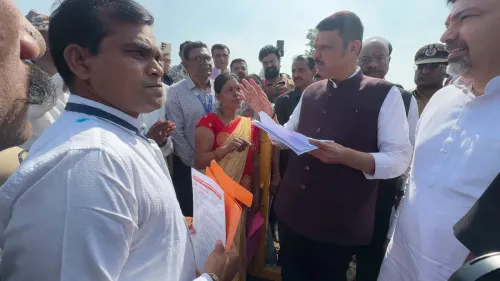
Women sarpanchs' extortion complaints addressed on the spot; CM Relief Fund help-desks to be extended to the taluka level.
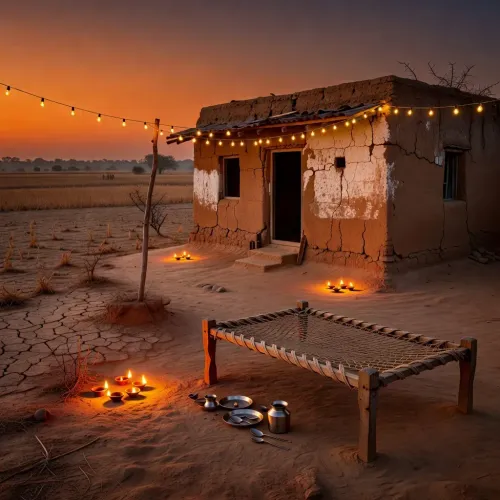
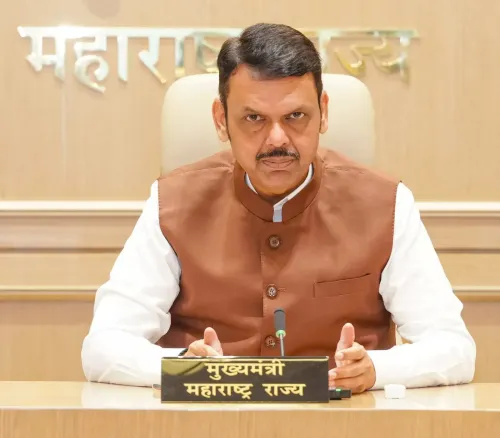
When the Chief Minister of Maharashtra spends a night on a farmer's cot in a drought-hit Nagpur village — eating meals with the family, walking the cracked fields at dawn — the signal is deliberate and unmistakable. Chief Minister Devendra Fadnavis travelled to Lohri Savanga village in Nagpur district to stay overnight with farmer Rambhau Balpande's family, celebrate Diwali with drought-affected farmers, and emerge the next morning with a bundle of concrete decisions on relief, irrigation, and water conservation.
A Night in the Village, a Morning on the Bunds
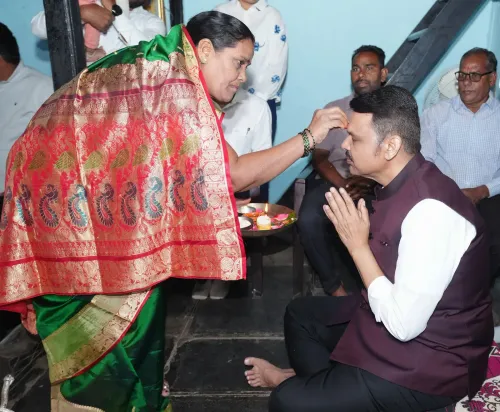
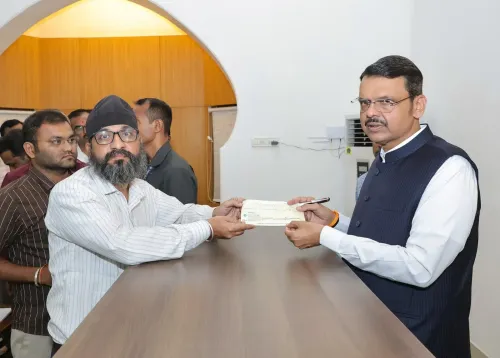
Villagers welcomed Fadnavis with traditional honours on his arrival at Lohri Savanga. He dined and stayed at Rambhau Balpande's home, spending the evening listening to residents' grievances. The next morning, before moving on, he had breakfast with the farming family — a deliberately unhurried gesture of solidarity in the middle of a crisis.
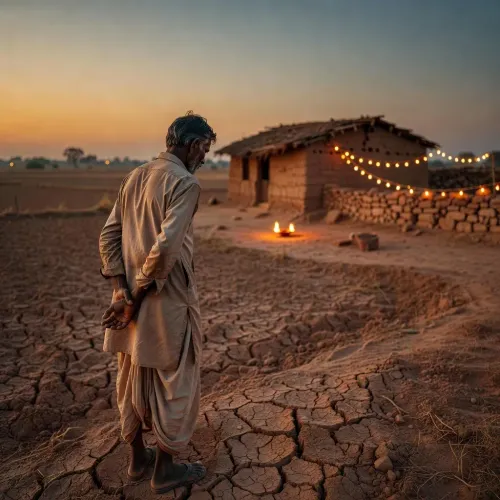
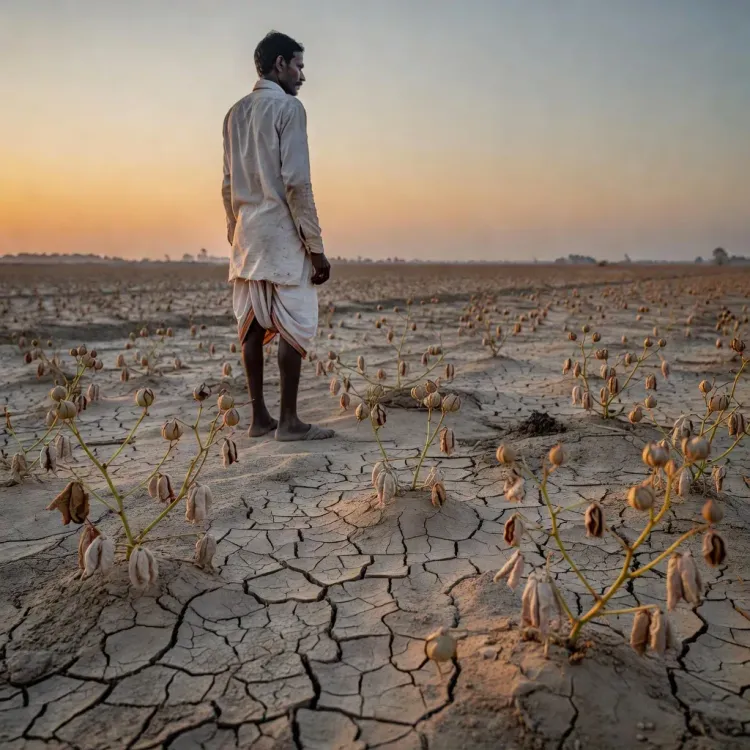
On 8 November, the CM walked onto the actual farm bunds at Sonegaon Rithi in Narkhed taluka and at Kohli in Kalmeshwar taluka. At Sonegaon Rithi he examined farmer Dilip Sarode's cotton crop — stunted by lack of rain, bolls refusing to open. At Kohli he assessed farmer Baburao Kale's cotton and tur fields. The imagery of a sitting Chief Minister standing on a parched farm bund, taking notes, is precisely the kind of political moment his office wanted documented.
₹5,000 Immediate Relief — and 18 Lakh Farmers in Line for ₹50,000 Each
Fadnavis confirmed that an immediate relief amount of ₹5,000 per farmer for crop losses has already been released, with the remaining compensation to follow directly into bank accounts. 'No farmer will be left out of assistance,' he stated.
He also announced that 18 lakh farmers who have made regular loan repayments will receive a ₹50,000 ex-gratia grant each, credited after the loan waiver amount is deposited in their accounts. That is a substantial fiscal commitment covering more than a million and a half farm households across the state.
Khori Project Cleared, 43-Year Pazhar Talav Finally Moving
On irrigation — the structural wound beneath every Maharashtra drought — Fadnavis announced that the Khori project has been approved and work will begin shortly. More striking was his commitment on a Pazhar talav (percolation tank) whose foundation stone was laid 43 years ago and has never been completed. It will be resolved soon, he said.
10 farmers at Lohri Savanga have been sanctioned irrigation wells under the irrigation well scheme. A storage tank costing ₹243.35 lakh will be built in the village — expected to benefit irrigation and also raise the groundwater table in surrounding wells, improving drinking water availability.
Jalyukt Shivar, Atal Bhujal, and Jal Jeevan Get a Prioritisation Push
Fadnavis told local self-government representatives that the Gaalmukta Dharan (desilting of reservoirs) and Jalyukt Shivar Abhiyan works will receive top priority, with silt from reservoirs to be spread on farmland — a double benefit for water storage and soil fertility. Works under the Atal Bhujal Yojana will be completed on priority, with repair funds released for damaged water-conservation structures.
Under the Jal Jeevan Mission, villages where more than 75 percent of work is complete will receive funds immediately to finish the remaining work; the rest will be completed in phases.
Borewell Curbs Eased Until December 15, Solar Fencing to Expand
In a targeted temporary measure, Fadnavis announced that the ban on new borewells will be relaxed until 15 December 2026 — strictly for agricultural use only, and only with prior permission, not as a blanket clearance. The move is intended to keep trees alive and crops irrigated through the worst of the dry spell.
To tackle crop losses from wildlife, the solar fencing scheme will be implemented more aggressively, with wire-fencing schemes expanded to prioritise farms adjacent to forest land.
Women Sarpanchs Report Extortion; CM Orders Police Action
The two-day visit also surfaced a sharp local grievance: several women sarpanchs in the taluka complained that individuals posing as journalists were demanding money and engaging in blackmail. Fadnavis responded without ambiguity — those making such demands would be jailed, he said, and directed the police department to act immediately.
Separately, he promised to personally take responsibility for the full medical treatment of an engineering student who lost the use of a leg in an accident — a moment that cut through the official programme and went human.
Fadnavis also announced that Chief Minister Relief Fund help-desks, currently operating at the district level, will be extended to the taluka level as well. Revenue Minister Chandrashekhar Bawankule, and MLAs Dr. Rajiv Potdar, Charansingh Thakur, and Dr. Ashish Deshmukh were present across the two-day tour.
Maharashtra's drought cycles have a long memory, and so do its farmers. Whether the Khori project actually breaks ground, whether the 43-year-old percolation tank finally fills, and whether 18 lakh bank accounts see ₹50,000 each — those numbers will determine whether this Diwali in Lohri Savanga was a turning point or just a very well-photographed visit.
Point of View
But the policy content is substantive enough to stand on its own. Unlocking the 43-year-old Pazhar talav and clearing the Khori irrigation project signals an attempt to address the structural water deficit that emergency compensation alone cannot fix. The ₹50,000 ex-gratia for 18 lakh regular loan-repayers is both a fiscal signal and a political one — rewarding compliance behaviour to build long-term credit culture among farmers. The deadline of 15 December on the borewell relaxation suggests the administration is calibrating between immediate crisis relief and groundwater sustainability, a tension that will intensify if rainfall remains deficient into the next kharif season.
NationPress
8 Nov 2026
Frequently Asked Questions
How much immediate financial help will drought-affected farmers in Maharashtra get?
Farmers who have suffered crop losses will receive an immediate payment of ₹5,000, with the remaining compensation amount to be credited directly into their bank accounts. CM Fadnavis stated that no farmer will be left out of the assistance.
Who are the 18 lakh farmers eligible for the ₹50,000 grant?
Farmers who have made regular loan repayments are eligible for a ₹50,000 ex-gratia grant each. The amount will be credited to their accounts after the loan waiver amount has been deposited, covering approximately 18 lakh farmers across Maharashtra.
What is the Khori project announced by CM Fadnavis?
The Khori project is an irrigation scheme in the Nagpur region that has been approved by the state government. CM Fadnavis announced during his Lohri Savanga visit that the project has received formal clearance and work will begin shortly.
Why has the borewell ban been relaxed and until when?
The ban on new borewells has been relaxed until 15 December 2026 specifically for agricultural use, to help keep crops and trees alive during the drought. The relaxation requires prior permission and is not a blanket clearance — it does not apply to non-agricultural purposes.
What action did CM Fadnavis take on women sarpanchs' complaints of extortion?
Women sarpanchs in the Narkhed-Kalmeshwar taluka area complained that individuals posing as journalists were demanding money and blackmailing them. CM Fadnavis directed the police department to take immediate action and said those involved would be imprisoned.