CM Mohan Yadav Honours Revenue Officials Under MP Registry Scheme
Synopsis
On Diwali 2026, CM Dr. Mohan Yadav inaugurated a self-funded marriage garden built by Dhendia Gram Panchayat in Ujjain and felicitated top-performing tehsildars and patwaris under the Mukhya Mantri Registry Yojana, spotlighting two pillars of MP's decentralised governance push.
Key Takeaways
Dhendia Gram Panchayat in Ujjain district constructed a marriage garden and rooms using its own financial resources, without external grants.
The inauguration took place on 8 November 2026 , coinciding with the Diwali festival.
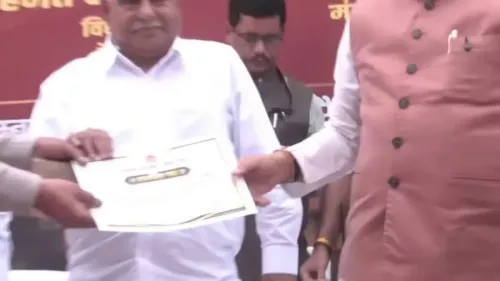
Tehsildars and patwaris who performed outstandingly under the Mukhya Mantri Registry Yojana were awarded certificates at the same event.
The Mukhya Mantri Registry Yojana aims to accelerate large-scale property and land registrations across Madhya Pradesh.
Mohan Yadav framed Dhendia's project as an 'exemplary model' for other gram panchayats in the state.
The dual announcements reflect MP's broader policy of decentralised governance and revenue-side administrative reform.
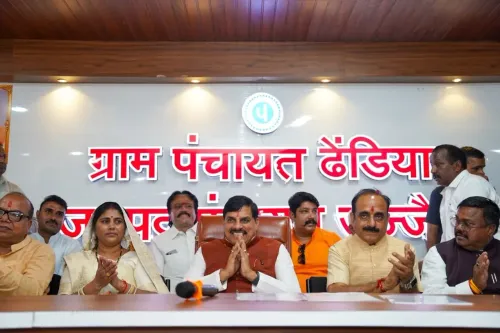
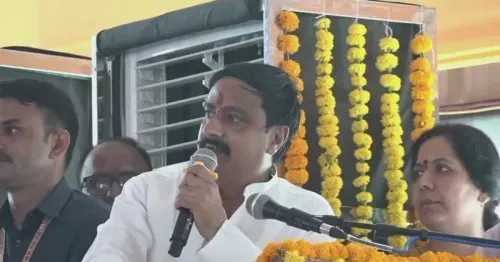
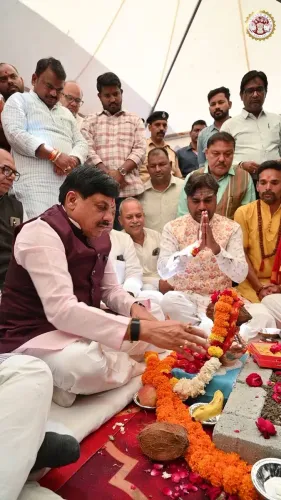
A village in Ujjain district just showed the rest of Madhya Pradesh how local governance is supposed to work — and Chief Minister Dr. Mohan Yadav made sure the state was watching. On Sunday, 8 November 2026, coinciding with the auspicious occasion of Diwali, the Chief Minister's Office of Madhya Pradesh announced the inauguration of a self-funded marriage garden and community rooms built by Dhendia Gram Panchayat in Ujjain, alongside a felicitation ceremony honouring top-performing tehsildars and patwaris under the state's flagship Mukhya Mantri Registry Yojana.
Dhendia Panchayat's self-built marriage garden sets a template
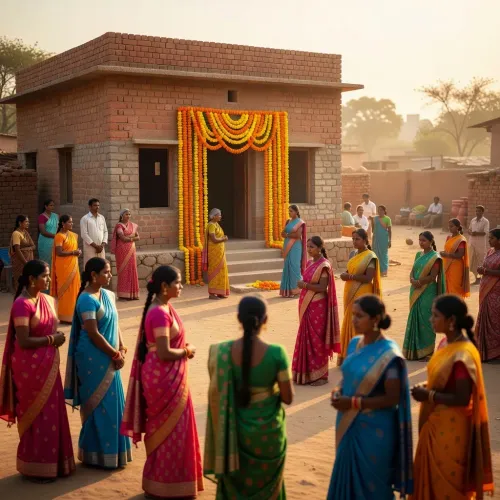
Dhendia Gram Panchayat, a village-level local body in Ujjain district, financed and constructed a marriage garden and adjoining rooms entirely from its own financial resources — without leaning on state grants or central funds. CM Yadav described the initiative as 'vikās kī ek anukaraṇīya misāl' (an exemplary model of development), signalling that the state views this as a replicable blueprint for other panchayats.
The inauguration was timed to Diwali, lending the event symbolic weight as a celebration of community self-reliance. Ujjain district, already a site of deep religious and administrative significance in western Madhya Pradesh, now has a grassroots infrastructure story to add to its profile.
Registry campaign rewards its best performers
The same event served as a platform to recognise frontline revenue officials who drove results under the Mukhya Mantri Registry Yojana — the state government's campaign to accelerate large-scale property and land registrations. Tehsildars and patwaris who delivered outstanding work under the scheme were presented certificates of appreciation and publicly honoured.
The registry scheme sits at the intersection of two state priorities: improving revenue collection and cutting procedural delays that have historically slowed property transactions across Madhya Pradesh. By rewarding the revenue officials who operate at the district and tehsil level, the government is sending a clear administrative signal — performance will be seen and acknowledged.
Decentralised governance as a deliberate state policy
The twin announcements are not coincidental. Madhya Pradesh under CM Dr. Mohan Yadav, who took office in December 2023, has pushed gram panchayats to finance small infrastructure projects independently as part of a broader decentralised governance philosophy. The idea: reduce dependency on top-down transfers, build local accountability, and generate visible community assets.
The registry yojana runs parallel to this — streamlining land records not just for revenue efficiency but to give property owners cleaner, faster titles. Together, the two threads point toward a state increasingly betting on administrative granularity: get the tehsildar and the sarpanch right, and the larger development picture follows.
The question now is whether Dhendia's marriage garden becomes a headline anomaly or the first entry in a much longer list of self-funded panchayat projects across the state's 52 districts.
Point of View
Amplifying both. For CM Yadav, publicly rewarding frontline revenue officials under the registry yojana is a low-cost, high-visibility way to sustain bureaucratic momentum on a scheme that directly feeds state coffers. The Dhendia model, if it scales, could also reduce panchayats' dependence on delayed state grants, a persistent friction point in rural MP. Taken together, the optics reinforce a governance brand centred on administrative granularity rather than headline mega-projects.
NationPress
8 Nov 2026
Frequently Asked Questions
What is the Mukhya Mantri Registry Yojana in Madhya Pradesh?
The Mukhya Mantri Registry Yojana is a Madhya Pradesh government scheme designed to accelerate property and land registrations on a large scale, involving tehsildars and patwaris at the district and tehsil level to reduce procedural delays and boost state revenue.
Where is Dhendia Gram Panchayat located?
Dhendia Gram Panchayat is a village-level local body located in Ujjain district in western Madhya Pradesh.
What did Dhendia Gram Panchayat build and how was it funded?
Dhendia Gram Panchayat built a marriage garden and adjoining community rooms using its own financial resources, without relying on state or central government grants.
Who is the Chief Minister of Madhya Pradesh in 2026?
Dr. Mohan Yadav is the Chief Minister of Madhya Pradesh, having assumed office in December 2023 .
Why were tehsildars and patwaris felicitated at the Ujjain event?
Tehsildars and patwaris who delivered outstanding work under the Mukhya Mantri Registry Yojana were awarded certificates of appreciation to recognise their performance and encourage continued effort under the land registration campaign.