Nadda Hails PM Modi's Diwali with Bastar Security Forces

Synopsis
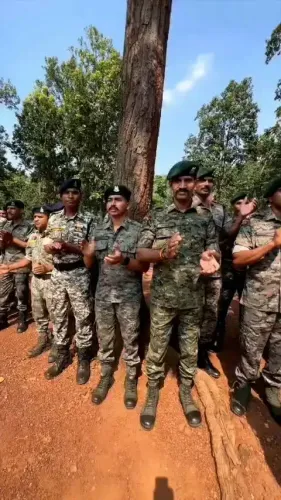
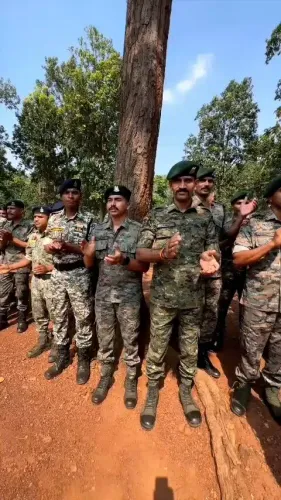
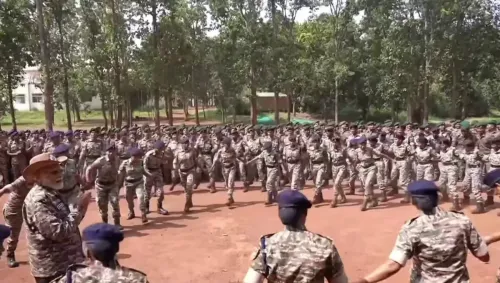
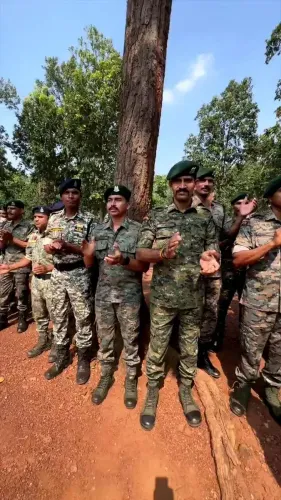
Union Health Minister J. P. Nadda on November 8, 2026 saluted PM Modi's Diwali celebration with security forces in Bastar, Chhattisgarh, calling it historic as the district advances on a path of peace after years of Naxalite insurgency.
Key Takeaways
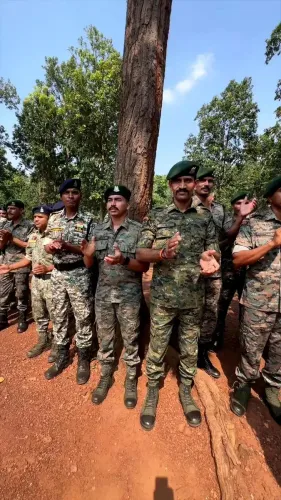
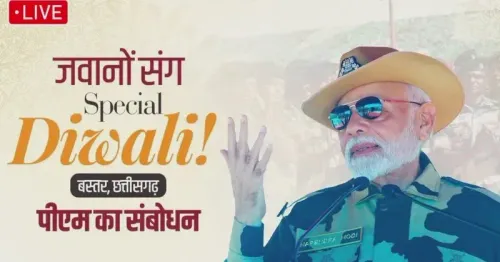
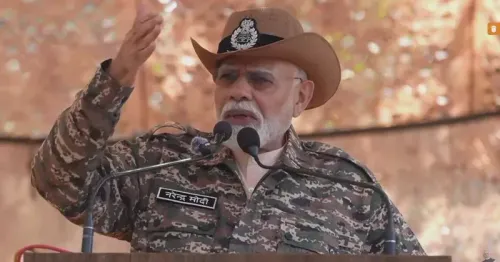
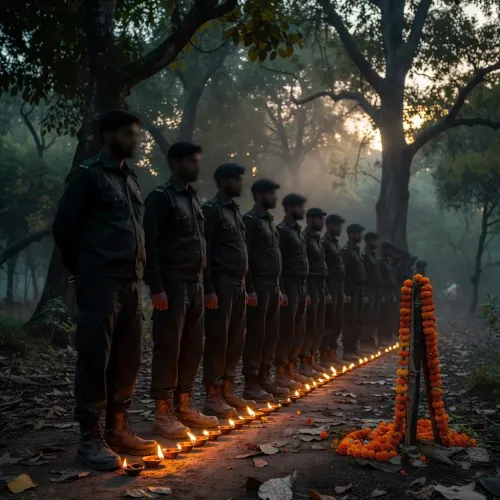
PM Narendra Modi celebrated Diwali 2026 with security forces deployed in Bastar, Chhattisgarh , continuing his annual tradition of spending the festival with deployed jawans.
Union Health Minister J.
Nadda posted a tribute on November 8, 2026 , describing the occasion as 'historic' for Bastar.
Nadda called Modi's practice of celebrating Diwali with forces a symbol of 'respect, affection, and gratitude' toward security personnel.
Bastar was historically one of the worst-affected districts in India's 'Red Corridor' of Left-Wing Extremism; the government narrative now frames it as moving toward peace and development.
The central government has pursued a dual approach of security operations and welfare schemes in LWE-affected districts since 2014 .
The post carried hashtags #NaxalFreeIndia and #HappyDiwali , directly linking festival messaging to a security-policy assertion.
While millions of families lit their diyas at home, Prime Minister Narendra Modi spent Diwali 2026 with security personnel deployed in Bastar, Chhattisgarh — a district that for decades bore the heaviest brunt of Naxalite violence. Union Health Minister J. P. Nadda marked the occasion with a tribute to both the Prime Minister and the forces, calling this Diwali 'historic' for Bastar.
Posting on X on November 8, 2026, Nadda wrote in Hindi: 'Jab poora desh apne parivaar ke saath Deepawali mana raha hai, tab hamare veer jawan desh ki raksha mein poori nishtha aur tatparta se tainat rehte hain' — 'When the entire nation celebrates Diwali with family, our brave soldiers remain deployed to guard the country with complete dedication and alertness.' He framed Modi's annual Diwali-with-forces tradition as a symbol of respect, affection, and gratitude.
Modi's Annual Diwali Tradition with Deployed Troops
Prime Minister Modi has made a consistent practice of spending Diwali with security forces at forward or conflict-affected locations across multiple years — a gesture that carries significant symbolic weight for personnel stationed far from home during the festival season. The annual tradition positions the Prime Minister alongside jawans rather than at a formal state function, and it draws attention each year to the conditions and morale of forces in difficult postings.
This year's choice of Bastar is deliberate and pointed. The district, tucked in southern Chhattisgarh, was once one of the most dangerous in India's so-called 'Red Corridor' — a swath of central and eastern states where Left-Wing Extremism, commonly known as Naxalism, dominated governance and daily life for decades. Security force casualties and civilian displacement were chronic features of the region.
Why Bastar — and Why This Diwali Feels Different
Nadda's post describes Bastar as now moving forward on a 'path of peace, security, and development' — freed, he says, from the fear of Naxalism through the 'indomitable courage and sacrifice' of the security forces. The claim reflects a broader government narrative that sustained counter-insurgency operations combined with infrastructure investment have progressively shrunk the geography of Naxal influence across the central Indian heartland.
Since 2014, the central government has pursued a dual-track strategy: intensified security operations alongside welfare and connectivity schemes in Left-Wing Extremism-affected districts. Official counts of 'highly affected' districts have been reported as declining over successive years. Bastar — once a byword for Maoist ambushes and administrative paralysis — has been repeatedly cited as a district where this dual approach has shown measurable results.
The hashtags #NaxalFreeIndia and #HappyDiwali that close Nadda's post are not incidental. They bind a festival greeting directly to a security-policy claim — presenting Bastar's Diwali not just as a celebration but as a declaration of changed ground realities.
A Salute That Carries Political Weight
Nadda's tribute arrives in his dual capacity as Union Health Minister and BJP national president, lending the post both governmental heft and party messaging. For the BJP, the optics of the Prime Minister celebrating Diwali in Bastar encapsulate a core governance narrative: that the state can reach — and secure — areas once abandoned to insurgency. The personal dimension matters too. Jawans stationed in regions like Bastar miss festivals with family as a matter of routine; a Prime Ministerial presence, however brief, is received as an acknowledgement of that sacrifice that no official letter can replicate.
When a nation celebrates with fireworks and sweets, the soldiers holding the perimeter rarely make the headline. This Diwali, at least, Bastar did.
Point of View
Transforming a festival tribute into a political-strategic statement about the retreat of Left-Wing Extremism. For the BJP, holding Diwali in Bastar in 2026 is meant to be read as evidence, not aspiration. The dual framing of gratitude to jawans and pride in a 'Naxal-free' trajectory signals that internal security will remain a central pillar of the party's governance narrative heading into future electoral cycles.
NationPress
8 Nov 2026
Frequently Asked Questions
Where did PM Modi celebrate Diwali 2026?
PM Modi celebrated Diwali 2026 with security forces in Bastar, Chhattisgarh, as reported by Union Health Minister J. P. Nadda in a post on November 8, 2026.
Why does PM Modi celebrate Diwali with soldiers every year?
PM Narendra Modi has made an annual tradition of spending Diwali with security forces deployed at forward or conflict-affected locations, as a gesture of respect and solidarity with jawans who cannot celebrate the festival with their families.
Is Bastar free from Naxalism?
The Indian government has repeatedly stated that Bastar is progressing toward peace after sustained counter-insurgency operations and development investment, and J. P. Nadda's post describes it as moving away from Naxal influence — but independent verification of the precise current extent of Naxal activity in the region is not available.
What is India's strategy against Naxalism in Chhattisgarh?
Since 2014, the central government has followed a dual-track approach combining intensified security operations with infrastructure and welfare schemes in Left-Wing Extremism-affected districts, aiming to progressively reduce the number of highly affected areas.
What did J. P. Nadda say about PM Modi and Diwali?
Nadda said Modi's annual tradition of celebrating Diwali with security forces is a symbol of respect, affection, and gratitude toward them, and called the 2026 Bastar celebration 'historic' given the region's journey away from Naxalite violence.