Akhilesh marks demonetisation decade with sharp poetic jab at BJP
Synopsis
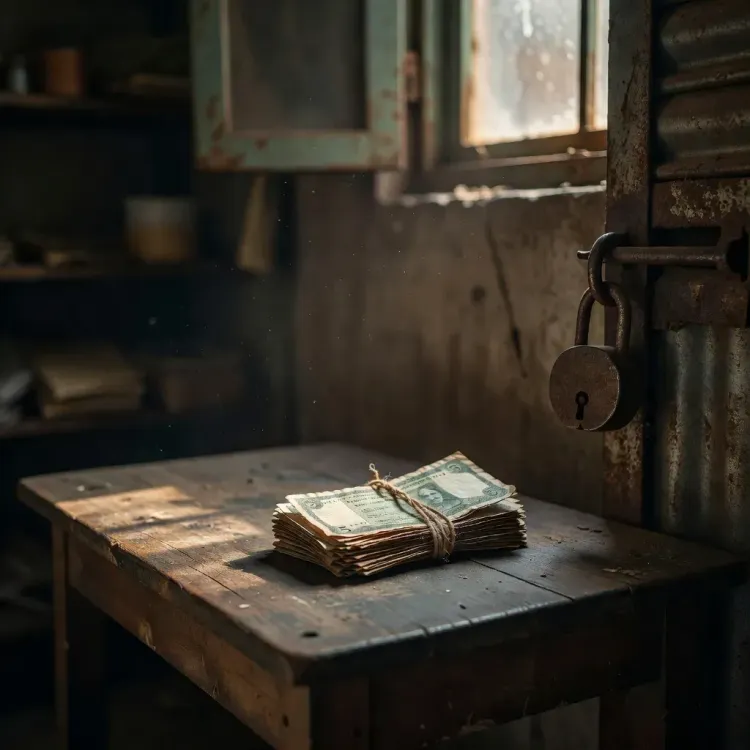
On the tenth anniversary of India's 2016 demonetisation, Samajwadi Party president Akhilesh Yadav fired a poetic broadside at the BJP, saying the policy turned the dreams of ordinary citizens to dust — keeping a decade-old political battle firmly alive.
Key Takeaways
8 November 2026 marks exactly ten years since Prime Minister Modi announced demonetisation of Rs 500 and Rs 1,000 notes.
Akhilesh Yadav marked the anniversary with a Hindi poem on X, calling the policy's impact the destruction of ordinary Indians' dreams.
The verse uses a numerical parallel — dashak (decade) and shatak (century) — for pointed rhetorical effect.
Demonetisation eliminated roughly 86 per cent of currency in circulation overnight, hitting informal-sector workers and small businesses hardest.
The Samajwadi Party has consistently used demonetisation as a political critique of the BJP since November 2016 , particularly in the context of Uttar Pradesh .
Ten years to the day that Prime Minister Narendra Modi announced the overnight withdrawal of Rs 500 and Rs 1,000 notes on 8 November 2016, Samajwadi Party president Akhilesh Yadav marked the anniversary not with a press conference or a data sheet — but with a poem that cuts.
In a three-line verse posted on X on 8 November 2026, Yadav wrote: 'Idhar Bhajpai notbandi ka dashak hua poora, udhar sangi-saathiyon ka bhi shatak hua poora, yoon hi na hua deshvasiyon ke sapnon ka choora' — which translates as: 'Here, the BJP's demonetisation completes a decade; there, the companions too complete their century; it was not for nothing that the dreams of the country's people were turned to dust.'
A decade since the midnight announcement
Demonetisation remains one of modern India's most debated economic interventions. When Modi addressed the nation on the night of 8 November 2016, he gave citizens less than four hours' notice before high-denomination notes — accounting for roughly 86 per cent of currency in circulation — ceased to be legal tender. The stated aims were to drain black money, curb counterfeit currency, and push the economy toward digital payments.
The immediate aftermath was painful for vast sections of the population: long queues outside banks and ATMs, disrupted daily wages for informal-sector workers, and a sharp squeeze on small businesses that ran almost entirely on cash. Opposition parties, including the Samajwadi Party, were vocal critics from day one — and Yadav, then Chief Minister of Uttar Pradesh, was among the loudest voices calling the move an assault on ordinary citizens.
The wordplay behind 'dashak' and 'shatak'
Yadav's verse is built on a deliberate numerical parallel: dashak (a decade, ten) and shatak (a century, hundred) sit side by side in consecutive lines, letting the numbers do the rhetorical heavy lifting. The first line anchors the poem squarely in the anniversary. The second line's reference to 'sangi-saathiyon ka shatak' — 'companions completing their century' — is an allusive swipe whose precise target the research flags as unverified; NationPress does not assert the specific referent.
The third line delivers the punch: the destruction of ordinary Indians' dreams was no accident, the verse implies — it was the predictable outcome of a policy choice. It is a structure familiar from Urdu-inflected political poetry: build a symmetry, then detonate it.
SP's decade-long critique of a contested policy
The Samajwadi Party's opposition to demonetisation has never really gone off the boil. For the SP, the policy is a perennial reference point — a moment that disrupted the rural and semi-urban economies of Uttar Pradesh most acutely, hitting daily-wage earners, small traders, and the unorganised workforce. Akhilesh Yadav has consistently framed demonetisation as emblematic of a governance style that prioritises optics over outcomes.
The tenth anniversary lands at a moment when economic debates — employment, inflation, rural distress — remain live political battlegrounds ahead of future electoral cycles. A single couplet will not resolve those debates, but it signals that the SP intends to keep the anniversary on the agenda.
Demonetisation turns ten. The argument about what it cost — and who paid — is nowhere close to settled.
Point of View
Keeping the memory of November 2016 vivid is essential to its core narrative that BJP governance has repeatedly hurt the rural poor and the informal economy of Uttar Pradesh. The 'dashak versus shatak' framing also allows Yadav to gesture at a broader set of BJP-era grievances without naming them directly — a rhetorical deniability that maximises reach. With economic anxieties still running high, the anniversary is a gift to the opposition that the SP clearly has no intention of leaving unwrapped.
NationPress
8 Nov 2026
Frequently Asked Questions
What is the tenth anniversary of demonetisation?
8 November 2026 marks ten years since Prime Minister Narendra Modi announced on 8 November 2016 that Rs 500 and Rs 1,000 currency notes would immediately cease to be legal tender — a policy known as demonetisation or notebandi .
What did Akhilesh Yadav say about demonetisation on its tenth anniversary?
Akhilesh Yadav posted a Hindi poem on X stating that as the BJP's demonetisation completes a decade, the dreams of the country's people have been turned to dust — framing the policy as directly responsible for public suffering.
Why did Akhilesh Yadav oppose demonetisation?
As Chief Minister of Uttar Pradesh at the time of the 2016 announcement, Akhilesh Yadav argued that demonetisation devastated daily-wage earners, small traders, and the informal economy, disproportionately hurting the rural and semi-urban population of states like UP.
What was the impact of India's 2016 demonetisation?
Demonetisation withdrew roughly 86 per cent of currency in circulation overnight, causing immediate cash shortages, long bank queues, disruption to small businesses, and sharp pain for informal-sector workers who relied on cash transactions.
What does 'dashak' and 'shatak' mean in Akhilesh Yadav's poem?
Dashak means a decade (ten years) and shatak means a century (hundred) — Yadav used the numerical parallel to draw a pointed rhetorical connection between the anniversary of demonetisation and what he characterised as compounding hardships for ordinary citizens.