Akhilesh Yadav questions BJP over currency printing tender
Synopsis
Samajwadi Party president Akhilesh Yadav on 17 July 2026 accused the BJP-led central government of effectively privatising India's currency printing through a suspiciously small tender, alleging the process is a formality masking a pre-arranged deal, and calling the BJP a 'partner of profiteers' rather than a government.
Key Takeaways
Akhilesh Yadav posted on 17 July 2026 alleging the BJP government is moving to privatise currency printing through a tender he called 'miserly' and pre-fixed.
He argued that outsourcing sovereign monetary functions directly contradicts the government's own Atmanirbhar Bharat self-reliance doctrine.
Yadav alleged the formal tender process is a khanapoori (mere formality), with the real decision already made behind closed doors.
He accused the BJP of being a 'partner of profiteers' rather than a governing party, escalating the opposition's economic governance critique.
The controversy is expected to be raised as parliamentary questions during the ongoing monsoon session on RBI and security-printing contracts.
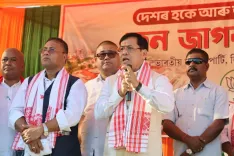
Samajwadi Party president Akhilesh Yadav on Friday, 17 July 2026, launched a sharp attack on the BJP-led central government, alleging that a tender floated for currency-related work signals the privatisation of India's sovereign monetary functions and reflects a pre-arranged deal favouring private profiteers.
Context
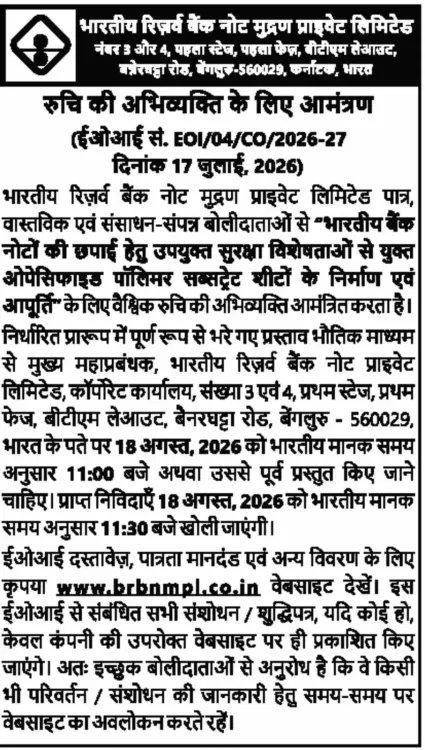
Yadav posted in Hindi, asking: 'भ्रष्ट भाजपा राज में अब नोटों का भी प्राइवेटाइजेशन हो जाएगा क्या?' ('Will currency notes also be privatised under the corrupt BJP regime?'). He alleged that the scale and sensitivity of the work was being matched with a deliberately small and 'miserly' tender — suggesting the formal process was merely a cover for a decision already made behind closed doors. 'It seems the deal has already been fixed; what is being shown is just a formality,' he wrote.
The post was accompanied by an image, which Yadav used to underscore his contention that the government's outsourcing model had sunk to an unprecedented low. He further questioned whether the government itself would eventually be outsourced, invoking the ruling party's own flagship self-reliance slogan against it.
Policy Backdrop
The Atmanirbhar Bharat Abhiyan, launched in May 2020, was positioned as a comprehensive drive to promote domestic production and reduce India's dependence on foreign entities across critical sectors — including manufacturing, defence, and monetary infrastructure. Critics have long argued that selective privatisation and outsourcing of sovereign functions contradict the scheme's stated goals.
Successive governments have issued tenders for security printing and currency-related tasks while maintaining oversight through the Reserve Bank of India (RBI). Opposition parties, including the Samajwadi Party, have repeatedly contended that such tendering processes favour well-connected private contractors and erode public control over core sovereign functions. Yadav's post sharpens this critique by directly tying the alleged tender to what he calls a 'commission-based model' of governance.
Yadav asked pointedly: 'जब देश की मुद्रा ही आत्मनिर्भर नहीं होगी तो अर्थव्यवस्था और देश आत्मनिर्भर कैसे होगा?' ('When the country's own currency is not self-reliant, how can the economy and the nation be self-reliant?'). The rhetorical question is a direct challenge to the government's Atmanirbhar branding.
Stakeholders and Impact
The debate touches directly on public sector workers employed in security printing and currency management, who could be affected if outsourcing norms are expanded. Common citizens are the broader stakeholder group, given that currency integrity is foundational to everyday economic transactions.
Yadav concluded his post with a blunt charge: 'भाजपा सरकार नहीं; मुनाफ़ाख़ोरों की भागीदार है' — 'The BJP is not a government; it is a partner of profiteers.' The framing is designed to consolidate opposition sentiment ahead of the ongoing parliamentary monsoon session, where such issues are likely to surface as questions on the floor of the House.
What's Next
The allegation is likely to prompt parliamentary questions on RBI tenders and security-printing contracts during the monsoon session. Opposition benches may press the Finance Ministry and the RBI for details on the tender's scope, value, and selection criteria.
Any government clarification on the nature and necessity of the outsourcing arrangement will be closely watched, as will any revision to existing norms governing the printing and management of Indian currency. The controversy also adds to a broader opposition narrative around the BJP's economic governance ahead of state elections in the political calendar.
Point of View
Framing any outsourcing of monetary infrastructure as ideological hypocrisy. By alleging a pre-fixed tender rather than merely opposing privatisation in principle, he shifts the attack from policy disagreement to corruption — a more potent charge with a wider voter base. The timing, during the monsoon parliamentary session, suggests a coordinated effort to force a floor debate and extract government disclosures on a sensitive sovereign function. This fits a broader Samajwadi Party pattern of using economic sovereignty arguments to consolidate anti-incumbency sentiment in Uttar Pradesh and nationally.
NationPress
15 Oct 2026
Frequently Asked Questions
What did Akhilesh Yadav say about currency privatisation?
Akhilesh Yadav alleged on 17 July 2026 that the BJP government was effectively privatising India's currency printing by floating a suspiciously small tender, which he claimed was a formality to cover a deal already fixed with private contractors.
Is India privatising currency printing?
No official government announcement of currency printing privatisation has been made. Akhilesh Yadav's post raises an allegation about a tender whose specific details have not been officially confirmed or detailed publicly as of the post date.
What is Atmanirbhar Bharat and why is Akhilesh Yadav invoking it?
Atmanirbhar Bharat Abhiyan is the BJP government's self-reliance initiative launched in May 2020 to promote domestic production. Yadav is using it to argue that outsourcing currency-related work to private parties contradicts the government's own stated goal of economic sovereignty.
What is the BJP's response to Akhilesh Yadav's currency tender allegation?
No official BJP response to this specific allegation has been reported as of the post date of 17 July 2026. The matter is expected to be raised in parliament during the monsoon session.
What happens to India's currency printing if it is outsourced?
Currency printing in India is a sovereign function overseen by the Reserve Bank of India. Any outsourcing of related tasks would require adherence to strict security and regulatory norms; critics argue it risks compromising national security and public control over monetary infrastructure.