Akhilesh Yadav attacks BJP over rising fuel prices
Synopsis
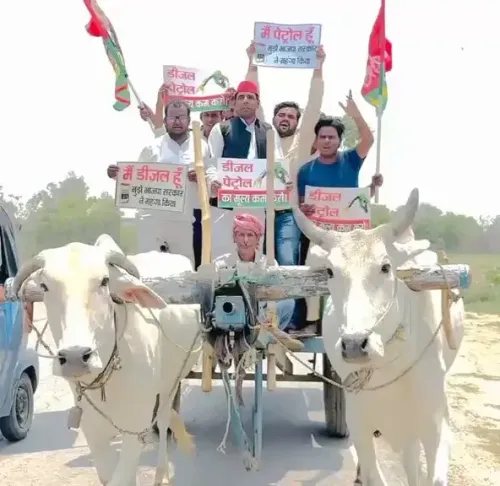
Samajwadi Party president Akhilesh Yadav on 25 May 2026 accused the BJP government of hiking fuel prices to recover election expenditure and alleged covert short-measuring of oil at pumps, calling it a 'bori mein chori' formula targeting ordinary consumers.
Key Takeaways
Akhilesh Yadav posted a sharp attack on the BJP-led central government on 25 May 2026 over rising fuel prices.
He alleged the BJP uses a 'bori mein chori' (theft-in-the-sack) method — reducing oil volume per litre rather than visibly raising the price.
Yadav claimed a direct link between fuel price increases and what he described as BJP's commission from higher prices.
He alleged that the BJP is recovering money spent during recent elections through fuel price hikes at the expense of ordinary consumers.
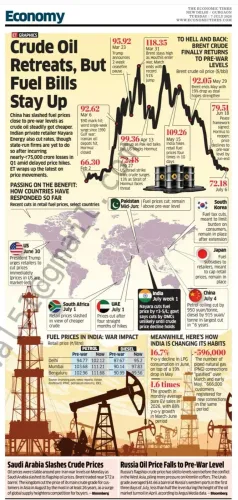
Fuel pricing in India combines global crude costs, central excise duty , and state VAT , making it a recurring opposition target since deregulation.
The specific claims of quantity reduction and direct election-spending recovery are unverified and represent the opposition leader's political assertions.
Samajwadi Party president Akhilesh Yadav on Monday, 25 May 2026, launched a sharp attack on the BJP-led central government over rising fuel prices, alleging that the ruling party was using price hikes to recover election expenditure and was resorting to what he called a 'bag-theft formula' — quietly reducing the quantity of oil per litre rather than raising the listed price.
Context
In the post, Yadav wrote: 'तेल के बेतहाशा बढ़ते दामों के बीच भाजपा सरकार के पास बस एक ही तरीक़ा बचा है' ('Amid the runaway rise in oil prices, the BJP government is left with only one method') — namely, reducing the volume of oil dispensed per litre instead of openly raising the price. He described this as a 'bori mein chori' (theft inside the sack) formula, a colloquial phrase implying covert short-changing of consumers.
He further alleged a 'direct link' between fuel prices and what he termed BJP's commission, arguing that every price increase directly fattens the ruling party's coffers. He also claimed that the BJP was using fuel price hikes to recover money spent during recent elections, stating that the party's sole principle was to ensure its own treasury never ran dry, 'even if it means robbing the public's pocket.'
Policy Backdrop
Fuel pricing in India is determined by a combination of global crude oil costs, central excise duties, and state-level VAT, making retail prices a perennial flashpoint between the ruling dispensation and the opposition. The central government has adjusted excise duties on petrol and diesel at multiple points since 2014, drawing sustained criticism from opposition parties who argue that consumers bear a disproportionate burden when crude prices rise globally.
Since deregulation, oil marketing companies are permitted to revise prices on a fortnightly basis, theoretically aligning retail rates with international benchmarks. Critics, including Yadav, have long contended that this mechanism is selectively applied — prices rise swiftly when crude costs climb but do not fall proportionately when global rates ease.
Stakeholders and Impact
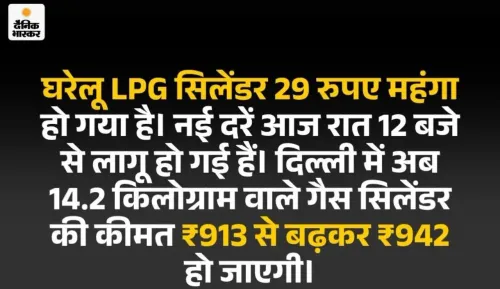
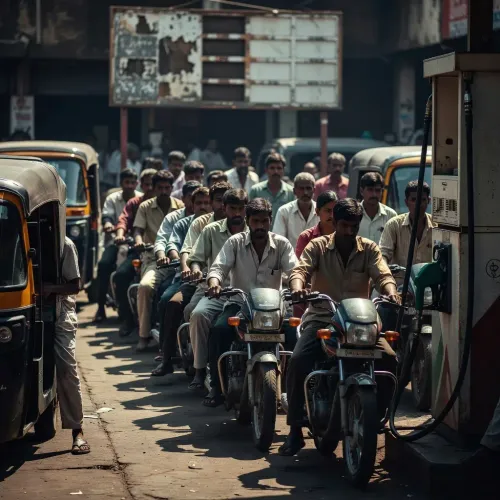
The most direct impact of fuel price increases falls on ordinary consumers — commuters, farmers, small transporters, and households dependent on liquefied petroleum gas (LPG) and diesel for daily needs. In a state as large and agrarian as Uttar Pradesh, fuel costs feed directly into food production and transportation expenses, amplifying inflationary pressure on lower-income groups.
Yadav's allegation of quantity reduction — dispensing less than a full litre at pumps — touches on a separate consumer-protection concern that weights and measures authorities are mandated to enforce. While the specific claim remains unverified, short-measure complaints at fuel retail outlets have been documented by consumer bodies across multiple states in past years.
What's Next
Opposition parties, including the Samajwadi Party, are expected to intensify pressure on the government over fuel pricing ahead of any forthcoming parliamentary session or state-level assembly proceedings. Oil marketing companies' next round of price revisions will be closely watched as a barometer of the government's political calculus on retail fuel costs. If prices remain elevated or rise further, the issue is likely to become a central plank of opposition campaigning in the near term.
Point of View
He shifts the debate from macroeconomic variables to a visceral image of consumer deception, which tends to resonate strongly in semi-urban and rural constituencies. The election-spending-recovery framing is a more aggressive escalation, directly imputing corrupt motive to the government's pricing decisions — an allegation that, while unverified, is calibrated to keep the BJP on the defensive ahead of any upcoming electoral cycle. Taken together, the post signals that fuel pricing will remain a frontline opposition issue as long as retail costs stay elevated.
NationPress
12 Oct 2026
Frequently Asked Questions
What did Akhilesh Yadav say about fuel prices in May 2026?
Akhilesh Yadav alleged on 25 May 2026 that the BJP government was hiking fuel prices to recover its election spending and was covertly reducing the quantity of oil dispensed per litre, a practice he called the 'bori mein chori' formula.
What is the 'bori mein chori' formula Akhilesh Yadav mentioned?
'Bori mein chori' literally means 'theft inside the sack.' Yadav used it to allege that instead of transparently raising the listed price of fuel, the BJP government was reducing the actual volume of oil delivered per litre, effectively cheating consumers covertly.
How are petrol and diesel prices determined in India?
Retail fuel prices in India are set by oil marketing companies and reflect global crude oil costs, central excise duties, and state-level VAT. Since deregulation, companies are permitted to revise prices on a fortnightly basis.
Has the BJP government raised excise duty on fuel?
The central government has adjusted excise duties on petrol and diesel at multiple points since 2014. Critics argue these adjustments have not been passed on to consumers proportionately when global crude prices ease.
Is Akhilesh Yadav's claim about fuel quantity reduction verified?
No. The specific claim that the government is reducing the volume of oil dispensed per litre has not been independently verified. It represents Akhilesh Yadav's political allegation and should be treated as such until confirmed by regulatory authorities.