Gadkari pays tribute to RSS chief Rajju Bhaiya on death anniversary
Synopsis
Union Minister Nitin Gadkari on 14 July offered homage to Rajendra Singh, the fourth RSS Sarsanghchalak known as Rajju Bhaiya, on his death anniversary — reflecting the enduring ideological bond between senior BJP leaders and the Sangh's legacy.
Key Takeaways
Nitin Gadkari , Union Road Transport and Highways Minister, paid tribute to Rajju Bhaiya on his death anniversary on 14 July 2026 .
Rajendra Singh (Rajju Bhaiya) was the fourth Sarsanghchalak of the RSS , serving from 1994 to 2000 .
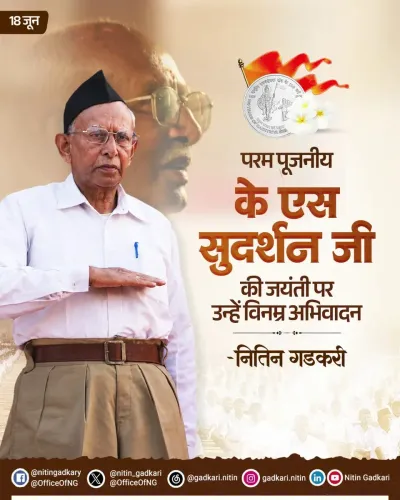
He succeeded Balasaheb Deoras and was himself succeeded by K.S.
Rajju Bhaiya was known for his focus on character-building, swadeshi values, and expanding the RSS's organisational reach.
Gadkari, a former BJP national president (2009–2013) , has longstanding RSS roots, making his tribute emblematic of the BJP-Sangh bond.
Similar tributes from other BJP leaders and RSS-affiliated bodies are expected on this date annually.
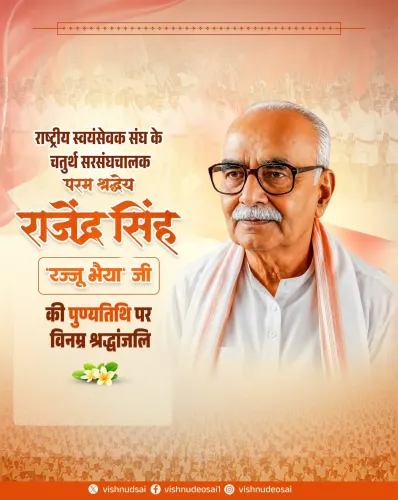
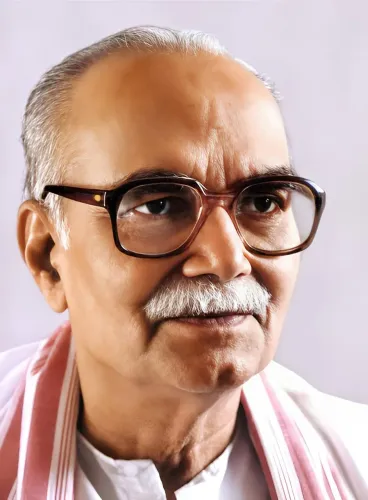
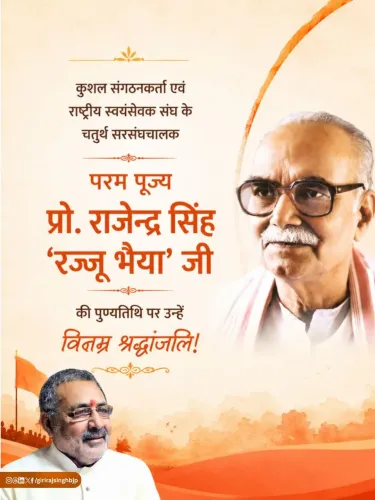
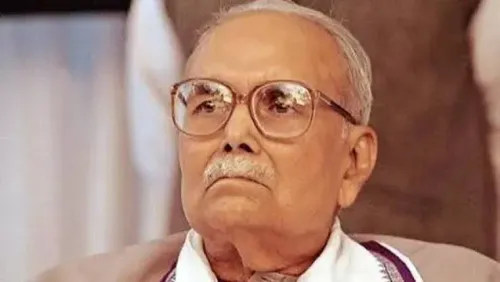
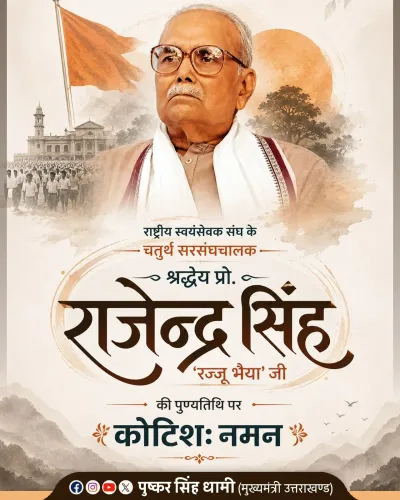
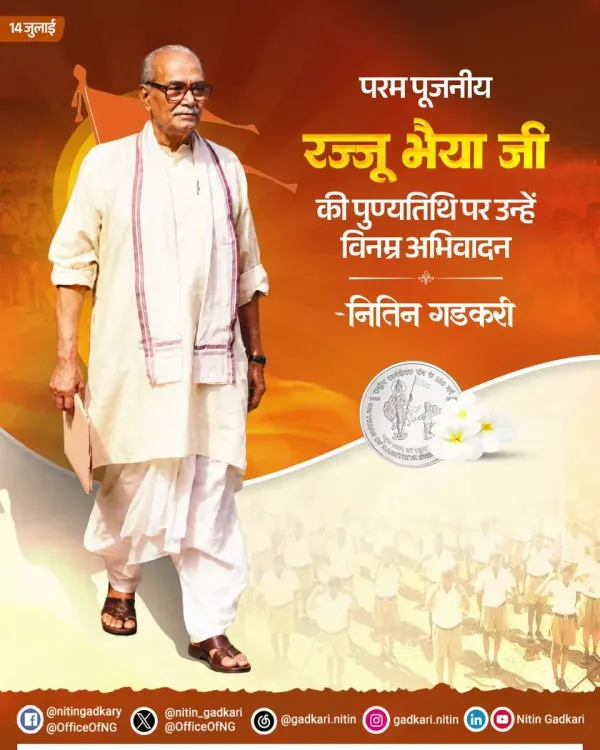
Union Road Transport and Highways Minister Nitin Gadkari on Tuesday, 14 July paid homage to Rajendra Singh, popularly known as Rajju Bhaiya, the fourth Sarsanghchalak of the Rashtriya Swayamsevak Sangh (RSS), on his death anniversary.
Posting on X, Gadkari wrote: 'Rashtriya Swayamsevak Sangh ke param pujaneey chaturtth Sarsanghchalak Rajju Bhaiya ji ki punyatithi par unhe vinamra abhivadan' — offering 'humble salutations to the most revered fourth Sarsanghchalak of the RSS, Rajju Bhaiya, on his death anniversary.'
Context
Rajendra Singh, widely addressed as Rajju Bhaiya, served as the fourth Sarsanghchalak of the RSS from 1994 to 2000, succeeding Balasaheb Deoras. He was known for his emphasis on character-building, swadeshi values, and the organisational expansion of the Sangh across India. He was succeeded by K.S. Sudarshan in 2000.
His death anniversary on 14 July is observed each year by RSS swayamsevaks and BJP leaders who trace their political and ideological roots to the Sangh's cadre system.
Policy Backdrop
The RSS, founded in 1925, forms the ideological and organisational backbone from which the BJP draws much of its leadership and volunteer base. Senior BJP figures with RSS backgrounds — including cabinet ministers — routinely mark the anniversaries of past Sarsanghchalaks as an expression of institutional continuity and gratitude.
Gadkari himself served as BJP national president from 2009 to 2013 and has a longstanding association with the Sangh. His tribute reflects the close, enduring relationship between the party's elected representatives and the RSS's ideological legacy.
Stakeholders and Impact
The message resonates primarily with RSS swayamsevaks and the broader BJP leadership, for whom Rajju Bhaiya's tenure represents a formative period of Sangh expansion. Such public tributes by serving Union Ministers reinforce the narrative of disciplined nationalism and organisational loyalty that has characterised BJP governance since 2014.
For the wider public, the post underscores the visible ideological thread connecting the current ruling establishment to the RSS's century-long tradition of cultural nationalism.
What's Next
Similar anniversary messages from other cabinet ministers and state BJP units are expected through the day. RSS-affiliated organisations may also hold remembrance programmes or publish tributes marking Rajju Bhaiya's contributions to the Sangh's growth and philosophy.
The annual pattern of such tributes signals that the BJP-RSS ideological continuum will remain a visible feature of public political communication in the months ahead.
Point of View
They help sustain the narrative of an unbroken ideological continuum from the RSS's founding generation to the current dispensation.
NationPress
12 Oct 2026
Frequently Asked Questions
Who is Rajju Bhaiya and why is he remembered?
Rajju Bhaiya is the popular name of Rajendra Singh , the fourth Sarsanghchalak of the RSS who led the organisation from 1994 to 2000 . He is remembered for his emphasis on character-building, swadeshi values, and expanding the Sangh's organisational network across India.
When did Rajju Bhaiya serve as RSS Sarsanghchalak?
Rajju Bhaiya served as RSS Sarsanghchalak from 1994 to 2000 , succeeding Balasaheb Deoras and being succeeded by K.S. Sudarshan.
Why did Nitin Gadkari pay tribute to Rajju Bhaiya?
Nitin Gadkari paid tribute on Rajju Bhaiya's death anniversary, 14 July , in keeping with the tradition among senior BJP leaders — many of whom have RSS backgrounds — of publicly honouring past Sarsanghchalaks.
What is the RSS and what role does it play in BJP politics?
The Rashtriya Swayamsevak Sangh (RSS) , founded in 1925 , is a Hindu nationalist volunteer organisation that provides the ideological foundation and a large share of the cadre base for the BJP . Many senior BJP leaders, including Gadkari, began their public lives through the Sangh.
Who were the other RSS Sarsanghchalaks before and after Rajju Bhaiya?
Rajju Bhaiya succeeded Balasaheb Deoras as the fourth Sarsanghchalak in 1994 and was himself succeeded by K.S. Sudarshan in 2000 .