Akhilesh Yadav attacks BJP over fuel prices, corruption
Synopsis
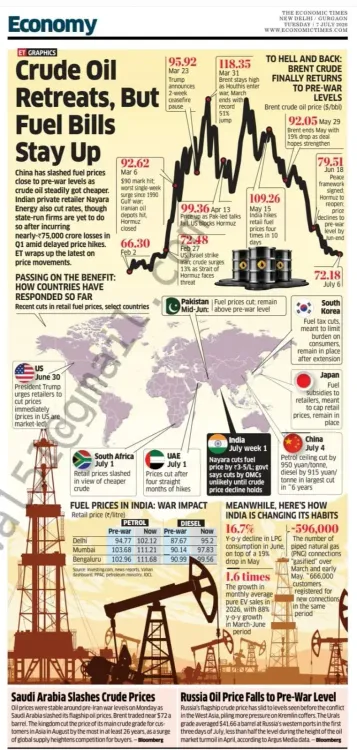
SP chief Akhilesh Yadav accused the BJP government on 7 July 2026 of refusing to pass on global crude price cuts to Indian consumers, alleging a 'corrupt economics' that channels corporate profits into party coffers while common citizens bear the burden of high fuel and food prices.
Key Takeaways
Akhilesh Yadav on 7 July 2026 accused the BJP of keeping petrol and diesel prices artificially high despite falling global crude oil rates.
He alleged that domestic fuel pricing follows a 'corrupt economics' driven by corporate commissions to the ruling party rather than demand-supply fundamentals.
India deregulated diesel prices in 2014 , but central excise duties and state VAT still give the government substantial control over retail pump prices.
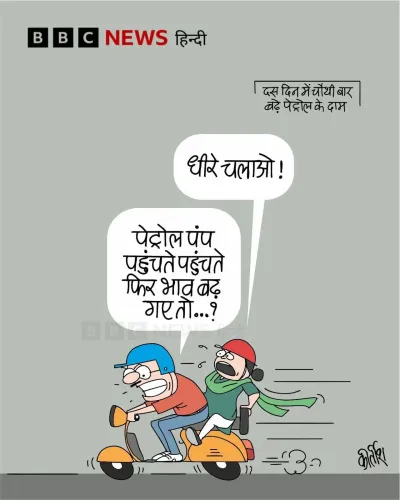
Elevated fuel costs directly raise transport, food, and household expenses for common citizens and transport operators across India.
Yadav predicted that BJP will increasingly rely on money power as its religious-identity politics loses electoral traction, worsening both corruption and inflation.
The opposition's fuel-pricing critique is expected to dominate the monsoon session of Parliament and budget discussions on excise duty revision.
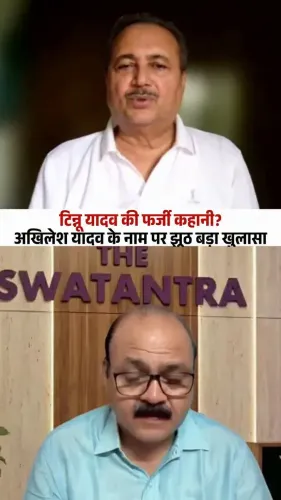
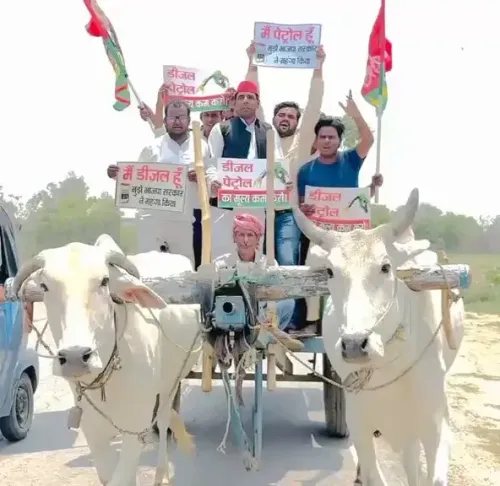
Samajwadi Party president Akhilesh Yadav on Tuesday, 7 July 2026 launched a sharp attack on the BJP-led central government, accusing it of deliberately keeping petrol and diesel prices high despite a significant fall in global crude oil rates, and of running what he called a 'corrupt economics' that benefits corporations at the expense of ordinary citizens.
Context
In a lengthy post on X, Yadav alleged that while people in other countries have benefited from falling international crude prices, Indian consumers continue to pay elevated rates at the pump. He wrote, 'भारत में तेल या किसी भी चीज़ के दाम का अपना अनोखा भ्रष्ट अर्थशास्त्र है' — 'In India, the price of oil or anything else has its own unique corrupt economics' — which he said is driven not by demand and supply but by what he described as 'BJP commissions' linked to corporate profits.
Yadav argued that the higher a company's profit, the greater the alleged kickback to the ruling party, and that this dynamic is the root cause of persistent inflation across fuel, transport, food, and other essential goods in the country.
Policy Backdrop
India completed the deregulation of diesel prices in 2014, with oil marketing companies theoretically revising pump prices daily in line with international crude benchmarks. However, central excise duties and state-level VAT constitute a substantial share of the final retail price, meaning the government retains significant influence over what consumers pay regardless of global market movements.
Opposition parties have consistently highlighted this gap — between falling global crude rates and sticky domestic prices — as evidence that the government prioritises tax revenue and corporate interests over consumer relief. Fuel pricing has remained a recurring political flashpoint because pump prices directly feed into transport costs, food inflation, and household budgets across India.
Stakeholders and Impact
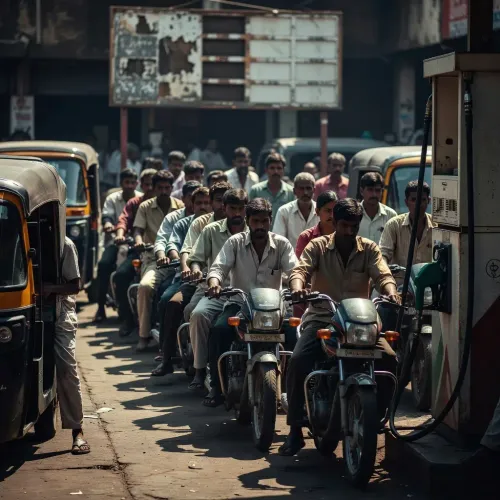
Common citizens, particularly low- and middle-income households, bear the most direct impact of elevated fuel costs through higher prices for daily commuting, cooking fuel, and food items transported across the country. Transport operators — truckers, auto-rickshaw drivers, and small fleet owners — face margin pressure whenever diesel prices remain elevated while freight rates lag.
Yadav also broadened his attack beyond economics, alleging that BJP's 'politics of religion' has ended following what he described as revelations of temple-related financial irregularities — a claim the research flags as unverified from established public records. He contended that the party will now rely solely on money power to compensate for eroding voter support, predicting this will accelerate both corruption and inflation.
What's Next
The opposition's fuel-pricing offensive is likely to intensify in the monsoon session of Parliament, where questions on the fuel pricing formula and central excise duties are expected to feature prominently. Any revision of excise duties in the forthcoming Union Budget will be closely watched as a litmus test of whether the government responds to sustained political pressure on the cost-of-living front.
With global crude markets remaining soft, the gap between international prices and Indian pump rates will continue to offer opposition parties a concrete, voter-relatable line of attack heading into the next electoral cycle.
Point of View
Making the contrast with unchanged domestic pump rates politically potent and easy for voters to grasp. By framing high fuel prices as a function of alleged corporate kickbacks rather than market dynamics, the SP chief is attempting to recast a technical policy debate as a corruption narrative accessible to every household managing a tight budget. The additional charge that BJP's religious politics has been discredited by financial scandal is designed to peel away moderate BJP supporters, though those specific allegations remain unverified. Taken together, the post signals that the opposition's 2026-27 campaign template will fuse cost-of-living grievances with anti-corruption messaging — a combination that has historically resonated in Uttar Pradesh and beyond.
NationPress
6 Oct 2026
Frequently Asked Questions
Why is Akhilesh Yadav criticising BJP over petrol-diesel prices?
Akhilesh Yadav alleges that even as global crude oil prices have fallen sharply, the BJP government has not reduced petrol and diesel prices in India, effectively allowing oil companies to earn higher profits while ordinary consumers continue to pay elevated rates.
Why don't petrol and diesel prices in India fall when global crude prices drop?
India deregulated diesel pricing in 2014, but a large portion of the pump price consists of central excise duties and state VAT. When the government does not reduce these taxes, consumers do not fully benefit from lower international crude rates.
What did Akhilesh Yadav mean by 'corrupt economics' in his post?
Yadav used the phrase to argue that Indian fuel and commodity prices are not determined by standard demand-supply logic but by alleged commission arrangements between the BJP and corporations — meaning prices rise in line with corporate profits rather than market conditions.
What is the Samajwadi Party's position on fuel price relief?
The Samajwadi Party has consistently demanded that the central government cut excise duties on petrol and diesel to pass on the benefit of lower global crude prices to consumers, particularly low- and middle-income households.
Will petrol and diesel prices be cut in India soon?
No official announcement of a price cut has been made. The opposition is expected to press the government on this during the monsoon session of Parliament, and any excise duty revision in the forthcoming Union Budget will be a key indicator of the government's intent.