ISI tightens Hafiz Saeed security after fresh assassination threats

Synopsis
India's intelligence agencies assess that Pakistan's ISI has placed Hafiz Saeed under unprecedented lockdown — barred from leaving his Lahore safe house, cut off from his cadre, and shielded behind military-grade security — after multiple attempts on his life. The move exposes the ISI's fear that losing Saeed means losing Lashkar-e-Tayiba itself, even as India builds a legal case that could threaten Pakistan's FATF standing.
Key Takeaways
Indian intelligence assessments confirm ISI has significantly upgraded security around Hafiz Saeed following multiple assassination attempts.
Saeed has been barred from attending training camps and meetings since the end of 2024 ; video calls are now minimal.
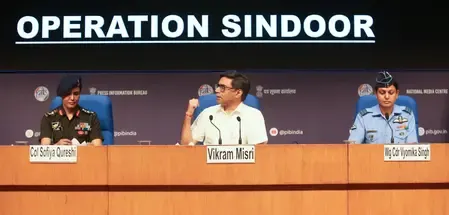
Lashkar-e-Tayiba's primary training facility in Muridke was destroyed during Operation Sindoor , leaving the group in a rebuilding phase.
Despite Pakistan's claim that Saeed is in Kot Lakhpat jail , officials say he lives in a fortified safe house in Mohalla Johar, Lahore .
The NIA has named Saeed in the Pahalgam attack case; he faces in-absentia trials for both Pahalgam and the Mumbai 26/11 attacks .
India's legal offensive against Saeed could affect Pakistan's position at the Financial Action Task Force (FATF) .
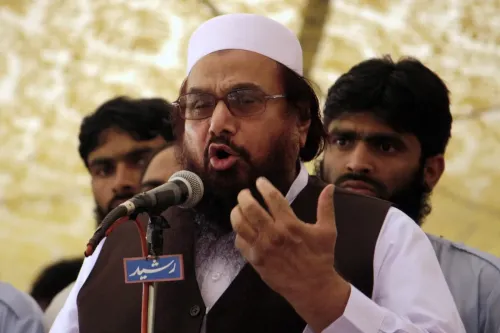
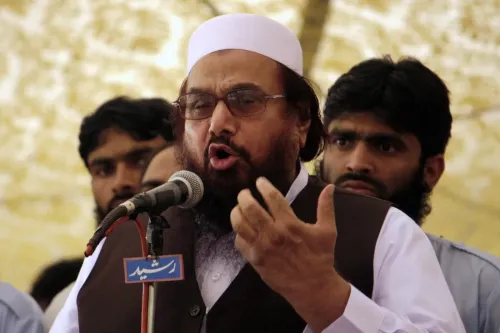
Indian intelligence assessments indicate that Pakistan's Inter-Services Intelligence (ISI) has significantly upgraded the security cover around Lashkar-e-Tayiba (LeT) founder and Mumbai 26/11 attack mastermind Hafiz Saeed, following multiple attempts on his life in recent months. The latest evaluations by Indian security agencies suggest that state-of-the-art protective measures have been deployed to keep the designated terrorist alive, according to officials familiar with the matter.
Escalating Threat Perception
An Intelligence Bureau official said that several assassination attempts have been made against Saeed in recent months, sharply elevating his threat perception. As a result, the ISI has completely barred him from stepping out of his safe house. Saeed, who routinely visited training and radicalisation camps until the end of 2024, has not been permitted to do so for the past couple of months.
Even cadres who previously met him in person are now subjected to heavy scrutiny and scanning before any access is granted. His interactions via video calls have been drastically curtailed, permitted only for large-scale meetings. To maintain some contact with his network, Saeed reportedly sends audio clips to motivate his followers.
The Muridke Blow and Operation Sindoor Fallout
Officials say the threat environment intensified sharply after Operation Sindoor, during which Lashkar-e-Tayiba's primary training facility in Muridke was completely destroyed. The group has since been in a rebuilding phase, with scores of meetings and training camps held across Pakistan and Pakistan-occupied Kashmir (PoK).
For the ISI, LeT remains a critical instrument for its India-directed operations. Losing Saeed, officials noted, would be tantamount to losing the organisation itself — a risk the Pakistani spy agency is unwilling to accept at this juncture.
Where Saeed Actually Lives
While Pakistan officially maintains that Saeed has been held at Kot Lakhpat jail in Lahore since 2019, Indian intelligence assessments paint a different picture. According to officials, he lives in a fortified safe house in the Mohalla Johar area of Lahore. When threat levels spike, he is relocated to the Mian Mir Cantonment in Lahore — described as a heavily secured military safe house.
Internal rifts and power struggles within LeT have already cost Saeed several top aides in recent years, with officials noting that he himself remains the primary target of these factions.
India's Legal and Diplomatic Pressure
The National Investigation Agency (NIA) recently named Saeed in connection with the Pahalgam attack. A proclamation has also been issued against him and six others linked to the Mumbai 26/11 attacks, paving the way for trial in absentia. He faces a similar in-absentia proceeding in the Pahalgam case.
Officials said India is building a robust legal case against Saeed, which could have direct consequences for Pakistan's standing at the Financial Action Task Force (FATF). Pakistan's claim that Saeed is imprisoned for terror financing is, according to these officials, a facade maintained to deflect international pressure — while the ISI works to shield him from accountability.
With India intensifying its legal and diplomatic offensive, the ISI's extraordinary security arrangements around Saeed reflect the growing convergence of domestic threats and external pressure closing in on the LeT chief.
Point of View
And that Pakistan's 'Saeed is in jail' narrative has never been credible. What is striking is that the threat to Saeed appears to be as much internal — rival factions, disgruntled cadres — as it is external. India's dual-track pressure, legal cases through the NIA and diplomatic exposure at FATF, is evidently landing. The real question is whether the international community will treat this ISI protective detail as the evidence of state sponsorship it plainly is, or continue to accept Islamabad's fiction of incarceration.
NationPress
5 Oct 2026
Frequently Asked Questions
Why has the ISI increased security around Hafiz Saeed?
According to Indian intelligence assessments, the ISI has stepped up security around Hafiz Saeed following multiple assassination attempts on his life in recent months. The threat perception has increased significantly after Operation Sindoor and internal power struggles within Lashkar-e-Tayiba.
Where is Hafiz Saeed actually being held?
While Pakistan officially claims Saeed has been at Kot Lakhpat jail in Lahore since 2019, Indian intelligence officials say he lives in a fortified safe house in the Mohalla Johar area of Lahore. When threats escalate, he is reportedly moved to the Mian Mir Cantonment, a heavily secured military facility.
What is Operation Sindoor and how did it affect Lashkar-e-Tayiba?
Operation Sindoor resulted in the complete destruction of Lashkar-e-Tayiba's primary training facility in Muridke, dealing a major blow to the group. LeT has since been in a rebuilding phase, conducting meetings and training camps across Pakistan and Pakistan-occupied Kashmir.
What legal cases does Hafiz Saeed face in India?
The National Investigation Agency has named Saeed in connection with the Pahalgam attack, and a proclamation has been issued against him and six others linked to the Mumbai 26/11 attacks. He is set to be tried in absentia in both cases.
How does Saeed's situation affect Pakistan's FATF standing?
Indian officials say the legal cases being built against Saeed could have a direct bearing on Pakistan's position at the Financial Action Task Force. Pakistan's claim that Saeed is imprisoned for terror financing is viewed by officials as a cover to deflect international accountability pressure.