Lashkar-e-Tayiba in crisis: 30+ killings by unknown gunmen deepen leadership vacuum
Synopsis
More than 30 Lashkar-e-Tayiba and Hizbul Mujahideen operatives have been killed by unknown gunmen across Pakistan in 2026 alone — and Pakistani security agencies have not caught a single perpetrator. Combined with the fallout from Operation Sindoor, LeT's inner circle is fracturing, its cadres are questioning their leadership, and Indian intelligence warns a desperate Pakistan may now attempt a major strike on Indian soil.
Key Takeaways
Sheikh Afridi , a senior Lashkar-e-Tayiba operative overseeing activities in KP and Jammu and Kashmir , was killed by unknown gunmen in Khyber Pakhtunkhwa .
More than 30 LeT and Hizbul Mujahideen operatives have been eliminated by unidentified gunmen across Pakistan in 2026 alone .
Amir Hamza , LeT's key ideological mentor and recruiter, was also shot earlier this month, severely disrupting the outfit's recruitment pipeline.
Hafiz Saeed is reportedly less active, and Zaki-ur-Rehman Lakhvi has taken a back seat, leaving a critical leadership vacuum.
Operation Sindoor has created a deep trust deficit among LeT cadres, who are questioning leadership promises and their own safety inside Pakistan .
Indian intelligence agencies warn that a desperate Pakistan may direct LeT to attempt a major strike on Indian soil to restore cadre morale.
Lashkar-e-Tayiba (LeT) is facing a deepening leadership crisis following heavy losses during Operation Sindoor, with unknown gunmen systematically eliminating the outfit's top commanders across Pakistan. The latest killing — that of Sheikh Afridi, a close aide of LeT chief Hafiz Saeed — in Khyber Pakhtunkhwa (KP) has sent shockwaves through the organisation, according to Indian intelligence officials.
A Pattern of Targeted Eliminations
In 2026 alone, more than 30 senior operatives linked to both Lashkar-e-Tayiba and Hizbul Mujahideen have been killed by unidentified gunmen. The incidents have been reported from Lahore, Punjab, Sindh, KP, Balochistan, and Karachi. Notably, the perpetrators have evaded Pakistani security agencies entirely — completing their assignments and vanishing without a trace. Pakistan's security apparatus, including the ISI and the Pakistan Army, has had virtually no success in identifying or apprehending those responsible, according to an official cited by NationPress.
Earlier this month, Amir Hamza — another close associate of Hafiz Saeed and a key ideological mentor — was also shot. Hamza was instrumental in recruitment, reportedly capable of drawing in large numbers of cadres. His removal has, according to officials, severely disrupted the outfit's recruitment pipeline, which was already under strain.
The Collapse of LeT's Inner Circle
The killing of Sheikh Afridi is being described by officials as a particularly significant blow. Afridi was not a peripheral operative — he was reportedly overseeing LeT's activities in both KP and Jammu and Kashmir, actively coordinating operations and managing the movement of terrorists. He was also engaged in recruiting youth for active operations at the time of his death. An official stated that Afridi was part of LeT's inner circle, and his elimination has further reduced the number of effective decision-makers within the organisation.
An Intelligence Bureau official noted that these killings are significantly weakening LeT, drawing a parallel with the Jaish-e-Mohammad, which has similarly struggled without a fierce operational leader. Hafiz Saeed, now aged, is reportedly unable to lead with the same vigour as before. Zaki-ur-Rehman Lakhvi appears to have stepped back from active operations, leaving a visible void at the top of the command structure.
Operation Sindoor's Lasting Impact on Cadre Morale
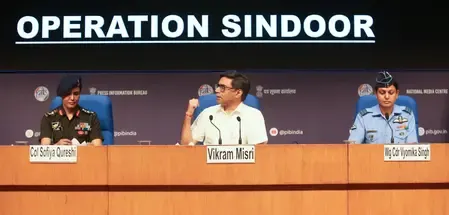
According to officials, Operation Sindoor — the Indian armed forces' strike that inflicted heavy losses on the group — created a profound trust deficit within LeT's rank and file. Cadres have reportedly begun questioning their leadership, feeling that the promises made at the time of their recruitment have been exposed as hollow. Hafiz Saeed's reduced public presence since the operation has compounded this disillusionment, with cadres reportedly asking whether Saeed prioritises his own safety over theirs.
The sustained killings of top commanders by unknown gunmen have added another layer of anxiety. If senior figures — recruiters, ideological heads, and operational commanders — can be eliminated with apparent ease anywhere in Pakistan, cadres are questioning what security guarantees, if any, exist for lower-ranking members. The ISI and Pakistan Army, which made extensive promises at the time of recruitment, are now seen as having failed to protect the outfit's leadership, according to officials.
Pakistan's Desperation and the Threat to India
Indian intelligence agencies warn that Pakistan is now in a desperate position. The ISI and Pakistan Army are reportedly working on plans to help LeT stage a recovery — and, critically, to attempt a major strike on Indian soil. Officials say such an operation would serve a dual purpose: restoring morale among LeT cadres and diverting attention from Pakistan's mounting internal problems. Agencies are said to be on heightened alert in response to this assessed threat.
The combined effect of Operation Sindoor, the relentless targeting of LeT's leadership, and the collapse of internal trust presents a picture of an organisation under severe stress — but one whose handlers in Islamabad may be willing to take significant risks to revive it.
Point of View
Sophisticated operation that goes well beyond opportunistic violence. What is often missed in mainstream coverage is the second-order effect: it is not just the loss of individuals but the collapse of institutional confidence within the outfit. When cadres begin questioning whether their handlers can protect even the top brass, the organisation's operational coherence erodes faster than any airstrike can achieve. The real danger, however, lies in Pakistan's response calculus — a cornered establishment with a weakened proxy may see a spectacular attack on India as the only path to internal rehabilitation.
NationPress
19 Sept 2026
Frequently Asked Questions
Who is Sheikh Afridi and why does his killing matter?
Sheikh Afridi was a senior Lashkar-e-Tayiba operative and close aide of LeT chief Hafiz Saeed. He was overseeing the outfit's operations in Khyber Pakhtunkhwa and Jammu and Kashmir, and was actively coordinating terrorist movements and recruitment at the time of his death. His killing further reduces the number of effective decision-makers within LeT's inner circle.
How many Lashkar-e-Tayiba operatives have been killed by unknown gunmen in 2026?
More than 30 operatives linked to Lashkar-e-Tayiba and Hizbul Mujahideen have been killed by unidentified gunmen across Pakistan in 2026 alone. Incidents have been reported from Lahore, Punjab, Sindh, Khyber Pakhtunkhwa, Balochistan, and Karachi, with Pakistani security agencies yet to apprehend any of the perpetrators.
What impact has Operation Sindoor had on Lashkar-e-Tayiba?
Operation Sindoor inflicted heavy losses on Lashkar-e-Tayiba and created a significant trust deficit among its cadres. Rank-and-file members have reportedly begun questioning their leadership, feeling that promises made during recruitment have been exposed as hollow, while Hafiz Saeed's reduced public presence has deepened disillusionment.
Is there a threat of a Lashkar-e-Tayiba attack on India?
Indian intelligence agencies have assessed that Pakistan, in a desperate bid to restore LeT's morale and divert attention from internal problems, may direct the outfit to attempt a major operation on Indian soil. Agencies are said to be on heightened alert in response to this threat.
Who leads Lashkar-e-Tayiba now that its leadership is weakened?
Hafiz Saeed remains the nominal chief but is reportedly less active due to age and security concerns following Operation Sindoor. Zaki-ur-Rehman Lakhvi has also taken a back seat, leaving the organisation without a strong operational head, according to Intelligence Bureau officials cited in the report.