Operation Sindoor sparks Lashkar revolt against ISI, Pakistan Army
Synopsis
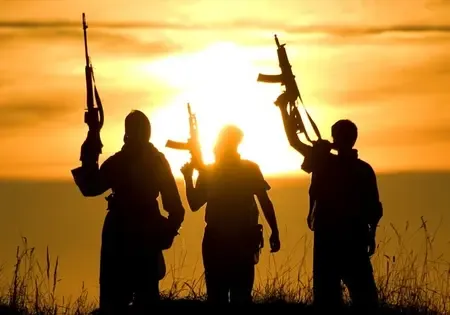
Operation Sindoor may have done more than destroy terror infrastructure — it appears to have fractured the ISI's control over Lashkar-e-Tayiba. For the first time in the outfit's history, LeT is reportedly defying Pakistan Army and ISI directives, with Hafiz Saeed in isolation and commanders publicly acknowledging devastating losses.
Key Takeaways
Lashkar-e-Tayiba is reportedly refusing to comply with ISI and Pakistan Army directives since Operation Sindoor — described as unprecedented in the outfit's history.
Hafiz Saeed has gone into isolation and is not communicating with his own cadre.
Repeated orders to rebuild the Muridke training facility have been ignored; Indian intelligence confirms no activity at the site.
LeT cadres are questioning leadership silence on Pakistan's conflict with the Afghan Taliban and resisting orders to align with the Islamic State against TTP and BLA .
Officials draw a parallel to the pre- 26/11 period, when the ISI used the Mumbai attack to redirect restless LeT cadres — suggesting no comparable tool exists today.
A formal LeT revolt, if it materialises, would mark a historic rupture between Pakistan's military establishment and its most significant proxy group.
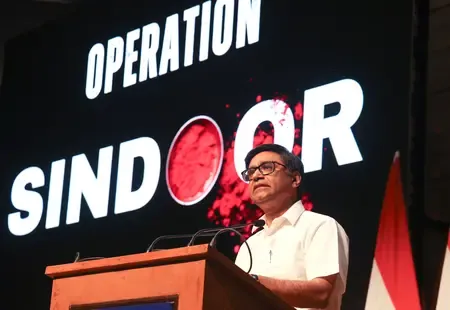
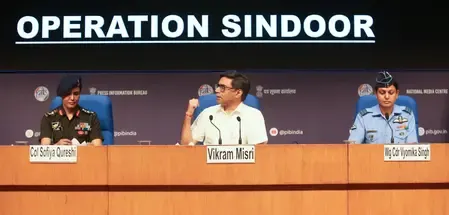
India's Operation Sindoor may have triggered an unprecedented internal rupture within Lashkar-e-Tayiba (LeT), with the Pakistan-based terror outfit reportedly refusing to comply with directives from the Inter-Services Intelligence (ISI) and the Pakistan Army — a development that intelligence officials describe as historically unprecedented for the group. The breakdown follows devastating losses the outfit sustained during India's retaliatory strikes targeting terror infrastructure after the Pahalgam terror attack that killed 26 people in Kashmir.
LeT Founder Goes Silent, Commanders Acknowledge Losses
Hafiz Saeed, the founder and chief of Lashkar-e-Tayiba, has reportedly gone into complete isolation and is no longer interacting with his own cadre, according to officials tracking the outfit. More strikingly, several of Saeed's commanders have been publicly acknowledging the scale of losses suffered during Operation Sindoor — a sharp departure from the Pakistan establishment's official narrative of claiming victory.
Repeated calls from the ISI and army to rebuild the Muridke training facility — one of LeT's most significant operational bases — have been ignored. Indian intelligence agencies have gathered that there is no activity at the site, and early reports of reconstruction efforts appear to have no basis in fact, according to officials.
The Revolt Taking Shape
An Intelligence Bureau official described the situation as a deliberate act of non-compliance. "The outfit and its members do not want the army to take credit for a battle that it clearly did not win," the official said. While the LeT leadership initially played along with the Pakistan establishment's victorious framing, that dynamic has, according to officials, drastically changed in recent weeks.
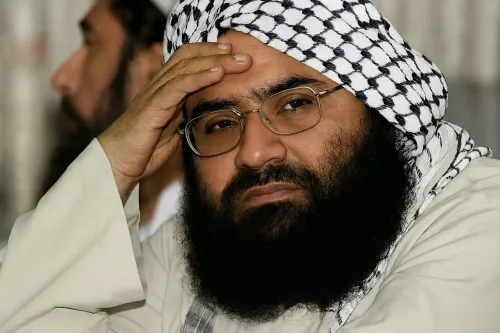
This marks the first time in the outfit's history that Lashkar-e-Tayiba is openly defying ISI and army expectations, officials noted. By contrast, the Jaish-e-Mohammad (JeM) had previously revolted and was even linked to assassination attempts on former Pakistan President Pervez Musharraf. The LeT had, until now, remained the more compliant of the two outfits.
Internal Fractures Deepened by Wider Conflicts
The dissent within the LeT is being compounded by two additional pressure points. First, cadres are reportedly questioning the leadership's silence over Pakistan's conflict with the Afghan Taliban. Second, the expectation that the LeT would partner with the Islamic State (IS) to fight against the Tehreek-e-Taliban Pakistan (TTP) and the Balochistan Liberation Army (BLA) has generated significant pushback within the outfit's ranks.
This comes amid a broader erosion of ideological coherence within Pakistani terror networks, as multiple groups find themselves pulled in conflicting directions by the ISI's shifting strategic priorities.
Historical Parallel: The 26/11 Playbook
Officials drew a direct parallel to the period before the Mumbai 26/11 attacks of 2008. At that time, the ISI had detected growing restlessness within the LeT, with many cadres seeking to leave for Afghanistan to fight alongside the Taliban against Western forces. The Mumbai attacks — originally conceived by Ilyas Kashmiri, head of the 313 Brigade of Al-Qaeda, and later sanctioned to be executed by the LeT — were reportedly orchestrated by the ISI partly to keep cadres distracted and away from Afghanistan, so as not to antagonise Western forces.
Officials suggest that Operation Sindoor has now replicated that destabilising dynamic, but without the ISI having a comparable instrument to redirect LeT's anger.
What This Means Going Forward
"Operation Sindoor did not just take down terror infrastructure — it also broke the morale of these terror groups," an official said. If the Lashkar-e-Tayiba formally revolts against the ISI and army, officials warn it would represent a seismic shift in the relationship between Pakistan's military establishment and its most operationally significant proxy group. The coming weeks are being closely watched by Indian intelligence agencies for further signs of fracture.
Point of View
This is the most consequential second-order effect of Operation Sindoor — one that mainstream coverage has largely missed. Pakistan's military establishment has long managed its proxy groups through a combination of incentives, distractions, and manufactured purpose. The ISI's use of the 26/11 attacks to keep LeT cadres away from Afghanistan was a textbook example of that management. Operation Sindoor appears to have broken that mechanism: the losses are too visible, the narrative too thin, and the alternative deployments — fighting IS alongside the ISI against TTP and BLA — too ideologically incoherent for the rank-and-file to accept. A fractured LeT is not necessarily a safer LeT; history suggests that unmoored jihadist cadres are more dangerous, not less. Indian policymakers would be wise to treat this as a warning as much as a victory.
NationPress
30 Sept 2026
Frequently Asked Questions
What is the reported revolt within Lashkar-e-Tayiba after Operation Sindoor?
According to Indian intelligence officials, Lashkar-e-Tayiba has been refusing to follow ISI and Pakistan Army directives since Operation Sindoor, with Hafiz Saeed going silent and commanders publicly acknowledging losses. This is described as the first time in the outfit's history that it has defied the Pakistani establishment.
What happened to the Muridke training facility after Operation Sindoor?
The Muridke training facility, one of Lashkar-e-Tayiba's key bases, was targeted during Operation Sindoor. Repeated ISI and army orders to rebuild it have been ignored, and Indian intelligence agencies report no activity at the site, contradicting earlier claims of reconstruction.
Why are Lashkar-e-Tayiba cadres unhappy with the ISI?
Cadres are reportedly upset on two counts: the leadership's silence over Pakistan's conflict with the Afghan Taliban, and the expectation that LeT would align with the Islamic State to fight against the TTP and the Balochistan Liberation Army — an ideological direction many members reportedly reject.
How does this compare to the Jaish-e-Mohammad's past defiance?
Jaish-e-Mohammad had previously revolted against the Pakistani establishment and was linked to assassination attempts on former President Pervez Musharraf. The Lashkar-e-Tayiba had, until now, remained compliant — making its current reported defiance historically significant.
What was the significance of the Pahalgam attack that triggered Operation Sindoor?
The Pahalgam terror attack killed 26 people in Kashmir and prompted India to launch Operation Sindoor, targeting terror infrastructure in Pakistan. The operation inflicted significant losses on both Lashkar-e-Tayiba and Jaish-e-Mohammad, according to Indian officials.