Is Leadership Behind the Slow Revival of Terror Groups in Pakistan?
Synopsis
In the aftermath of Operation Sindoor, the ISI's attempt to revive terror groups like Lashkar-e-Taiba and Jaish-e-Mohammed is hampered by a critical leadership vacuum. Fear and uncertainty surround their leaders, Hafiz Saeed and Masood Azhar, as the ISI grapples with rebuilding these factions while facing increased scrutiny from Indian intelligence agencies.
Key Takeaways
ISI is striving to revive Lashkar-e-Taiba and Jaish-e-Mohammed .
The leadership vacuum poses a significant challenge for these terror groups.
Fear among leaders Hafiz Saeed and Masood Azhar has led to a decline in their public visibility.
New facilities are being constructed in Pakistan-occupied Kashmir .
Indian intelligence is monitoring these developments closely.
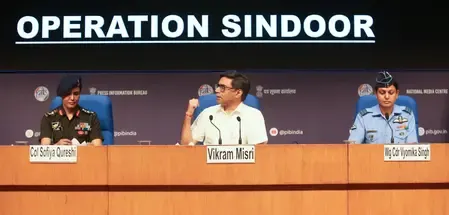
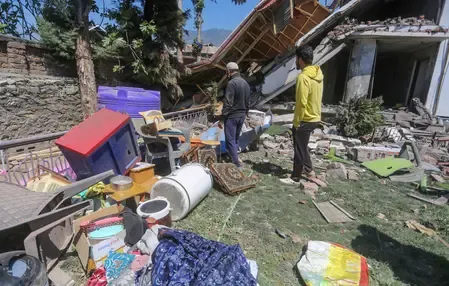
New Delhi, Dec 16 (NationPress) The ISI has been making extensive efforts to reactivate the Lashkar-e-Taiba and Jaish-e-Mohammed. Following Operation Sindoor, these terrorist organizations, along with the Hizbul Mujahideen, suffered significant and humiliating defeats. This operation was executed by the Indian armed forces as a direct response to the Pahalgam attack.
According to intelligence officials, the ISI, in collaboration with the Pakistan army, is doing everything within its power to rejuvenate these groups, which have been incapacitated since the Indian operation. While launch pads have been established and training facilities have been reinstated, the most significant challenge they face is a lack of leadership.
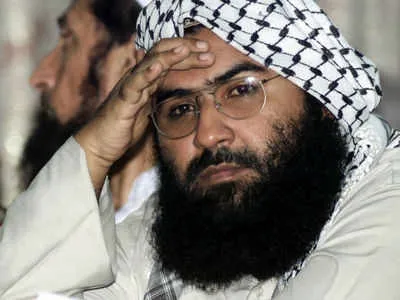
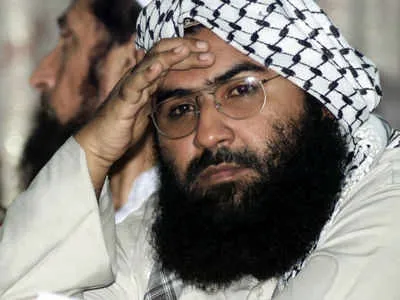
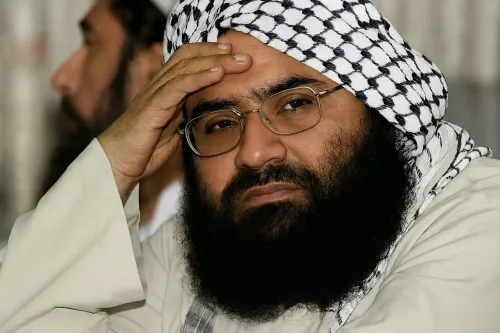
Since Operation Sindoor, the heads of Lashkar-e-Taiba and Jaish-e-Mohammed, Hafiz Saeed and Masood Azhar, have been shifting between various locations. Intelligence assessments indicate that both figures have frequently moved to Rawalpindi, Karachi, and Lahore. Despite assurances of safety from the Pakistan establishment, both terror leaders are hesitant to appear publicly, as noted by intelligence officials. Indian agencies are closely monitoring the movements of both Saeed and Azhar.
There could be two underlying reasons for this constant relocation. Firstly, fear is a significant factor, as Operation Sindoor demonstrated the extent to which Indian forces could penetrate Pakistan. Secondly, this movement may serve as a tactic to confuse Indian agencies regarding their precise whereabouts. However, experts predominantly believe that fear is the primary reason for Saeed and Azhar's limited visibility.
In recent months, both Saeed and Azhar have canceled numerous meetings and public events. Previously, they were often seen without any concern for their safety, even regarded as heroes among their followers. However, this perception has shifted, and both leaders now prefer to remain underground out of fear of being targeted.
An official has revealed that their absence has prompted the ISI to revise its strategy. The agency aims to unify both groups under a single command, recognizing that operating independently would render both Jaish-e-Mohammed and Lashkar-e-Taiba appear weaker. While the ISI has the necessary infrastructure and funding to revive these organizations, the primary challenge remains the leadership vacuum, which has hindered operations and recruitment.
As the ISI looks to reintegrate the two groups into the mainstream while also searching for successors, it hasn't ceased constructing infrastructure. Indian intelligence has reported that Lashkar-e-Taiba and Jaish-e-Mohammed are expanding their facilities in Pakistan-occupied Kashmir (PoK).
Agencies have captured satellite images revealing extensive construction in PoK. While many facilities targeted during Operation Sindoor have been rebuilt, new structures are reportedly being erected at an accelerated pace. A substantial facility, believed to serve both as a religious site and a training center, is reportedly under construction in PoK, as per agency sources.
Officials report that, in addition to the religious center, four command centers are also being established in the area. This indicates the ISI's intention to relaunch comprehensive operations in PoK with the aim of targeting Jammu and Kashmir.
Nevertheless, the persistent issue of leadership remains, and officials in India contend that without the presence of Saeed and Azhar, these terror groups will struggle to initiate full-scale operations.
Point of View
It is crucial to remain vigilant about the evolving situation in Pakistan regarding terrorism. The ISI's struggle to reinstate leadership within Lashkar-e-Taiba and Jaish-e-Mohammed reflects not only the challenges these groups face but also highlights the ongoing threat they pose to national and regional security. Our commitment is to inform and engage our audience with accurate and timely updates.
NationPress
20 Sept 2026
Frequently Asked Questions
What is Operation Sindoor?
Operation Sindoor was a military operation carried out by the Indian armed forces aimed at targeting terrorist groups in Pakistan, particularly in response to the Pahalgam attack.
Who are Hafiz Saeed and Masood Azhar?
Hafiz Saeed and Masood Azhar are the leaders of Lashkar-e-Taiba and Jaish-e-Mohammed, respectively, two prominent terrorist organizations operating in Pakistan.
Why is the leadership vacuum a concern for ISI?
The absence of strong leadership within these groups hampers their operational capabilities and recruitment efforts, making it difficult for the ISI to effectively revive them.
How are Indian intelligence agencies monitoring the situation?
Indian intelligence agencies are closely following the movements of Saeed and Azhar, utilizing satellite imagery and other surveillance methods to track their activities.
What does the construction of new facilities in PoK indicate?
The construction of new facilities suggests that the ISI is preparing to relaunch operations in Pakistan-occupied Kashmir, signaling a potential increase in terrorist activity targeting Jammu and Kashmir.