How Did Operation Sindoor Unravel JeM-LeT’s Disinformation Tactics?

Synopsis
Operation Sindoor has significantly disrupted the recruitment efforts of terrorist organizations like JeM and LeT. These groups resort to disinformation to maintain their narrative. As their credibility wanes, desperate tactics emerge, revealing the fragility of their operations and the shifting perceptions of youth.
Key Takeaways
Operation Sindoor has disrupted terrorist recruitment efforts.
Jaish-e-Mohammed and Lashkar-e-Taiba are resorting to disinformation .
Public perception of these groups is declining.
Many youth are turning away from terrorism.
The collaboration with ISKP has negatively impacted recruitment.
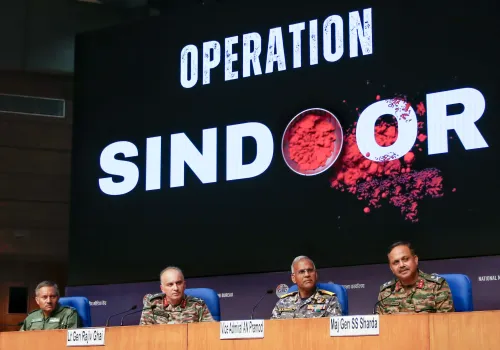
New Delhi, Jan 17 (NationPress) The commanders of Jaish-e-Mohammed and Lashkar-e-Taiba are currently engaged in an extensive disinformation campaign aimed at enhancing recruitment efforts. Operation Sindoor dealt an unexpected and severe blow to these organizations, leaving them struggling to launch a successful revival initiative.
It is evident that their justification for pursuing Jihad against India is losing its appeal. With the Indian armed forces delivering a strong response to the Pahalgam attack, young individuals perceive these groups as weakened. Consequently, the only strategy left for these terrorist organizations is to fabricate narratives that portray them as robust and unaffected by Operation Sindoor, as noted by an official.
Commanders from Lashkar-e-Taiba have been discussing international matters to entice the youth into believing that Pakistan is a formidable nation while India remains isolated. Hafiz Abdul Rauf, a leader within the Lashkar's charity division, has been touting the recent connections with the United States.
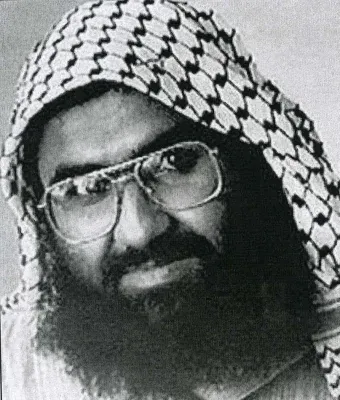
He assures potential recruits that Pakistan will receive support from the US against India, claiming that India is now encircled by an alliance consisting of the US, Pakistan, and Bangladesh. Recently, Jaish-e-Mohammed also disseminated audio recordings purportedly featuring their leader, Masood Azhar, boasting of recruiting 1,000 individuals specifically for Jihad against India.
An official from the Intelligence Bureau has declared this claim as completely false. In reality, the audio is fabricated, and numerous members have abandoned these organizations following Operation Sindoor. Officials assert that many terrorists have recently bragged publicly about Pakistan's advantageous position, particularly regarding relations with the US and Bangladesh. This is clearly a desperate attempt to attract new recruits.
However, in their urgency, these groups overlook the fact that US support is not an enticing factor for recruitment. Many view Western powers unfavorably due to their conflicts with the Taliban and various Gulf nations. In their perspective, the US is perceived as a nation targeting Muslims, leading them to reject any association with it.
Moreover, most individuals promoting these US ties have been labeled as terrorists by the very same country. Officials indicate that these talking points only reflect the extreme level of desperation that has emerged. Following Operation Sindoor, over 200-300 terrorists have reportedly left their respective organizations, officials observe.
Intelligence Bureau officials anticipate further dissemination of falsehoods in the near future. Currently, the narrative is failing to resonate, prompting more frantic attempts in the coming days, officials warn. Operation Sindoor is a significant factor in this narrative shift. Additionally, the Lashkar-e-Taiba's decision to collaborate with the Islamic State Khorasan Province (ISKP) against the Tehreek-e-Taliban Pakistan (TTP) and the Balochistan Nationalist Army (BLA) has adversely affected recruitment.
Many young individuals who might have joined these groups now hesitate to affiliate with an organization that is at odds with their fellow countrymen. Moreover, the deterioration of relations with the Taliban has also significantly contributed to the slowdown in recruitment, leading to an increase in deserters.
For numerous Pakistanis, the Taliban has been a longstanding ally. An official stated that they struggle to comprehend Pakistan's conflict with the Taliban. Another official remarked that this situation reflects a complete failure of Field Marshal Asim Munir's strategy, which is faltering on multiple fronts. Under his leadership, Pakistan has lost allies, and public trust in the Pakistani army has eroded. This, in turn, has affected terror groups, which now resort to deceit to advance their agenda in hopes of attracting the youth, the official concluded.
Point of View
The unfolding events signify a crucial juncture in the fight against terrorism. The disinformation campaigns by JeM and LeT reveal their vulnerabilities as Operation Sindoor disrupts their operations. A united front and a firm stance against such deceptive narratives are essential to safeguard national interests.
NationPress
1 Oct 2026
Frequently Asked Questions
What is Operation Sindoor?
Operation Sindoor is a military initiative aimed at dismantling terrorist organizations like Jaish-e-Mohammed and Lashkar-e-Taiba, significantly affecting their recruitment and operations.
How have JeM and LeT reacted to Operation Sindoor?
In response to Operation Sindoor, JeM and LeT have launched a disinformation campaign to portray a false image of strength and recruitment success.
Why are youth becoming disillusioned with these terrorist organizations?
Youth are increasingly perceiving these organizations as weakened due to military actions against them, coupled with their reliance on deceptive narratives.
What role does misinformation play in recruitment for terrorist organizations?
Misinformation is used by terrorist organizations to create a facade of strength and legitimacy, attempting to attract new recruits despite their declining credibility.
What are the implications of these disinformation campaigns?
These campaigns indicate a level of desperation and highlight the shifting perceptions among potential recruits, ultimately undermining the groups' effectiveness.