IANS Year Ender 2025: What Impact Did Operation Sindoor Have on India's Military Doctrine?

Synopsis
Operation Sindoor marked a significant shift in India's military doctrine post-Pahalgam attack. This article delves into the operation's impact on national security, showcasing India's strategic stance against terrorism and its implications for Indo-Pak relations.
Key Takeaways
Operation Sindoor marked a decisive shift in India’s military response to terrorism.
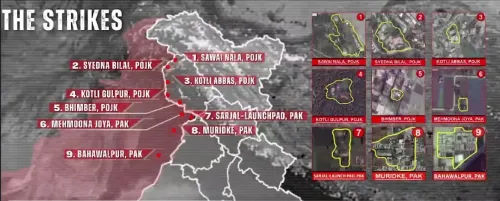
It targeted key terror infrastructures in Pakistan and PoK.
Advanced indigenous technologies played a critical role in the operation.
The operation demonstrated India’s commitment to its zero-tolerance policy towards terrorism.
It significantly impacted the operational capabilities of major terror groups.
New Delhi, Dec 26 (IANS) Operation Sindoor sent a powerful signal to Pakistan as a retaliation for the devastating Pahalgam attack. This operation by the Indian military obliterated numerous terror camps and headquarters, along with launch pads, clearly indicating to Pakistan that any act of terror would now be interpreted as an act of war, not merely a cross-border issue.
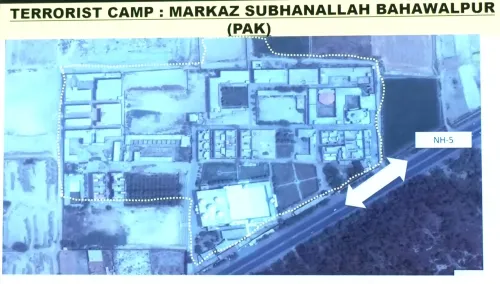
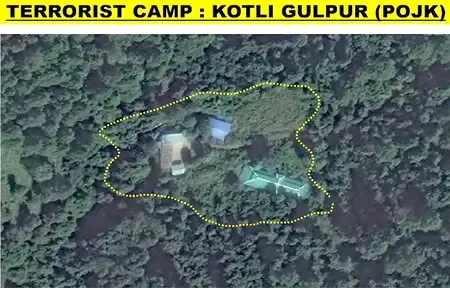
On May 7, the Indian armed forces declared that Operation Sindoor targeted terror infrastructure in both Pakistan-occupied Kashmir (PoK) and Pakistan itself. Critical infrastructures destroyed included the Jaish-e-Mohammed headquarters in Bahawalpur and the primary training facility of Lashkar-e-Taiba in Muridke. These terror organizations, along with Hizbul Mujahideen, faced considerable losses in both personnel and facilities, making it increasingly difficult for them to reorganize.
Through Operation Sindoor, India made it clear to the global community that it had redefined its military doctrine, asserting that any terrorist act would be equated with an act of war. Analysts believe such a reaction was crucial, as it would compel Pakistan to reconsider any future strikes on India, aware that the repercussions would be severe. This response was vital to avenge the audacious Pahalgam attack on April 22, which claimed 26 innocent lives.
The Pakistani intelligence agency, ISI, aimed to deploy Lashkar-e-Taiba in Jammu and Kashmir to disrupt the flourishing tourism sector, which has been revitalized following the revocation of Article 370. Although Pakistan managed to inflict temporary damage, Operation Sindoor was not only a message of revenge but also a strategic maneuver. The Pahalgam attack was particularly heinous, targeting men based on their religion, executed in front of their wives.
Post-Sindoor, two military officials addressed the media, revealing the successful strikes on terror training camps and detailing the use of advanced indigenous military technology, including Akash and BrahMos missiles. They provided real-time footage of the operations to counter the misleading narrative propagated by Pakistan, which attempted to claim victory and depict India as the loser. This evidence effectively debunked their claims, highlighting Operation Sindoor as a testament to India’s military prowess.
The operation was multifaceted, combining military and non-military strategies to neutralize terrorists, deter Pakistani aggression, and enforce India's zero-tolerance stance on terrorism. It was imperative that this operation showcased strategic restraint while garnering international backing. Following the Pahalgam attack, India was a nation driven by anger, seeking a robust response against Pakistan, marking one of the most challenging periods for the Modi administration.
Despite the public's demand for rapid action, Prime Minister Narendra Modi prioritized decisive, well-planned operations over hasty responses. He withstood immense pressure, granting the armed forces a mandate to act freely. This strategic gamble proved successful, establishing a clear message that both terrorism and its sponsors would face equal repercussions. Post-operation, Modi emphasized that India would no longer tolerate nuclear blackmail or the establishment of terror camps and would retaliate resolutely.
Moreover, Pakistan was informed that there would be no distinction between the state-sponsored terrorism and the terrorists themselves. The Prime Minister asserted that terror and dialogue could not coexist, nor could trade and terrorism, and that blood and water could not flow together.
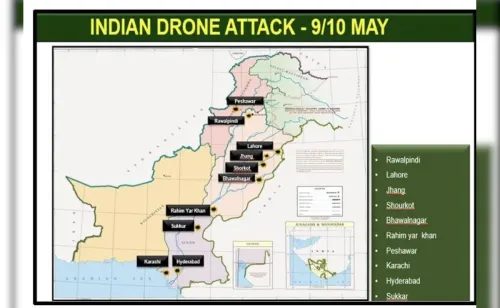
Operation Sindoor resulted in the destruction of nine terror camps, affirming that terrorists and their supporters would receive equal punishment. India also demonstrated its air defense capabilities, with the indigenous Akashteer system successfully intercepting numerous drones and missiles. The operation, conducted on May 9-10, involved air strikes on 11 bases of a nuclear-armed nation, leading to the crippling of 20% of Pakistan's Air Force assets, particularly at the Bhoolari airbase. This tri-service operation significantly impacted the terror landscape in Pakistan, with many leaders now in hiding or missing.
Key figures in the terror hierarchy, such as Hafiz Saeed and Masood Azhar, are now largely absent, struggling to rebuild their networks. Azhar, notorious for orchestrating major attacks in India, suffered immensely—losing key infrastructure and many family members. The strikes also eliminated high-profile Jaish-e-Mohammed operatives involved in past hijackings. In summary, Operation Sindoor not only dismantled terror infrastructure but also severely damaged the morale and recruitment capabilities of the top terror leadership.
Point of View
Operation Sindoor underscores India's unwavering commitment to counterterrorism and national security. The operation not only reinforces the nation's resolve but also sends a critical message to adversaries, emphasizing that terrorism will not be tolerated. As we navigate these complex geopolitics, it is essential to maintain a strong national front.
NationPress
5 Oct 2026
Frequently Asked Questions
What was the main objective of Operation Sindoor?
The primary goal of Operation Sindoor was to retaliate against Pakistan for the Pahalgam attack and to destroy terrorist infrastructure in both Pakistan and Pakistan-occupied Kashmir.
How many terror camps were destroyed during the operation?
Operation Sindoor resulted in the destruction of nine terror camps.
What technology was used in Operation Sindoor?
The operation utilized advanced indigenous military technology, including Akash and BrahMos missiles.
What message did India send to Pakistan through this operation?
India conveyed that any act of terror would be considered an act of war, signaling a shift in its military doctrine.
How did Operation Sindoor impact Pakistan's terror infrastructure?
The operation severely disrupted Pakistan's terror infrastructure, causing significant losses in personnel and resources, and forcing many top leaders into hiding.