Operation Sindoor: Inside Pakistan's fake victory circus and terror group rifts
Synopsis
India's Operation Sindoor didn't just destroy terror infrastructure — it cracked the Pakistan Army's most prized strategic assets from within. As Islamabad spent ₹500 crore staging fake victory rallies, Masood Azhar and Hafiz Saeed were reportedly questioning the very army that had promised them protection — a rupture that could redraw Pakistan's proxy terror calculus.
Key Takeaways
Operation Sindoor destroyed Jaish-e-Mohammad's Bahawalpur headquarters and Lashkar-e-Tayiba's Muridke training camp .
JeM chief Masood Azhar reportedly lost most of his family members and several cadres in the strikes.
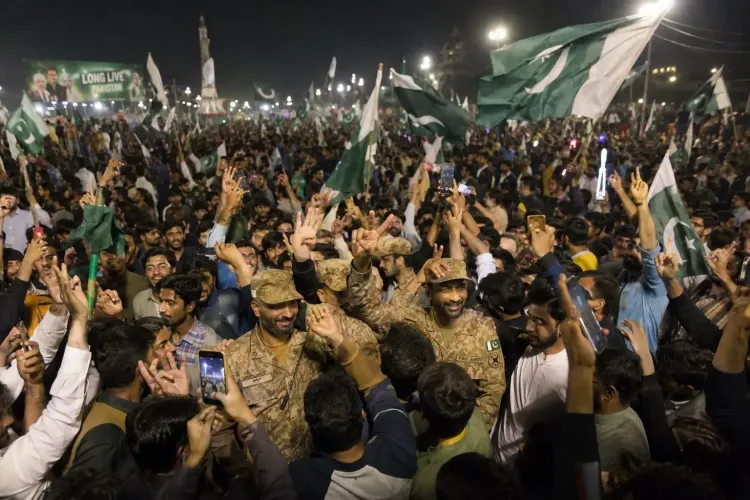
The Pakistan Army directed ₹500 crore to be distributed for staging ten days of fake victory rallies under the programme 'Ashra-e-Tashakur Fateh-E-Muneeb' .
Both Hafiz Saeed and Masood Azhar reportedly began questioning the ISI and Army over broken protection guarantees.
Internal dissent among cadres of both terror groups is reportedly delaying their operational rebuilding.
The Army's use of JeM and LeT cadres in public rallies inadvertently confirmed the groups' integration within Pakistan's state establishment.
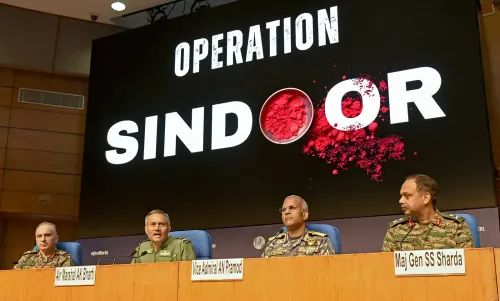
Following Operation Sindoor, in which Indian armed forces struck terror infrastructure deep inside Pakistan in retaliation for the Pahalgam terror attack, Islamabad launched a coordinated disinformation campaign projecting a Pakistani victory — even as the strike left both Jaish-e-Mohammad (JeM) and Lashkar-e-Tayiba (LeT) deeply fractured, according to Indian intelligence officials.
The Manufactured Victory Narrative
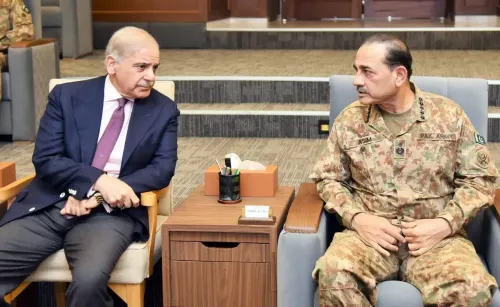
According to officials, events were strategically planned across Pakistan to project a false image of triumph. Pakistan's Army chief reportedly instructed the Shehbaz Sharif government to release ₹500 crore, which was then distributed evenly among federal agencies, business groups, and religious organisations — all of whom were directed to organise large-scale rallies. The programme, mandated by the Pakistan Army, was titled 'Ashra-e-Tashakur Fateh-E-Muneeb' — meaning ten days of gratitude for a decisive victory. Social media handles run by Pakistani operatives also reportedly worked overtime to amplify the false narrative.
In a further bid to consolidate his image, Army chief Asim Munir allegedly pressured the Sharif government to confer upon him the rank of Field Marshal, according to the officials.
What Operation Sindoor Actually Struck
The scale of damage inflicted by the Indian operation tells a starkly different story. The Jaish-e-Mohammad lost its Bahawalpur headquarters — its primary base of operations — in the strikes. JeM chief Masood Azhar reportedly lost most of his family members along with several cadres. The Muridke camp, the Lashkar-e-Tayiba's primary training facility, was also destroyed during the operation. Officials note that while encounters and targeted killings of terrorists have occurred on Indian soil before, neither group had ever been struck so hard, and so deep inside Pakistani territory.
Cracks Within Terror Groups
An Intelligence Bureau official told NationPress that while the ten-day rallies proceeded on a grand scale, something far more serious was unfolding within the ranks of both terror outfits. Both Hafiz Saeed of the LeT and Masood Azhar of the JeM had reportedly begun questioning the Pakistan Army and the Inter-Services Intelligence (ISI), demanding to know what had happened to the guarantees of protection they had been assured. These groups, the official explained, have historically operated freely only because of the funding and protection extended by the Army and the ISI.
The official added that many rank-and-file cadres had also started questioning their own leadership, deepening the internal disarray. "The impression that the Pakistan establishment sought to create worked among a few people, but clearly their proxies were not impressed. They knew what they had lost and the fact that the Army could not even defend them is what left them completely disgruntled," the official said.
Army's Desperation Exposed Its Own Contradictions
Analysts and Pakistan watchers point out that the Army's insistence on having JeM and LeT cadres visibly participate in the victory rallies inadvertently backfired. By doing so, the establishment publicly showcased that globally banned terror groups — both the Jaish-e-Mohammad and Lashkar-e-Tayiba are internationally designated terrorist organisations — remain embedded within the Pakistani state's ecosystem. "It was nothing but desperation on part of the Army. It had to indulge in this circus and claim a false victory. In reality, the Pakistan Army and its chief were the hardest hit," Pakistan watchers noted.
Long Road to Rebuilding
Officials say the combination of unprecedented physical losses, broken trust between the terror groups and their military patrons, and internal dissent among cadres explains why both the JeM and LeT are taking significantly longer than expected to rebuild their operational capacity. This comes amid heightened international scrutiny of Pakistan's links to these organisations. The rifts exposed by Operation Sindoor may have lasting consequences for the Army's ability to deploy these groups as strategic proxies going forward.
Point of View
The Army handed international observers a rare public admission of what they have long alleged: that these globally banned groups are state assets, not rogue elements. More significantly, the physical destruction of Bahawalpur and Muridke has done what years of diplomatic pressure could not — it has turned the proxies against their patron. If the rift between the Army and its terror groups deepens, India's Operation Sindoor may prove to be a strategic inflection point that outlasts the ceasefire.
NationPress
23 Sept 2026
Frequently Asked Questions
What did Operation Sindoor target inside Pakistan?
Operation Sindoor targeted terror infrastructure deep inside Pakistan, including the Jaish-e-Mohammad's Bahawalpur headquarters and the Lashkar-e-Tayiba's Muridke training camp. The strikes were carried out by Indian armed forces in retaliation for the Pahalgam terror attack.
What is the 'Ashra-e-Tashakur Fateh-E-Muneeb' programme?
It is a ten-day rally programme mandated by the Pakistan Army, translating to 'ten days of gratitude for a decisive victory.' The Pakistan Army reportedly directed ₹500 crore to be distributed to federal agencies, business groups, and religious organisations to organise large-scale rallies projecting a false narrative of Pakistani victory after Operation Sindoor.
Why are Jaish-e-Mohammad and Lashkar-e-Tayiba reportedly in crisis after Operation Sindoor?
Both groups suffered unprecedented physical losses — JeM lost its Bahawalpur headquarters and LeT its Muridke training facility — and JeM chief Masood Azhar reportedly lost most of his family. The destruction, combined with the Pakistan Army's failure to protect them despite long-standing assurances, has triggered internal dissent among cadres and a breakdown of trust with their military patrons.
What did Asim Munir reportedly demand after Operation Sindoor?
According to Indian officials, Pakistan Army chief Asim Munir allegedly pressured the Shehbaz Sharif government to confer upon him the rank of Field Marshal in the aftermath of Operation Sindoor, as part of efforts to project a narrative of personal and institutional victory.
How does Pakistan's response to Operation Sindoor expose its links to terror groups?
By insisting that JeM and LeT cadres participate visibly in state-sponsored victory rallies, the Pakistan Army publicly confirmed the integration of both internationally banned terror organisations within its institutional ecosystem — undermining Islamabad's long-standing denial of state support for these groups.