SC warns states on RTE 25% quota: File affidavits or face summons
Synopsis
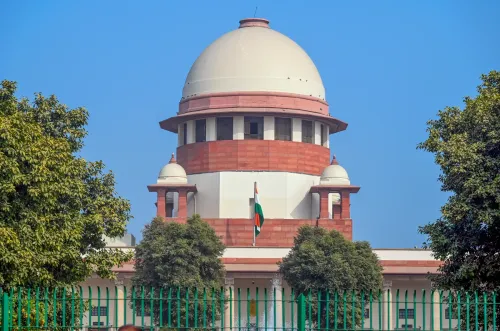
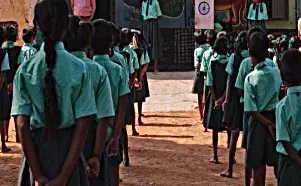
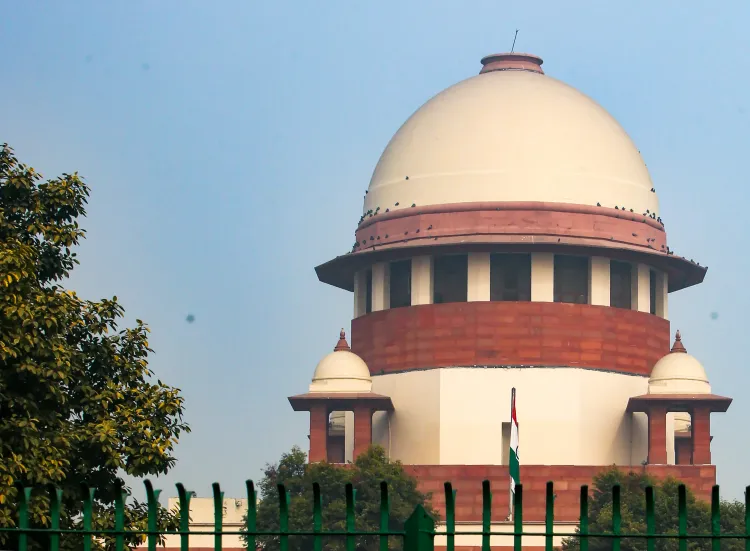
The Supreme Court has put several states on notice over their failure to implement the RTE Act's 25% admission quota for disadvantaged children in private schools, warning that Principal Secretaries of Education Departments could be summoned if affidavits are not filed within four weeks. The case exposes a decade-long pattern of state-level resistance to a constitutional mandate.
Key Takeaways
The Supreme Court on 7 May 2025 sought compliance reports from states and UTs on Section 12(1)(c) of the RTE Act, 2009 .
States including Punjab , West Bengal , Kerala , Goa , Arunachal Pradesh , Meghalaya , Nagaland , and UT Puducherry have been given four weeks to file affidavits.
Court warned it will be compelled to summon Principal Secretaries of Education Departments if affidavits are not filed in time.
Ladakh , Jammu and Kashmir , Andaman and Nicobar Islands , Mizoram , and Sikkim were not represented during the hearing.
The matter is next listed for hearing on 22 July 2025 .
The apex court has previously reiterated that the right to education under Article 21A will remain an
The Supreme Court of India has sought compliance reports from several states and Union Territories (UTs) over the implementation of Section 12(1)(c) of the Right of Children to Free and Compulsory Education (RTE) Act, 2009, warning that failure to file affidavits may compel the top court to summon the Principal Secretaries of their respective Education Departments. The order was passed on 7 May 2025 during a hearing of a writ petition filed by Md Imran Ahmad concerning the 25 per cent reservation mandate for children from weaker and disadvantaged sections in private unaided schools.
Key Developments in the Hearing
A bench comprising Justices Vikram Nath, Sandeep Mehta, and Vijay Bishnoi was presented with a detailed chart by senior advocate Salman Khurshid, appearing for the petitioner, categorising states and UTs into five groups based on their implementation status of Section 12(1)(c).
The first category comprised states and UTs that had allegedly refused to implement the provision. The second included those that had framed rules allegedly aimed at bypassing or overruling the mandate. The third covered states that were either silent or had not framed rules at all, while the fourth consisted of those that had partially implemented it. The fifth category comprised states and UTs that claimed enforcement but had not submitted proof before the court.
States and UTs Directed to File Affidavits
The Justice Vikram Nath-led bench granted four weeks to the states of Punjab, West Bengal, Kerala, Goa, Arunachal Pradesh, Meghalaya, and Nagaland, along with the Union Territory of Puducherry, to obtain instructions and file appropriate affidavits regarding the
Point of View
Several states continue to resist, delay, or technically circumvent a constitutional obligation. The five-category framework presented by the petitioner's counsel is damning — it suggests that non-compliance is not incidental but, in some cases, deliberate. The court's threat to summon Principal Secretaries is significant, but the deeper question is whether judicial pressure alone can substitute for political will at the state level. Without a centralised, independently verified compliance mechanism, this risks becoming a recurring courtroom ritual rather than a structural fix.
NationPress
23 Sept 2026
Frequently Asked Questions
What is Section 12(1)(c) of the RTE Act?
Section 12(1)(c) of the Right of Children to Free and Compulsory Education Act, 2009 mandates that private unaided schools reserve at least 25 per cent of their seats in entry-level classes for children from weaker and disadvantaged sections of society. These admissions are free of charge, with the government reimbursing schools for the cost.
Which states have been asked to file compliance affidavits by the Supreme Court?
The Supreme Court has directed Punjab, West Bengal, Kerala, Goa, Arunachal Pradesh, Meghalaya, and Nagaland, along with the Union Territory of Puducherry, to file affidavits within four weeks on the true and faithful implementation of Section 12(1)(c) of the RTE Act.
What happens if states fail to file affidavits?
The Supreme Court has warned that if states and UTs fail to file the required affidavits within the stipulated period, it will be compelled to summon the Principal Secretaries of their respective Education Departments to appear before the court.
When is the next hearing in this RTE quota case?
The Supreme Court has listed the matter for further hearing on 22 July 2025. The bench has also directed the registry to forward copies of its order to the Chief Secretaries and standing counsel of the concerned states and UTs within one week.
What has the Supreme Court previously said about the RTE quota?
In a recent judgment concerning a denial of admission in Uttar Pradesh, the Supreme Court reiterated that neighbourhood schools have a binding constitutional and statutory obligation to admit students allotted under the RTE Act. The court observed that the right to education under Article 21A of the Constitution will remain an empty promise if the RTE Act's mandate is not implemented in letter and spirit.