Did the SC Dismiss a PIL on RTE in Minority Institutions?

Synopsis
The Supreme Court has dismissed a PIL challenging the exemption of minority institutions from the RTE Act, imposing a hefty cost on the petitioner. The court's stern response highlights the significance of judicial integrity and the implications of such legal challenges.
Key Takeaways
The Supreme Court dismissed the PIL against minority institutions regarding the RTE Act.
A penalty of Rs 1 lakh was imposed on the petitioner.
The ruling highlights the autonomy of minority institutions .
It raises questions about the enforcement of educational rights.
The debate on the RTE Act's applicability continues.
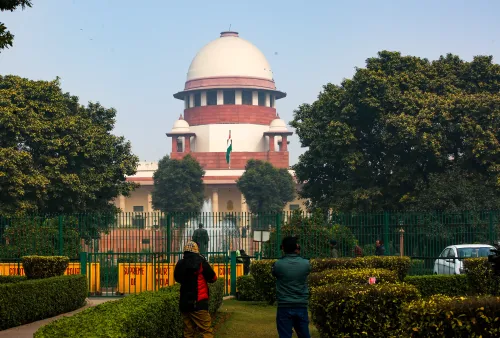
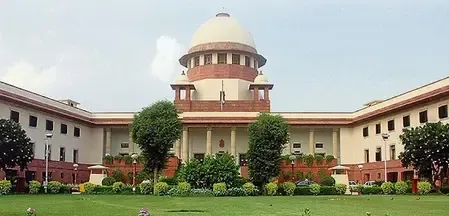
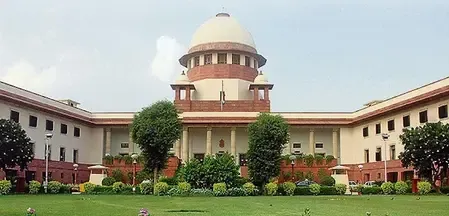
New Delhi, Dec 12 (NationPress) The Supreme Court delivered a stinging rebuke to a public interest litigation (PIL) aiming to enforce the Right to Education (RTE) Act in minority-run madrasas and similar institutions. A Bench led by Justice B.V. Nagarathna outrightly rejected the plea, imposing a penalty of Rs 1 lakh on the petitioner while expressing significant dissatisfaction over the attempt to contest a previous Constitution Bench ruling in Pramati Educational and Cultural Trust v. Union of India (2014), which determined that the RTE Act is not applicable to minority institutions.
“You cannot treat the Supreme Court this way. We are infuriated,” the Bench stated, which also included Justice R. Mahadevan, warning that such petitions threaten the very essence of the judiciary.
“How can you challenge a Supreme Court ruling through a writ petition? Such actions undermine the judiciary in our nation. We are exercising restraint with a penalty of one lakh, but we are not issuing contempt,” the apex court remarked while dismissing the petition.
The PIL, filed under Article 32 of the Constitution, requested a judicial review of the blanket exemption given to minority institutions from Section 12(1)(c) of the RTE Act, which requires a 25% reservation for children from economically weaker and disadvantaged groups in private schools.
The petitioner argued that the Pramati ruling had deprived a segment of children of their fundamental right to free and compulsory education in diverse, inclusive settings, leading to the establishment of segregated educational environments.
The plea claimed that minority institutions, while accepting students from the general category on a profit-oriented basis, were deliberately circumventing their statutory and constitutional duties to include children from underprivileged backgrounds.
It contended that such practices constituted blatant discrimination, violating Articles 14, 15(4), and 21A, asserting that the autonomy granted to minority institutions under Article 30(1) should not be seen as a “blank check” to create exclusive educational enclaves.
Earlier in October, a two-judge Bench of the Supreme Court had referred a PIL seeking a directive to mandate the Teacher Eligibility Test (TET) for all schools educating children aged 6-14 years, including minority institutions, to the Chief Justice of India (CJI).
Noting that the petition raised significant legal questions, Justices Dipankar Datta and AG Masih referred the issue to the CJI, responsible for the roster, indicating that similar petitions have already been forwarded to a larger Bench.
The PIL asserted that the exclusion of minority-managed institutions from the RTE Act's scope infringes upon the fundamental rights to equality and education enshrined in Articles 14, 15, 16, 21, and 21A of the Constitution.
Point of View
It is crucial to respect the judiciary's decisions and the established legal framework. The Supreme Court's ruling reinforces the autonomy of minority institutions while highlighting the delicate balance between education rights and institutional autonomy. The debate surrounding the RTE Act's applicability to minority-run institutions will continue to evoke diverse opinions in society.
NationPress
5 Oct 2026
Frequently Asked Questions
What was the Supreme Court's ruling on the PIL?
The Supreme Court rejected the PIL seeking the implementation of the RTE Act in minority institutions, imposing a cost of Rs 1 lakh on the petitioner.
Why was the PIL dismissed?
The court expressed strong displeasure over the attempt to challenge a previous ruling which stated that the RTE Act does not apply to minority institutions.
What did the PIL argue regarding minority institutions?
The PIL argued that minority institutions were evading their responsibilities to include disadvantaged children while accepting students from the general category.
What are the implications of this ruling?
The ruling reinforces the autonomy of minority institutions and emphasizes the importance of adhering to judicial decisions.
Is there any ongoing debate about the RTE Act?
Yes, the applicability of the RTE Act to minority institutions continues to be a contentious issue, raising questions about equality in education.