Pakistan femicide crisis: 405 honour killings, 5,000 rapes recorded in 2024
Synopsis
Pakistan recorded at least 405 honour killings, 5,000 rapes, and over 2,000 domestic violence cases in 2024 alone — and ranked last on the WEF Gender Gap Index. A Genocide Watch report now calls on the US, China, and the UK to press Islamabad for structural reform, raising the stakes for Pakistan's international partnerships.
Key Takeaways
At least 405 honour killing cases were reported in Pakistan in 2024 , with actual figures likely higher due to underreporting.
More than 5,000 rape cases and 2,000 domestic violence cases were recorded in 2024 .
Pakistan ranked last on the World Economic Forum's Global Gender Gap Index .
Over 21 million children are reportedly out of school, with girls disproportionately affected.
Genocide Watch has urged the EU , US , China , and UK to press Pakistan on honour killings and structural reforms for women's rights.
Religious minorities including Ahmadis , Christians , and Hindus face violence and exclusion under blasphemy laws.
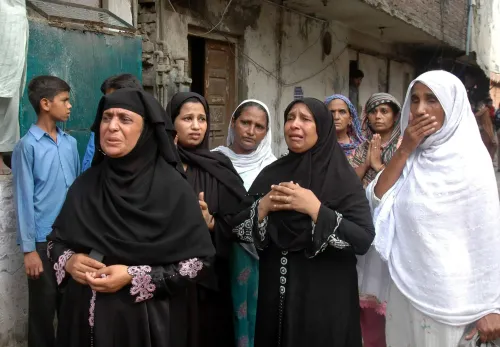
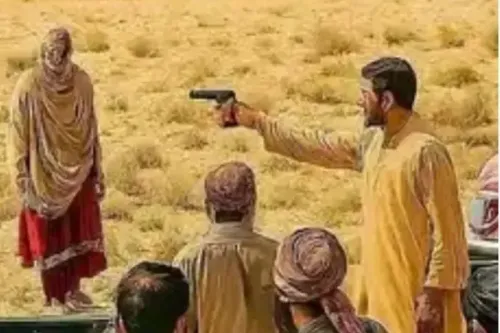
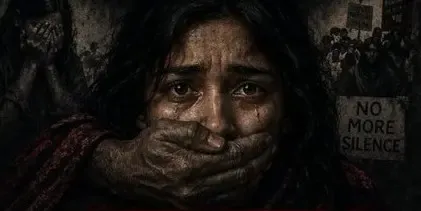
Pakistan is facing a deepening femicide crisis, with women bearing the most severe consequences of the country's structural inequalities, according to a report by Genocide Watch. Gender-based violence — including acid attacks, forced and child marriage, rape, trafficking, forced conversion, and domestic abuse — remains widespread, with hundreds of women killed each year in so-called "honour killings."
Scale of Violence Against Women
At least 405 honour killing cases were reported in 2024, though the actual figures are likely significantly higher due to chronic underreporting and inconsistent law enforcement, the Genocide Watch report noted. More than 2,000 domestic violence cases and 5,000 accounts of rape were recorded in the same year, reinforcing Pakistan's standing as one of the most dangerous countries in the world for women.
According to a 2025 United Nations report, two out of every three Pakistani women are denied reproductive autonomy and face abuse and pressure relating to their reproductive health. In September 2024, the Lahore High Court ruled that marriages after puberty are valid under Islamic law — a decision that drew sharp criticism from rights groups, as millions of girls in Pakistan are reportedly married under the age of 18.
Education and Gender Gap
Pakistan was ranked last on the World Economic Forum's Global Gender Gap Index, a damning indicator of systemic exclusion. The country also faces a severe education crisis, with over 21 million children reportedly out of school due to poverty, social pressures, child labour, and discrimination — a crisis that disproportionately affects girls.
Religious Minorities and Press Freedom Under Threat
Beyond gender-based violence, religious minorities remain acutely vulnerable. Ahmadis, Christians, and Hindus face discrimination, violence, and social exclusion, compounded by the misuse of blasphemy laws and weak institutional enforcement. Journalists, activists, and academics face censorship, threats, arrests, and in some cases murder, the report stated, attributing responsibility to actions of the Pakistani government.
Security conditions have further deteriorated, with militant groups including Tehreek-e-Taliban Pakistan, the Islamic State of Khorasan Province, Al-Qaeda, and the Balochistan Liberation Army (BLA) carrying out attacks in 2025 and 2026.
What Genocide Watch Is Demanding
Genocide Watch has urged the European Union to use its GSP+ review procedures to press Pakistan on reforms covering freedom of expression, religious freedom, and women's rights. It has also called on partner states to expand emergency relocation programmes, humanitarian visas, and protection referrals for journalists, human rights defenders, and religious minorities facing immediate risk.
The report stated: "Pakistan's diplomatic and economic partners, such as the United States, China, and the United Kingdom, should urge and incentivise the country to combat honour killings and implement structural and systemic changes that would protect the lives and futures of women."
Genocide Watch further called on the United Nations High Commissioner for Human Rights to consider designating Pakistan as a country of special concern, citing its concerning record of abuses against ethnic and religious minorities. Whether international pressure translates into measurable reform on the ground remains the central question.
Point of View
But the harder question is whether international pressure will move the needle. Pakistan has faced similar calls for reform for decades — GSP+ conditionality has existed for years, yet the structural conditions enabling honour killings, child marriage, and blasphemy-law abuse persist. The Lahore High Court's 2024 ruling validating post-puberty marriages signals that institutional regression, not just enforcement failure, is at play. Until Pakistan's diplomatic partners attach concrete, verifiable benchmarks — not just diplomatic language — to economic engagement, these reports risk becoming a ritual of documentation without consequence.
NationPress
26 Sept 2026
Frequently Asked Questions
How many honour killings were reported in Pakistan in 2024?
At least 405 honour killing cases were reported in Pakistan in 2024, according to a Genocide Watch report. The actual number is likely higher due to widespread underreporting and weak enforcement mechanisms.
What is the femicide crisis in Pakistan?
Pakistan's femicide crisis refers to the systematic killing and abuse of women rooted in structural gender inequality. It encompasses honour killings, acid attacks, rape, forced marriage, trafficking, and domestic violence, with Pakistan ranking last on the WEF Global Gender Gap Index.
What has Genocide Watch recommended regarding Pakistan?
Genocide Watch has urged the EU to use GSP+ review procedures to press Pakistan on reforms, called on the US, China, and UK to incentivise action against honour killings, and asked the UN Human Rights Commissioner to designate Pakistan a country of special concern.
How are religious minorities treated in Pakistan?
Ahmadis, Christians, and Hindus in Pakistan face discrimination, violence, and social exclusion, largely enabled by blasphemy laws and weak institutional enforcement, according to the Genocide Watch report.
What is Pakistan's ranking on the Global Gender Gap Index?
Pakistan was ranked last on the World Economic Forum's Global Gender Gap Index, reflecting deep-rooted systemic exclusion of women from education, economic participation, and political representation.