Pakistan's Gender Violence: A Troubling Reality vs. Political Rhetoric
Synopsis
A recent analysis reveals that Pakistan's gender violence issues highlight a significant disconnect between the government’s proclaimed commitment to women's rights and the harsh realities faced by women across the country.
Key Takeaways
Pakistan's gender-based violence highlights systemic failures in protecting women's rights.
Forced marriages and honour killings continue to occur despite government promises of modernization.
The country ranks last in the Global Gender Gap Report, reflecting significant gender inequality.
Washington, April 11 (NationPress) The status of women in Pakistan is not simply an issue of gender inequality but highlights a deeper systemic failure by the government to uphold fundamental human rights.
In a climate of institutional indifference, practices like forced marriages and honour killings remain prevalent throughout the nation, as reported this week.
In an article for the US-based platform 'Medium', European political analyst Dimitra Staikou points out that despite the Pakistani leadership's attempts to present an image of modernization and global integration, the actual experiences of women reveal a significant divide between “rhetoric and reality”.
She noted that the inability to safeguard women’s rights is not just a moral issue; it obstructs sustainable development and undermines both social harmony and economic advancement.
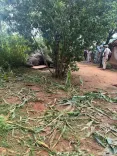
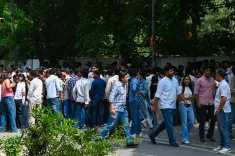
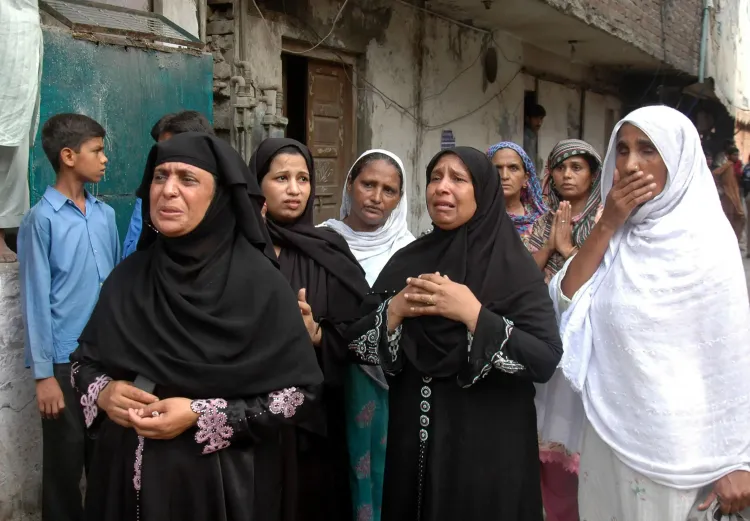
“On March 16, 2026, in Rahim Yar Khan, Pakistan, at least eight women tragically lost their lives and many others were injured when a building's roof collapsed as they gathered for state financial assistance. They were forced onto the rooftop due to severe overcrowding in a process that was supposedly intended to assist them. This event is not merely an 'accident'; it starkly highlights the vulnerability of women even within initiatives aimed at their protection,” Staikou elaborated.
“Just weeks earlier, in early February 2026, in Punjab, a young woman was killed by her own family members in another honour killing, reportedly for resisting a forced marriage. This case sparked minimal local response, lacking meaningful public discourse or accountability—a painfully familiar trend,” she added.
Referring to a January analysis by the Pakistani newspaper 'Dawn', the expert revealed a troubling reality: “Courts in the country often misinterpret essential concepts such as consent, leaving victims of rape effectively unprotected by the very system designed to ensure justice.”
She emphasized that Pakistan ranks last out of 148 countries in the Global Gender Gap Report 2025 by the World Economic Forum, with only 56.7% of its overall gender gap addressed, marking a decline from previous years.
“The index evaluates equality across economic participation, education, health, and political empowerment, showcasing a reality where women are systematically excluded from the workforce and decision-making roles,” Staikou asserted.
She also referenced international human rights organizations, noting that Amnesty International has highlighted that women in Pakistan “continue to encounter significant obstacles in accessing justice,” while Human Rights Watch (HRW) stated that gender-based violence “remains widespread, with authorities consistently failing to protect victims and hold offenders accountable.”
Reflecting on the persistent gender inequality in Pakistan, Staikou remarked, “The issue is not a lack of awareness or international pressure, but rather a deficiency of sincere political will.”
Point of View
Which is vital for the nation’s development.
NationPress
19 Sept 2026
Frequently Asked Questions
What is the current status of women's rights in Pakistan?
Women in Pakistan face systemic challenges, including gender-based violence, forced marriages, and limited access to justice.
How does Pakistan rank in terms of gender equality?
Pakistan ranks last out of 148 countries in the Global Gender Gap Report 2025, indicating severe gender inequality.
What incidents exemplify gender violence in Pakistan?
Recent incidents include honour killings and a tragic building collapse during a state aid event that resulted in multiple fatalities among women.