Violence against women embedded in Pakistan's institutions: Report
Synopsis
A Pakistan Observer report reveals that gender-based violence in Pakistan is not a law-and-order failure alone — it is a structural one. With 7,071 GBV cases in 2025 (up 34%), conviction rates near zero, a Supreme Court that reduced a rape sentence to fornication, and Jirgas executing couples for love marriages, the report argues that Pakistan's institutions are not failing women — they are actively working against them.
Key Takeaways
Pakistan Observer report finds violence against women is institutionally embedded, sustained by Jirgas , judicial failure, and media complicity.
Sahil recorded 7,071 gender-based violence cases in 2025 — a 34 per cent rise from the previous year, including 284 honour killings and 41 acid attacks .
Approximately 1,000 women are killed annually in Pakistan in the name of honour; 405 cases were officially recorded in 2024 .
In January 2026 , Pakistan's Supreme Court reduced a rape conviction to fornication, cutting a 20-year sentence to five years .
Conviction rates for domestic violence, rape, and honour killings remain in the low single digits; abduction convictions stand at just 0.1 per cent .
Pakistan ranks 148th in the Global Gender Gap Report 2025 , with literacy parity below 75 per cent .
Violence against women in Pakistan is not merely a social problem — it is structurally embedded in the country's institutions, upheld by Jirgas that the state tolerates and reinforced by media narratives that normalise abuse, according to a report by the Pakistan Observer. The findings, published in June 2025, paint a damning picture of systemic impunity that leaves women across Pakistan vulnerable and unprotected.
Systemic Impunity and Judicial Failure
'The normalisation of abuse reflects hostility toward female autonomy. Punitive measures alone cannot dismantle this system… International obligations lose significance when justice is replaced by silence. Low conviction rates, state reluctance to confront Jirgas and media complicity sustain impunity, leaving women vulnerable and unprotected,' the report stated.
The judiciary's role has come under sharp scrutiny. In January 2026, Pakistan's Supreme Court reduced a rape conviction to fornication, cutting a 20-year sentence to five years and lowering the associated fine — a ruling the report described as emblematic of 'systemic reluctance to confront gender-based violence.' Conviction rates for domestic violence, rape, and honour killings remain in the low single digits, while abductions see a dismal 0.1 per cent conviction rate. 'The judiciary's failure is not incidental; it is structural, reflecting a broader reluctance to challenge patriarchal norms and tribal authority,' the report noted.
Key Incidents That Exposed the Crisis
The report draws on a series of high-profile cases to illustrate the scale of the problem. On 5 June, young physician Mahnoor Narsir was attacked with acid by a staff member at Quetta's civil hospital. 'This was not merely an assault; it was a grave act of gender-based violence and workplace insecurity, emblematic of the perilous conditions women face in Pakistan,' the report said.
In June 2025, TikTok influencer Sana Yousaf was shot dead in her Islamabad home, hours after celebrating her 17th birthday. In 2021, Noor Mukadam was beheaded by her boyfriend after rejecting his marriage proposal — an incident that sparked nationwide outrage and briefly renewed calls for legislative reform.
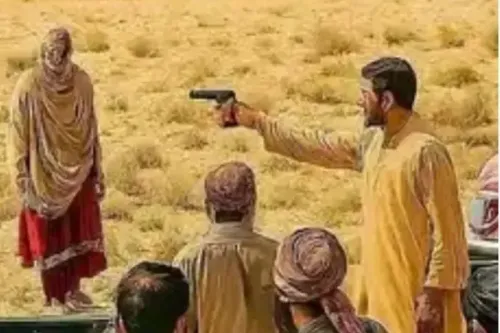
Among the most harrowing cases cited was the execution in July 2025 of a young couple, Ehsan Samalani and Bano Satakzai, killed for contracting a love marriage without family approval. A video from Quetta went viral showing Bano's final words in Brahvi — 'You are allowed to shoot me, but nothing more than that' — spoken moments before she was shot dead by her own brother, after her husband was also killed.
The Scale in Numbers
The data underscores the breadth of the crisis. Approximately 1,000 women are murdered annually in Pakistan in the name of honour, with 405 cases officially recorded in 2024 alone — a figure the report notes is likely a significant undercount, with many deaths erased by tribal allegiance and societal complicity.
In 2025, the organisation Sahil recorded 7,071 gender-based violence cases nationwide — a 34 per cent increase from the previous year. These included 1,546 murders, 1,345 abductions, 1,169 torture cases, 877 rapes, 680 suicides, 449 injuries, 316 harassment cases, 284 honour killings, and 41 acid attacks. Acquaintances were responsible for 32 per cent of cases, strangers for 18 per cent, and husbands for 12 per cent.
Pakistan's Standing on Global Gender Indices
Pakistan ranks 148th in the Global Gender Gap Report 2025, with literacy parity remaining below 75 per cent and economic participation continuing to deteriorate. The combination of weak institutions, a compliant media, and a judiciary reluctant to challenge tribal authority means the structural conditions sustaining violence remain largely intact.
Unless the state moves to actively dismantle Jirga authority and establish independent accountability mechanisms, analysts warn, the numbers are unlikely to improve.
Point of View
Not the exception.
NationPress
20 Sept 2026
Frequently Asked Questions
What does the Pakistan Observer report say about violence against women in Pakistan?
The report concludes that violence against women in Pakistan is structurally embedded in state institutions, upheld by Jirgas the government tolerates, and reinforced by media narratives that normalise abuse. It argues that low conviction rates, judicial reluctance, and societal complicity together sustain a climate of impunity.
How many gender-based violence cases were reported in Pakistan in 2025?
The organisation Sahil recorded 7,071 gender-based violence cases across Pakistan in 2025 — a 34 per cent increase from the previous year. These included 1,546 murders, 877 rapes, 284 honour killings, and 41 acid attacks, among others.
What was the Supreme Court of Pakistan's controversial January 2026 ruling?
Pakistan's Supreme Court reduced a rape conviction to fornication in January 2026, cutting a 20-year sentence to five years and lowering the associated fine. The report cited this as evidence of 'systemic reluctance to confront gender-based violence' at the highest judicial level.
What is Pakistan's ranking in the Global Gender Gap Report 2025?
Pakistan ranks 148th in the Global Gender Gap Report 2025, with literacy parity below 75 per cent and deteriorating economic participation for women. The ranking reflects the broader institutional failures documented in the report.
Who were Ehsan Samalani and Bano Satakzai?
Ehsan Samalani and Bano Satakzai were a young couple executed in July 2025 for contracting a love marriage without their family's approval — one of the most widely cited honour-killing cases in recent Pakistani history. A video of Bano's final words before she was shot went viral, drawing international attention to honour-based violence in Pakistan.