Are Honour Killings Still a Grave Human Rights Concern in Pakistan?

Synopsis
The alarming trend of honour killings in Pakistan continues to raise pressing human rights concerns, with a staggering number of incidents and an abysmally low conviction rate. This report sheds light on the systemic failures that perpetuate this crisis, highlighting the urgent need for reforms to protect vulnerable individuals and bring justice.
Key Takeaways
Honour killings remain a critical human rights issue in Pakistan.
High incident rates are coupled with very low conviction rates .
Women constitute 90% of the victims in honour killings.
Systemic issues in law enforcement hinder justice.
Immediate reforms are necessary to protect vulnerable individuals.
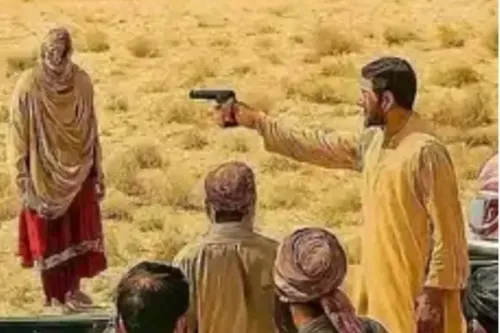
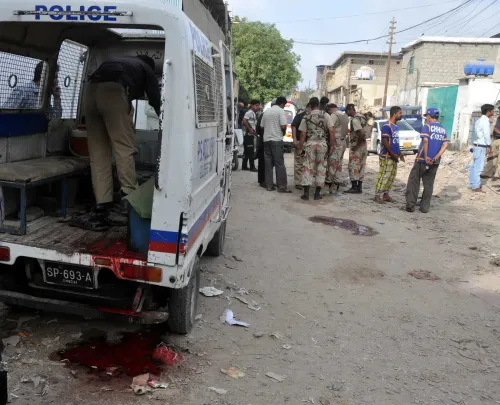
Islamabad, Feb 16 (NationPress) Honour killings persist as a significant human rights violation in Pakistan, with a troubling number of incidents reported nationwide and a dismal conviction rate, according to a recent report.
The Express Tribune Magazine revealed, "Occasionally, isolated cases of honour killings surface in the media. Yet, beneath these individual tragedies lies a grim national reality, where family forgiveness, court delays, and law enforcement shortcomings permit the ongoing loss of innocent lives in the name of honour."
A recent analysis by the Sustainable Social Development Organisation (SSDO), bolstered by official statistics and global studies, highlighted that inadequate investigations, judicial delays, and societal pressures hinder the pursuit of justice despite existing laws.
The province of Punjab reported the highest number of honour killings, with 225 incidents and only two convictions. Khyber Pakhtunkhwa recorded 134 honour killings, also yielding two convictions. Although Sindh documented honour killings, no convictions were made. Balochistan reported 32 cases with a solitary conviction. This data starkly illustrates the gap between the number of lives lost and the judicial response.
In an interview with The Express Tribune, women’s rights activist Imran Takkar pointed out that women represent 90% of honour killing victims. "Women are often seen as a vulnerable and oppressed demographic, leading families to withdraw from such cases. If police enhance their investigative approaches and prosecution fulfills its duties, stricter penalties could become viable," Takkar was quoted as saying.
Senior advocate Shabbir Hussain Gigyani emphasized that ineffective police investigations and poor case preparation remain significant barriers to justice in honour killing cases, despite the existence of laws and amendments. "The police frequently involve close relatives of the victim as complainants and witnesses, who later reach compromises with the accused. Witnesses often retract their statements before the trial, resulting in acquittals in approximately 80% of cases," Gigyani stated.
SSDO Executive Director Syed Kausar Abbas remarked that the extraordinarily low conviction rate indicates that Pakistan’s current system fails to provide adequate protection and timely justice for victims. Abbas insisted that immediate reforms are essential to strengthen police investigations, enhance legal procedures, and ensure expedited trials.
The report in The Express Tribune magazine further noted: "Rooted in deep-seated customs, honour killings exploit fear to violently silence those who challenge societal norms. Thus, in the absence of rigorous law enforcement, the deaths of victims continue to be justified as moral rectification, allowing accountability to remain elusive."
Point of View
It is my duty to highlight the grave injustice surrounding honour killings in Pakistan, which continues to claim countless lives. Our commitment remains with the nation, advocating for reforms that ensure justice and protection for all individuals, especially women, who disproportionately bear the brunt of this societal malady.
NationPress
3 Oct 2026
Frequently Asked Questions
What are honour killings?
Honour killings are violent acts, typically murder, committed by family members against individuals perceived to have brought dishonor upon the family, often involving women.
What is the current conviction rate for honour killings in Pakistan?
The conviction rate for honour killings in Pakistan is alarmingly low, with many provinces reporting only a handful of convictions relative to the high number of incidents.
What reforms are needed to address honour killings?
Reforms should focus on strengthening police investigations, improving legal procedures, and ensuring timely trials to provide justice for victims of honour killings.
Who are the primary victims of honour killings?
Women make up the vast majority of honour killing victims, often due to societal norms and pressures that view them as bearers of family honour.
How can the public help combat honour killings?
Raising awareness, advocating for legal reforms, and supporting women's rights organizations can help combat the issue of honour killings in society.