Unmasking Gender-Based Violence: The Role of Patriarchy in Pakistan's Justice System
Synopsis
A recent report highlights the grave issues surrounding gender-based violence in Pakistan, revealing how systemic patriarchy and governance failures facilitate ongoing violence against women. This article dives deep into the societal norms and legal challenges that perpetuate injustice, making it a critical read for understanding women’s rights in the region.
Key Takeaways
Systemic Denial of Justice: Pakistan's governance structures fail to protect survivors of gender-based violence.
Entrenched Patriarchy: Deep-rooted societal norms reinforce gender inequality and normalize violence.
Underreporting: Fear of retaliation leads to significant underreporting of domestic violence cases.
Minority Vulnerability: Women from minority communities face compounded discrimination.
Urgent Need for Reform: Legal and social reforms are essential to combat gender-based violence effectively.
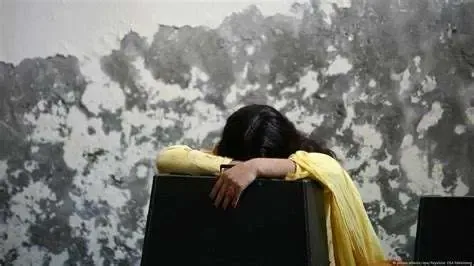
London, March 18 (NationPress) The persistent denial of justice for victims of gender-based violence in Pakistan reveals more than just procedural shortcomings; it uncovers a deeply rooted patriarchal system and administrative inefficiencies embedded within the nation’s governance frameworks.
When victims of violence are disregarded, discouraged, and denied impartial hearings, the notion of justice becomes a mere illusion—one that fosters ongoing violence and marginalization, as highlighted in a recent report.
“Patriarchy in Pakistan transcends social norms, evolving into an entrenched system that influences laws, institutions, and daily power dynamics. This framework positions women in disadvantaged roles, normalizing violence as a method of control. From a young age, restrictive behavioral codes, strict gender segregation, and the powerful ideology linking ‘family honor’ to female virtue dictate women’s lives. Abuses justified in the name of culture or religion are routinely overlooked or even endorsed,” detailed a report from the UK-based publication 'Asian Lite'.
“Practices such as honor killings, rape, sexual assaults, acid attacks, forced marriages, custodial abuse, domestic violence, dowry-related fatalities, and abductions are not mere social irregularities; rather, they serve as instruments through which patriarchal dominance is upheld,” it further elaborated.
The report emphasizes that the ongoing cycle of violence in Pakistan has continually attracted international attention.
“Justice for those affected by gender-based violence is systematically hindered by the corruption of patriarchal structures within law enforcement, judicial systems, and local authorities, where victims often face disbelief, blame, or coercion to remain silent,” the report asserted.
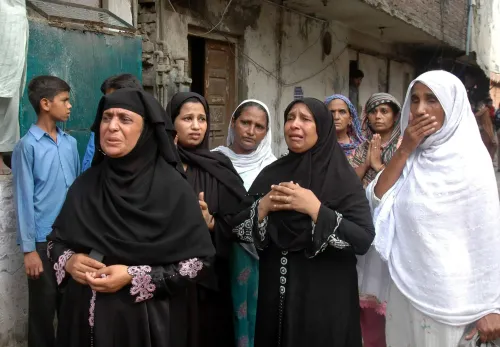
According to findings, women from minority religious communities—including Christians, Hindus, and Sikhs—experience compounded discrimination based on gender, faith, caste, and socio-economic status.
Despite the constitutional guarantees of equality in Pakistan, these women frequently find themselves lacking access to meaningful legal protections and social services.
Referencing the Human Rights Commission of Pakistan (HRCP), the report noted that approximately 70% of women in the nation have endured domestic violence—a statistic widely regarded as underreported, especially among minority groups where fear of reprisals and institutional bias deter complaints.
“Economic exploitation, limited access to education and employment, along with escalating digital harassment further exacerbate their vulnerability, pushing many survivors beyond the reach of formal justice. Pakistan’s glaring gender inequality is also evident in global indices measuring women’s economic engagement and political representation, where the country ranks perilously low. This disparity reinforces the perception of male superiority that lies at the heart of gender-based violence, a dynamic long recognized by international frameworks,” the report emphasized.
Pakistan experienced a notable increase in gender-based violence in 2025, with reported incidents rising by 25% from the previous year.
A report from Sahil, a non-governmental organization focused on child welfare in Pakistan, documented “thousands of murders, abductions, physical assaults, suicides, and rape incidents” across the country between January and November 2025.
“These figures illustrate a deteriorating situation for women and girls already at risk of violence in both public and private domains. Yet, beyond these statistics lies a more disturbing truth: the state’s failure to ensure justice for survivors,” the report concluded.
Point of View
It is imperative to understand that the systemic issues contributing to gender-based violence in Pakistan are not just individual failings but reflect a broader societal malaise. The entrenched patriarchy and administrative shortcomings demand urgent attention from both policymakers and civil society to create a safer environment for all.
NationPress
16 Oct 2026
Frequently Asked Questions
What is the main cause of gender-based violence in Pakistan?
The primary cause of gender-based violence in Pakistan is a deeply entrenched patriarchal system that influences laws and societal norms, often normalizing violence against women.
How does the legal system fail gender-based violence survivors?
The legal system often fails survivors by perpetuating corruption and bias, leading to disbelief, blame, and intimidation of victims.
What percentage of women in Pakistan face domestic violence?
Approximately 70% of women in Pakistan have experienced domestic violence, according to the Human Rights Commission, although this figure is believed to be underreported.
What are some examples of gender-based violence in Pakistan?
Examples include honor killings, rape, acid attacks, forced marriages, and domestic violence.
How do minority women fare in terms of legal protection?
Minority women often face additional challenges, including compounded discrimination and limited access to legal and social protections.