Rights Group Warns: Pakistan's Blasphemy Laws Undermine Justice and Institutions
Synopsis
A leading minority rights organization claims that Pakistan's blasphemy laws are weaponized to intimidate judicial figures and undermine justice, turning the legal system into a hostage of extremist threats. Explore how this 'blasphemy complex' harms societal structures.
Key Takeaways
Blasphemy laws in Pakistan are misused for intimidation.
Judges and lawyers face severe risks and violence.
The legal system is compromised by extremist threats.
Reform is crucial for restoring justice.
Current laws empower organized groups to exploit fear.
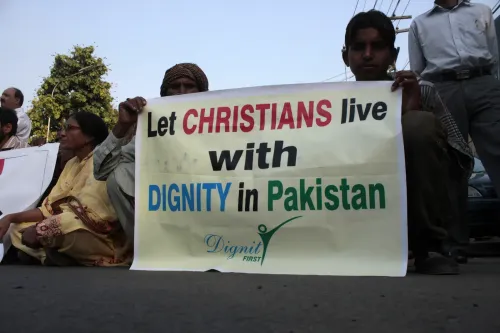
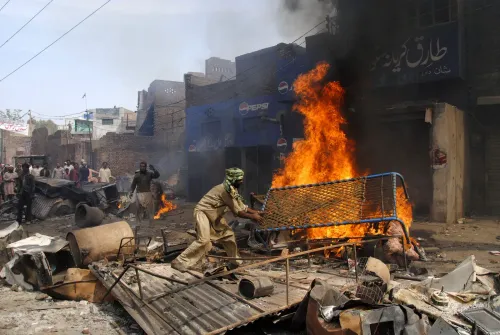
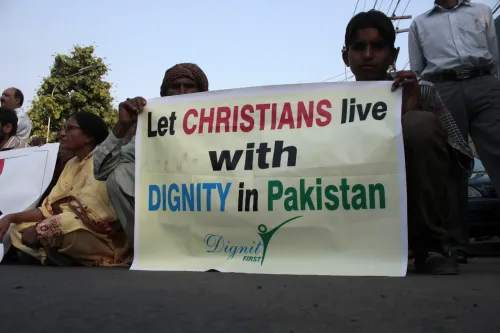
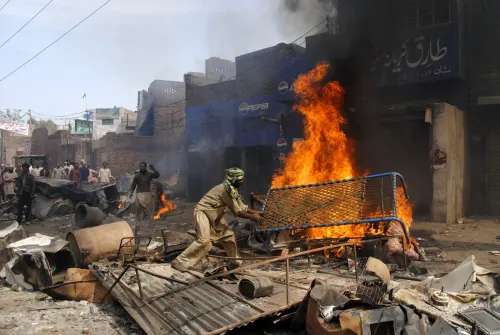
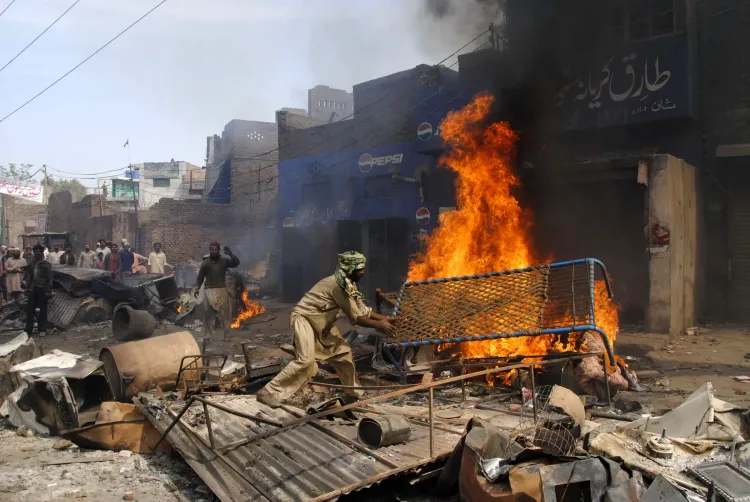
Islamabad, March 27 (NationPress) A prominent organization advocating for minority rights has raised concerns that Pakistan's blasphemy laws are being misused as a mechanism of systematic oppression. This misuse allows organized religious factions and their supporters to threaten judges, prosecutors, police, and politicians, effectively taking the nation's justice system and larger governmental structures hostage.
The Voice of Pakistan Minority (VOPM) describes this phenomenon as a "blasphemy complex" that utilizes fear of mob violence, targeted assassinations, and economic coercion to effectively "cripple" institutions meant to safeguard rights and uphold legal standards.
The organization stated, "In Pakistan, blasphemy laws impose a mandatory death sentence or life imprisonment, yet their vague and expansive language means that mere accusations can lead to arrest and detention. Human rights groups have documented that these laws are frequently wielded to settle personal grievances, seize land, and persecute religious minorities, rather than to combat actual incitement or hate speech."
Recent investigations cited by the VOPM reveal that blasphemy claims are often not spontaneous acts of anger; instead, they are frequently orchestrated by structured networks.
The VOPM noted that human rights attorneys in Pakistan have identified a coordinated "blasphemy business syndicate" or "Islamist group" that fabricates cases by spreading allegedly blasphemous material online, filing complaints, and then extorting the accused or their families.
Judges dealing with blasphemy cases in Pakistan often operate under a climate of direct and, at times, deadly intimidation.
The VOPM reported that there are documented instances of judges being "openly threatened in court, pressured by crowds outside the courtroom, and criticized in sermons or social media when they exhibit leniency or demand substantial evidence."
"Lawyers defending those accused of blasphemy face similar, if not greater, risks: several have been murdered, including the notable rights lawyer Rashid Rehman, who was shot in his office after defending an academic accused of blasphemy, following explicit threats about his involvement in the case. Due to this pattern of violence, many attorneys refuse to represent such cases, leaving the accused without adequate legal defense and further skewing the proceedings towards conviction or indefinite detention," the rights group highlighted.
"The pervasive climate of fear compels judges to often refuse bail, delay case resolutions, or shift responsibility upward in the judicial hierarchy to evade personal accountability," it continued.
Observers have pointed out that Pakistani courts frequently overlook established procedural safeguards—such as the need for prompt investigations and protections against false allegations—transforming trials into prolonged struggles where managing extremist pressure takes precedence over achieving justice.
Emphasizing the dire situation, the VOPM concluded, "Until Pakistan recognizes its own pivotal role in empowering the blasphemy network, its judiciary and state apparatus will remain captives, not only to street extremists but also to the cowardice and complicity entrenched within the state itself."
Point of View
It's clear that Pakistan's blasphemy laws have become a double-edged sword, undermining the rule of law and endangering the safety of judicial institutions. The need for reform is urgent to restore integrity and justice in the system.
NationPress
19 Sept 2026
Frequently Asked Questions
What are Pakistan's blasphemy laws?
Pakistan's blasphemy laws impose severe penalties such as life imprisonment or the death penalty for individuals accused of defaming Islam or the Prophet Muhammad.
How are these laws being misused?
These laws are frequently exploited to settle personal disputes, seize property, and target religious minorities, rather than to combat actual hate speech.
What are the consequences for judges and lawyers?
Judges face threats and intimidation, while lawyers defending accused individuals often experience extreme danger, including assassination.
What is the 'blasphemy complex'?
The 'blasphemy complex' refers to a system where accusations of blasphemy are used as tools of coercion, effectively paralyzing institutions tasked with protecting rights.
What needs to change in Pakistan regarding these laws?
Reform is essential to ensure the rule of law is upheld, protecting judges, lawyers, and the accused from extremist pressures and ensuring justice prevails.