Ramaswamy takes aim at Cleveland's Democratic hold
Synopsis
Entrepreneur Vivek Ramaswamy declared on November 3, 2026 that 'Cleveland doesn't belong to the Democrats,' vowing to contest the Ohio city on crime, schools, and affordability in a direct challenge to its long-standing Democratic control ahead of the 2026 midterms.
Key Takeaways
Entrepreneur Vivek Ramaswamy publicly declared that Cleveland, Ohio is a political battleground, posting his challenge on November 3, 2026 .
Ramaswamy pledged to fight for 'safer streets, better schools, and the more affordable life' Cleveland residents deserve.
Cleveland is Ohio's largest city and has been under Democratic control for decades, with documented challenges in crime, public education, and cost of living.
The move mirrors Ramaswamy's 2024 presidential campaign themes of school choice, crime reduction, and deregulation targeted at struggling cities.
National Republicans have increasingly sought to nationalise local issues in Rust Belt cities as a midterm electoral strategy in Ohio.
The specific electoral office or campaign context for Ramaswamy's 2026 push has not been officially confirmed.
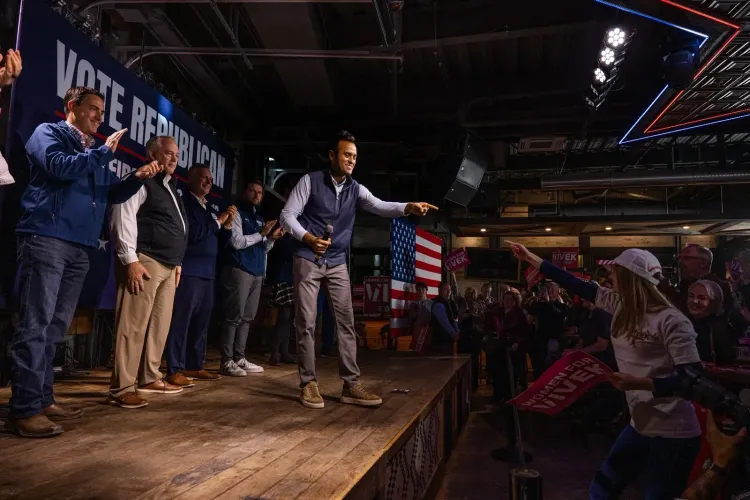
A battle is being drawn for one of Ohio's most enduring Democratic strongholds. Entrepreneur Vivek Ramaswamy declared on Tuesday, November 3, 2026 that Cleveland is up for political contest, vowing to fight for the city's residents on crime, schools, and the cost of living — a direct challenge to a city Democrats have long governed without serious Republican competition.
The stronghold Ramaswamy is targeting
Cleveland, Ohio's largest city, has operated under Democratic control for decades. It carries the dual weight of a storied industrial past and stubborn present-day challenges: persistently high crime rates, underperforming public schools, and a cost of living that squeezes working families even as the national economy shifts. Ramaswamy's declaration — 'Cleveland doesn't belong to the Democrats' — is a direct rebuke of that political status quo.
In his post, Ramaswamy framed the fight in the language of residents, not party: 'safer streets, better schools, and the more affordable life they deserve.' The framing is deliberate. It sidesteps ideological abstraction and lands on the three kitchen-table concerns that have animated Republican outreach to Rust Belt cities throughout this political cycle.
The playbook: nationalising local pain in Ohio
This is not a new move for Ramaswamy. During his 2024 presidential campaign, he repeatedly invoked school choice, crime reduction, and deregulation as the prescription for struggling American cities. The thread running from that campaign to this post is unmistakable — the message has been sharpened, the geography tightened to a single, symbolically potent city.
National Republican figures have long tried — and mostly failed — to crack Democratic dominance in Rust Belt urban centres. The strategy heading into the 2026 midterm cycle appears to lean on that same architecture: take issues that feel local, charge them with national stakes, and force Democrats to defend terrain they have held almost by default. Ohio has been a bellwether state in every sense, and a competitive Cleveland changes the electoral math considerably.
What this signals for 2026
Ramaswamy, as former co-lead of the DOGE advisory effort and founder of Strive Asset Management, carries a brand that merges anti-establishment energy with business credibility. His move into Cleveland's political conversation — timed precisely to Election Day 2026 — signals that Ohio urban centres will not be conceded quietly this cycle. Whether this translates into a specific candidacy or campaign infrastructure remains to be confirmed, but the intent to contest is now public and explicit.
The next question is whether Cleveland's voters — who have real, documented grievances about safety, schools, and affordability — are ready to hear that answer from a very different political direction.
Point of View
Contesting a decades-long Democratic stronghold is on-brand and strategically coherent. The open question is whether post-DOGE momentum and business credibility can translate into the ground-level coalition-building that Ohio's urban electorate actually demands.
NationPress
3 Nov 2026
Frequently Asked Questions
What did Vivek Ramaswamy say about Cleveland?
Ramaswamy posted on November 3, 2026 that 'Cleveland doesn't belong to the Democrats,' vowing to fight for residents to have safer streets, better schools, and a more affordable life.
Is Vivek Ramaswamy running for office in Ohio in 2026?
Ramaswamy has publicly signalled his intention to contest Cleveland's Democratic political hold, but the specific office or formal campaign has not been officially confirmed as of his November 3, 2026 post.
Why is Cleveland considered a Democratic stronghold?
Cleveland, Ohio's largest city, has been governed by Democrats for decades and faces persistent challenges including high crime rates, underperforming public schools, and cost-of-living pressures that Republicans argue reflect failed Democratic urban policy.
What is Vivek Ramaswamy's political background?
Ramaswamy is the founder of Strive Asset Management, a 2024 Republican presidential candidate, and former co-lead of the DOGE advisory effort under the Trump administration.
What is the Republican strategy for Rust Belt cities in the 2026 midterms?
National Republican figures, including Ramaswamy, are seeking to contest traditionally Democratic Rust Belt cities by emphasising public safety, education reform, and economic affordability — nationalising local grievances ahead of the 2026 midterm cycle.