Pakistan Blasphemy Laws Fuel Mob Violence Against Minorities: Report
Synopsis
Pakistan's blasphemy laws have sentenced professor Junaid Hafeez to death, left over 90% of Jaranwala church attackers free, and forced Christian families to wait for compensation — exposing a state that criminalises minorities while shielding mob violence, according to reports by HRW, USCIRF, Amnesty International, and the ECLJ.
Key Takeaways
Pakistan's blasphemy laws carry mandatory death penalty and life imprisonment , and are disproportionately used against religious minorities including Christians, Ahmadis, and Hindus .
Professor Junaid Hafeez , a Fulbright scholar and lecturer at Bahauddin Zakariya University , has been on death row since December 2019 after being convicted of blasphemy — charges he denies.
His defence lawyer, Rashid Rehman , was shot dead in his office in 2014 — illustrating how blasphemy cases endanger even legal defenders.
The Jaranwala attack of August 16, 2023 saw a mob destroy over 20 churches and 80 Christian homes ; as of 2024 , over 90% of suspects remain at large , per Amnesty International .
Around 40% of affected Christian families from the Jaranwala violence are still awaiting government compensation , with trials yet to begin.
The ECLJ submitted a formal complaint to the UN Special Rapporteur on February 27 , calling Pakistan's mandatory death penalty for blasphemy a violation of international human rights law.
Islamabad, April 26: Pakistan's blasphemy laws are systematically enabling mob violence, abuse, and the criminal persecution of religious minorities — particularly Christians — with accused individuals facing life imprisonment and the death penalty, according to a damning new report. The findings expose a deeply entrenched legal framework that international human rights organisations argue violates fundamental freedoms and amounts to institutionalised torture.
The Case of Junaid Hafeez: A Symbol of Systemic Injustice
Professor Junaid Hafeez, a lecturer at Bahauddin Zakariya University in Multan, remains on death row after being sentenced in December 2019 by a district and sessions court for allegedly "insulting the Prophet Muhammad." He was simultaneously handed a life sentence for "desecrating the Qur'an" and an additional 10-year prison term for "intending to outrage religious feelings."
The United States Commission on International Religious Freedom (USCIRF) documented that Pakistani authorities arrested Hafeez in 2013 after students accused him of blasphemy on social media. By 2014, he was placed in solitary confinement after fellow prisoners repeatedly targeted him for violence.
Tragically, Hafeez's defence lawyer, Rashid Rehman, was shot dead by two gunmen in his own office that same year — a chilling demonstration of how blasphemy accusations endanger not just the accused, but anyone who dares defend them. Before his arrest, Hafeez had earned a master's degree in the United States on a Fulbright Scholarship, specialising in American literature, photography, and theatre.
Elaine Pearson, Asia Director at Human Rights Watch (HRW), stated on February 26 that Hafeez's case is "emblematic of the unjust and abusive nature of Pakistan's blasphemy laws," calling on Pakistani authorities to quash his conviction and free all individuals held under these laws.
International Bodies Condemn Pakistan's Death Penalty for Blasphemy
On February 27, the European Centre for Law and Justice (ECLJ) submitted an official contribution to the UN Special Rapporteur on summary, extrajudicial, or arbitrary executions, specifically criticising Pakistan's mandatory and automatic imposition of the death penalty for blasphemy against Islam.
The report notes that individuals convicted of blasphemy in Pakistan face death by hanging. While Pakistan has never formally executed anyone under blasphemy laws, the accused endure years — sometimes decades — on death row, in conditions that the ECLJ argues constitute torture. The psychological and physical toll on prisoners and their families is severe and largely invisible to the international community.
The Jaranwala Pogrom: State Failure on Full Display
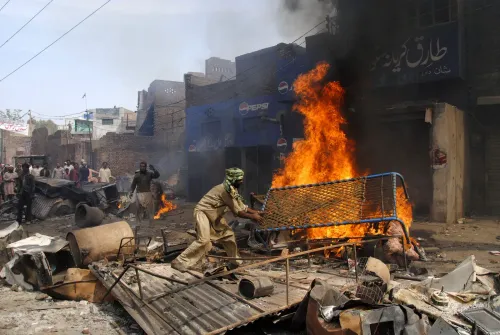
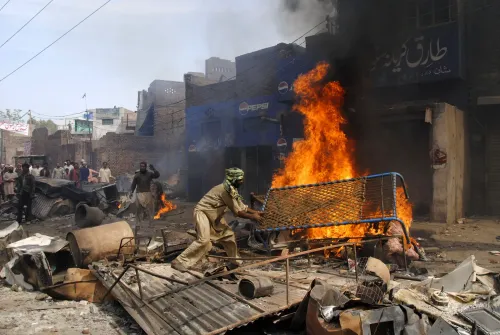
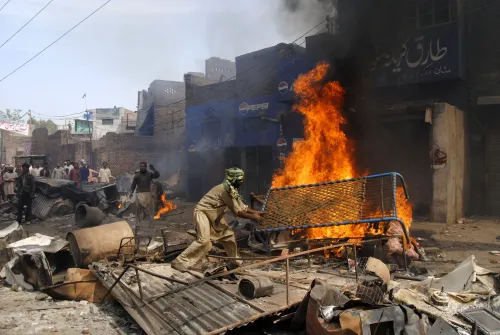
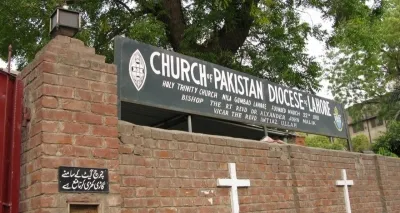
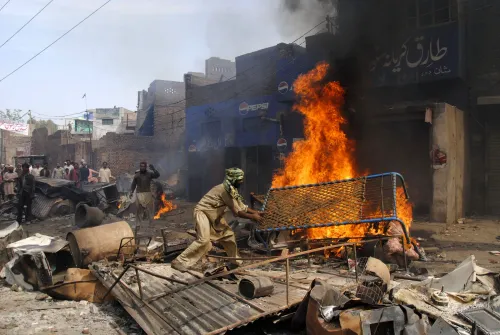
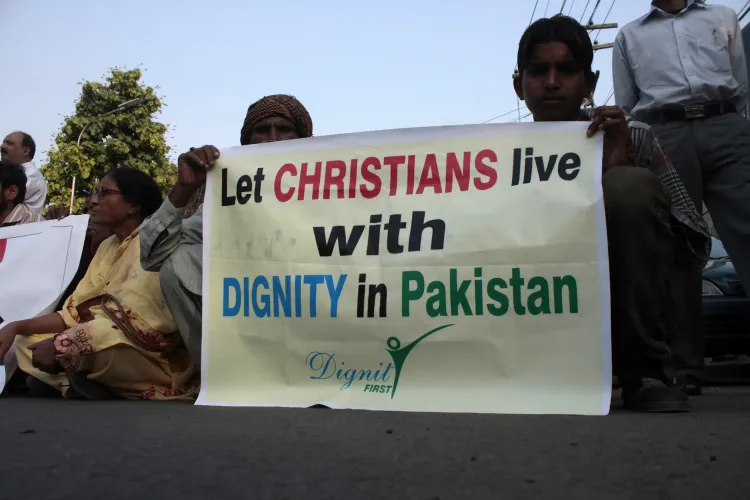
On August 16, 2023, allegations of blasphemy against two Christian residents in Jaranwala, located in the Faisalabad district of Punjab Province, triggered a mob rampage in which over 20 churches and more than 80 Christian homes were vandalised and destroyed by a Muslim mob.
By 2024, Amnesty International revealed that over 90 per cent of suspects involved in the Jaranwala attack remain at large. Trials for those arrested have not yet commenced. Adding to the injustice, approximately 40 per cent of the minority Christian families displaced or affected by the violence are still awaiting government compensation — a stark indictment of Islamabad's commitment to protecting its minorities.
Uzay Bulut, a Turkey-born journalist and researcher, noted in a report published by PJ Media that even an unverified accusation of blasphemy is sufficient to unleash coordinated mob violence not just against the accused, but against entire Christian communities. "Pakistan's government has failed to deliver justice for the Christian community in Jaranwala, as well as to prevent further misuse of blasphemy laws," Bulut wrote.
A Pattern of Persecution: The Broader Context
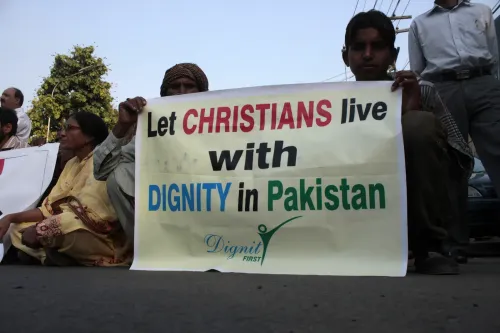
Pakistan's blasphemy laws — enshrined under Sections 295-C and 298 of the Pakistan Penal Code — have long been criticised as tools of persecution disproportionately wielded against religious minorities, including Christians, Ahmadis, and Hindus. Critics argue the laws are routinely weaponised to settle personal scores, property disputes, or communal tensions under the guise of religious offence.
This comes amid a broader global reckoning with state-sanctioned religious persecution. Notably, Pakistan's blasphemy framework stands in stark contrast to its stated obligations under the International Covenant on Civil and Political Rights (ICCPR), which it ratified in 2010, guaranteeing freedom of religion and protection from arbitrary detention.
The continued inaction by Pakistani authorities — despite international pressure from the UN, HRW, Amnesty International, USCIRF, and the ECLJ — raises urgent questions about accountability and the rule of law in the country. With Junaid Hafeez's appeals still pending and the Jaranwala attackers largely unpunished, the international community faces mounting pressure to impose consequences on Islamabad for its failure to protect religious minorities.
Point of View
Providing legal cover for mob rule while the government looks the other way. The Jaranwala pogrom, where 90% of attackers remain free two years on, and the death row imprisonment of a Fulbright scholar like Junaid Hafeez, reveal a pattern that goes far beyond judicial overreach — it is deliberate institutional failure. What makes this particularly damning is Pakistan's simultaneous posturing as a victim of Islamophobia on global platforms, even as it criminalises its own Christian, Ahmadi, and Hindu citizens at home. India and the international community must name this contradiction loudly and consistently.
NationPress
15 Sept 2026
Frequently Asked Questions
What are Pakistan's blasphemy laws and who do they target?
Pakistan's blasphemy laws, under Sections 295-C and 298 of the Pakistan Penal Code, criminalise insults to Islam and the Prophet Muhammad, carrying penalties including life imprisonment and death by hanging. These laws disproportionately target religious minorities such as Christians, Ahmadis, and Hindus, and are frequently misused to settle personal or communal disputes.
Who is Junaid Hafeez and why was he sentenced to death?
Junaid Hafeez is a Pakistani university lecturer and Fulbright scholar who was arrested in 2013 after students accused him of blaspheming Islam on social media. In December 2019, a court in Multan sentenced him to death for 'insulting the Prophet Muhammad,' along with a life sentence and a 10-year prison term for related charges.
What happened in Jaranwala in August 2023?
On August 16, 2023, a Muslim mob attacked the Jaranwala area in Punjab Province, Pakistan, destroying over 20 churches and more than 80 Christian homes following unverified blasphemy allegations against two Christian residents. By 2024, Amnesty International reported that over 90% of the attackers remain at large and trials have yet to begin.
Has Pakistan ever executed anyone under its blasphemy laws?
No, Pakistan has never formally carried out an execution specifically under its blasphemy laws. However, the accused often spend years or decades on death row in harsh conditions, and many face extrajudicial mob violence — a situation the European Centre for Law and Justice (ECLJ) has described as amounting to torture.
What have international organisations said about Pakistan's blasphemy laws?
Human Rights Watch, Amnesty International, USCIRF, and the ECLJ have all condemned Pakistan's blasphemy laws as abusive and disproportionate. The ECLJ formally raised concerns with the UN Special Rapporteur in February 2025, while HRW's Asia Director called for the immediate release of Junaid Hafeez and others imprisoned under these laws.