Jaishankar Launches India's UNSC 2028-29 Campaign
Synopsis
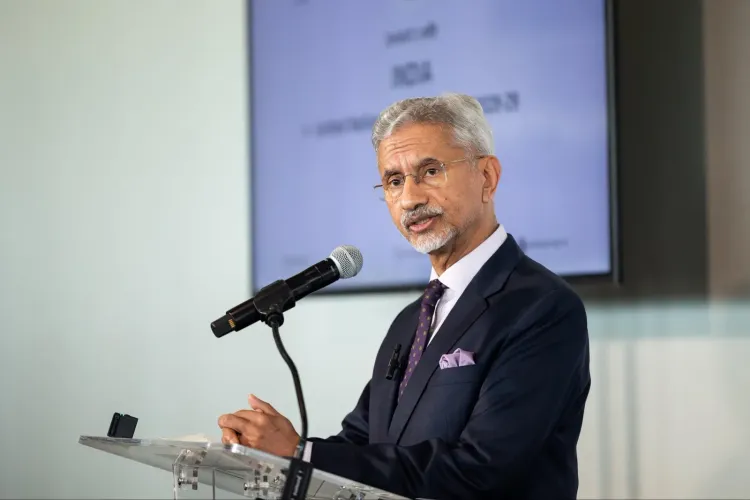
External Affairs Minister Dr. S. Jaishankar on 14 July 2026 launched India's formal bid for the UN Security Council's 2028-29 non-permanent seat, anchoring the campaign in the SHANTI framework covering Global South voice, multilateral reform, peacekeeping, AI governance, maritime order and counter-terrorism.
Key Takeaways
India formally launched its campaign for a UNSC non-permanent seat for the 2028-29 term on 14 July 2026 .
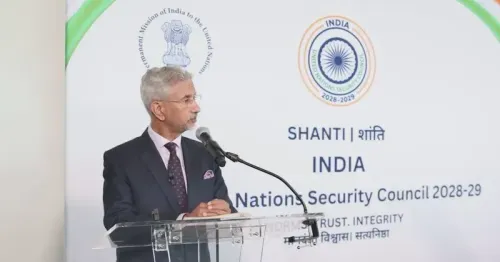
The campaign is anchored in the SHANTI framework: Securing Holistic Advancement through Norms, Trust and Integrity .
Six pillars include Global South representation , reformed multilateralism , future-ready peacekeeping , human-centric AI governance , rules-based maritime order under UNCLOS , and counter-terror financing .
India explicitly called for a 'transparent sanctions regime with objective and evidence-based proposals' for listing terrorist groups at the UNSC.
The UN General Assembly election for the seat is expected in 2027 ; support from the African Union and ASEAN blocs will be decisive.
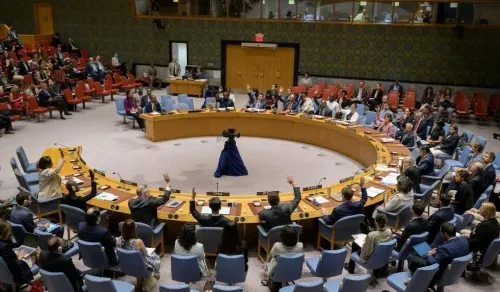
India previously held a UNSC non-permanent seat in 2021-22 , winning election in June 2020 with record member-state support.
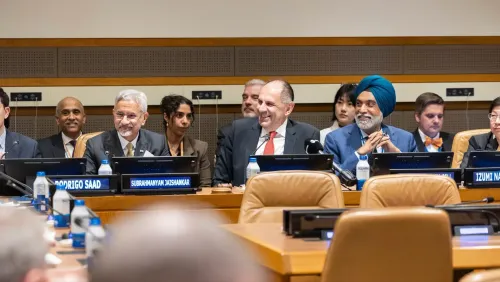
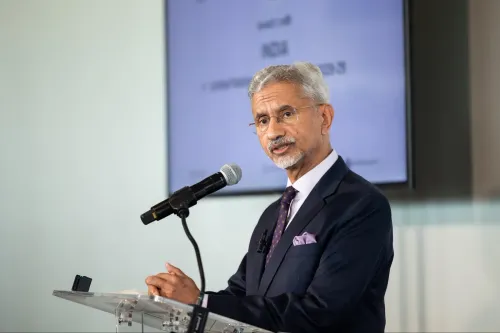
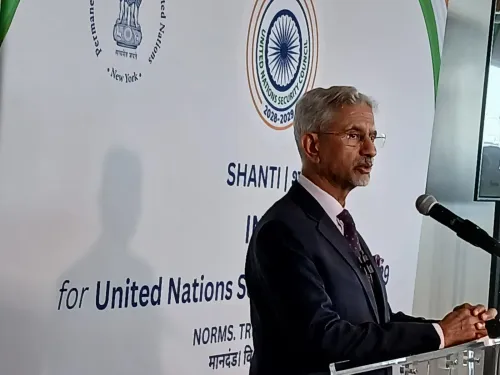
Union External Affairs Minister Dr. S. Jaishankar on Tuesday, 14 July 2026, formally launched India's campaign for a non-permanent seat on the United Nations Security Council for the 2028-29 term, unveiling a six-pillar framework branded SHANTI — Securing Holistic Advancement through Norms, Trust and Integrity — as the conceptual spine of New Delhi's bid.
Context
Announcing the campaign, Dr. Jaishankar outlined that India's approach would be 'rooted in SHANTI,' covering priorities from Global South representation and reformed multilateralism to artificial intelligence governance, maritime order, and counter-terrorism financing. The minister stated plainly: 'A reformed, representative and results-driven Security Council needs a voice of the Global South at the table.' The launch marks the formal opening of what is expected to be a multi-year diplomatic campaign ahead of the UN General Assembly election scheduled for 2027.
India last held a non-permanent UNSC seat in the 2021-22 term, winning election in June 2020 with record support from member states. The current bid follows a well-established pattern: New Delhi has sought institutional reform of the UN system since the 1990s, arguing that post-Cold War power shifts demand a more representative Council.
Policy Backdrop
The SHANTI framework bundles several of India's long-standing multilateral positions into a single campaign identity. On peacekeeping, Dr. Jaishankar called for a 'future-ready' force that is 'better equipped, technologically enabled, realistically mandated,' and explicitly guided by the Women, Peace and Security agenda. India is one of the largest historical contributors to UN peacekeeping missions, giving this pillar particular credibility in diplomatic corridors.
On maritime governance, the campaign commits to promoting 'a free, open and rules-based maritime order in accordance with international law, especially UNCLOS' — the 1982 United Nations Convention on the Law of the Sea. The explicit invocation of UNCLOS signals continuity with India's position on contested waters in the Indo-Pacific. The counter-terrorism pillar calls for 'a transparent sanctions regime with objective and evidence-based proposals for listing of terrorist groups,' language that directly addresses longstanding frustrations with politically blocked listings at the UNSC.
India's broader push for multilateral reform has historically been advanced through the G4 group — comprising India, Brazil, Germany, and Japan — which issued a joint proposal for UNSC expansion as far back as 2005. The current campaign also builds on the Voice of Global South Summit that India hosted in January 2023, which sought to consolidate developing-nation positions on institutional reform.
Stakeholders and Impact
Global South nations are the primary constituency Dr. Jaishankar is addressing. The framework's first and closing lines both invoke the Global South's right to shape 'our common future,' a deliberate framing aimed at the African Union and ASEAN blocs whose bloc votes will be decisive in the 2027 UNGA election. Support from these groupings proved critical to India's record-margin victory in 2020.
The artificial intelligence pillar — anchoring AI governance in 'inclusivity, security and public good' while committing to counter its 'misuse and threats to international peace and security' — is aimed at middle-income and developing nations wary of both big-power AI dominance and ungoverned AI-enabled conflict tools. This positions India as a bridge between the Global North's technology leadership and the Global South's governance anxieties.
What's Next
The UN General Assembly election for 2028-29 non-permanent seats is expected to be held in 2027. Between now and then, India's diplomatic missions will work to consolidate regional endorsements, particularly from the African Union and ASEAN groupings. The SHANTI framework gives New Delhi a structured platform to advance these conversations at every multilateral forum it participates in over the next two years.
More broadly, a successful UNSC bid would give India a formal platform to push the reform agenda it has championed for decades — including a permanent seat aspiration that successive governments have kept alive. Whether the 2028-29 term translates into renewed momentum for permanent membership reform will depend heavily on how the geopolitical landscape shifts before the vote.
Point of View
New Delhi is signalling that this bid will be more coordinated and proactive than previous campaigns. The explicit focus on AI governance and counter-terrorism sanctions reform also reflects a calculated effort to make India's candidacy relevant to contemporary security anxieties rather than just institutional reform arguments. The real test will be whether the African Union and ASEAN blocs, whose votes are decisive, see India as a genuine champion of their interests or a large power pursuing its own permanent-seat ambitions under a Global South banner.
NationPress
12 Oct 2026
Frequently Asked Questions
What is India's UNSC 2028-29 campaign?
India is seeking election as a non-permanent member of the UN Security Council for the 2028-29 term. External Affairs Minister Dr. S. Jaishankar formally launched the campaign on 14 July 2026 , with the SHANTI framework as its guiding philosophy.
What does SHANTI stand for in India's UN campaign?
SHANTI stands for Securing Holistic Advancement through Norms, Trust and Integrity . It is the six-pillar framework India unveiled to guide its approach as a UNSC non-permanent member, covering areas from Global South representation to AI governance and counter-terrorism.
When was India last on the UN Security Council?
India last served as a non-permanent member of the UN Security Council during the 2021-22 term, having won election in June 2020 with record support from UN member states.
What is India's position on UNSC reform?
India has long advocated for a 'reformed, representative and results-driven' Security Council that gives the Global South a greater voice. New Delhi is also a member of the G4 group — with Brazil , Germany , and Japan — which has pushed for UNSC expansion and permanent seat reform since 2005 .
When will the UN vote on the 2028-29 Security Council seats?
The UN General Assembly election for non-permanent seats covering the 2028-29 term is expected to be held in 2027 . Support from the African Union and ASEAN member states is considered critical to India's success.