Jaishankar launches India's UNSC 2028 bid with 'Shanti' six-point manifesto
Synopsis
India's UNSC campaign is not just a seat bid — it is a strategic signal. Jaishankar's 'Shanti' manifesto frames India as the developing world's multilateral champion, but the path to two-thirds of 193 votes runs through the OIC, which has already backed rival Tajikistan. How New Delhi builds its coalition in the next year will define whether this is a walkover or a genuine diplomatic contest.
Key Takeaways
Jaishankar launched India's UNSC candidature on 14 July at the United Nations with a six-point 'Shanti' manifesto.
India is contesting the Asia-Pacific non-permanent seat for a term beginning in 2028 , its ninth elected term overall.
Sole declared rival Tajikistan has the backing of the OIC and its 56 General Assembly votes , secured as early as 2023 .
India needs a two-thirds majority in the 193-member General Assembly ; it received 184 votes running unopposed in its last election.
The bid aims to close a pattern of long gaps between India's Council terms — including a 19-year gap between 1991 and 2011.
India is simultaneously pursuing a permanent seat on a reformed Council as a parallel diplomatic track.
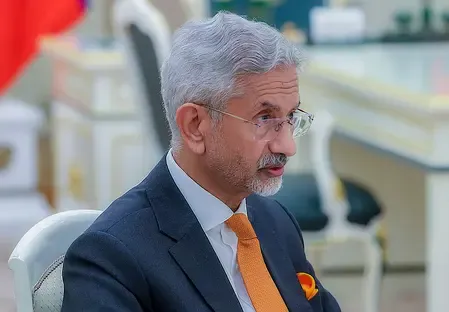
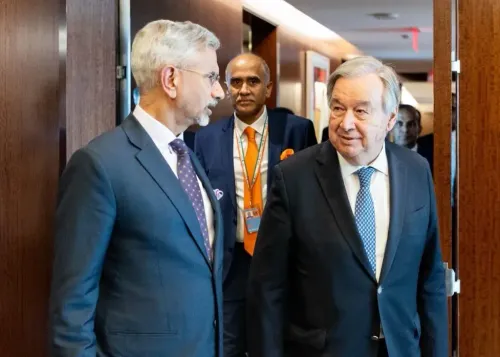
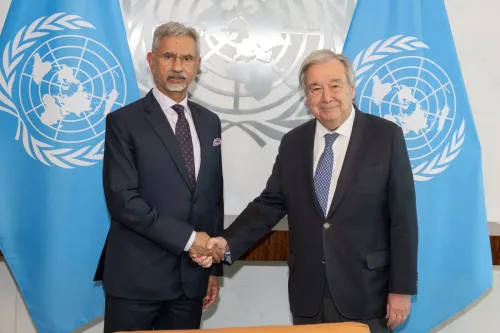
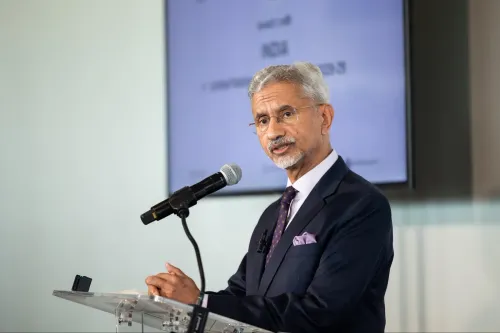
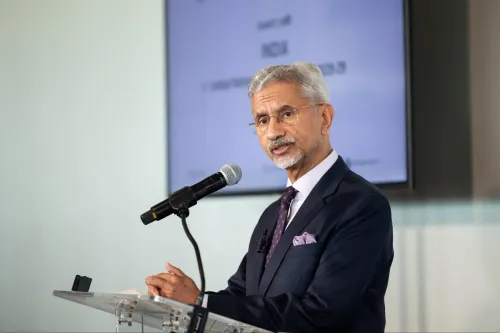
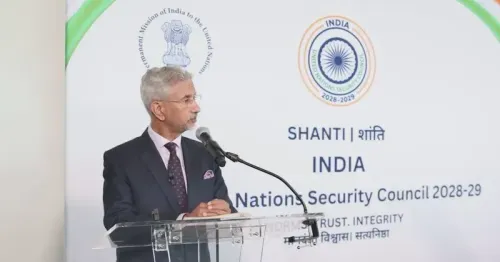
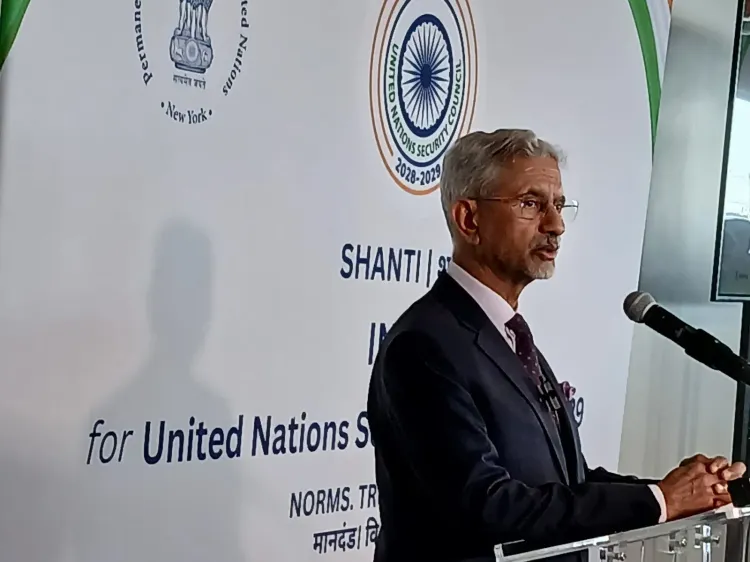
External Affairs Minister S. Jaishankar on Monday, 14 July formally launched India's candidature for a non-permanent seat on the United Nations Security Council (UNSC), unveiling a six-point manifesto anchored in the acronym 'Shanti' — standing for 'Securing Holistic Advancement through Norms, Trust and Integrity'. Speaking before delegates and diplomats at the United Nations in New York, Jaishankar positioned India as the natural Voice of the Global South at the Council's highest table.
What the Shanti Manifesto Proposes
India is contesting the Asia-Pacific non-permanent seat in next year's UN General Assembly election, with the winning term beginning in 2028. Jaishankar outlined that India's campaign rests on its track record of supporting developing nations, its extensive participation in UN peacekeeping missions, and its commitment to reforming multilateral institutions to meet contemporary global challenges.
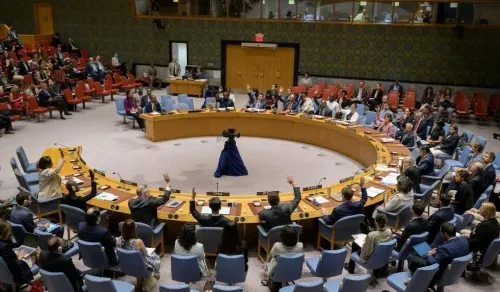
Countering terrorism will remain a central pillar of India's agenda — a continuation of its most recent Council term in 2021-22, during which the Council, under India's rotating presidency, met in Mumbai in October 2021 and paid tribute to victims of the 2008 terrorist attacks carried out by Pakistan-based groups. That session also spotlighted the misuse of emerging technologies by terrorist networks.
The Competition: Tajikistan and the OIC Factor
So far, only Tajikistan has formally announced its candidature for the same Asia-Pacific seat, which will be vacated by Bahrain at the end of next year. Dushanbe has been lobbying for the seat for several years and received the endorsement of the Organisation of Islamic Cooperation (OIC) as early as 2023, with the bloc's resolution citing 'the principle of Islamic solidarity' as the basis for its backing.
The OIC commands 56 votes in the 193-member General Assembly. India will require a two-thirds majority — approximately 129 votes — to secure the seat. In its last election, India ran unopposed with unanimous Asia-Pacific Group backing and received 184 votes, with 8 cast as spoiler votes.
India's UNSC History and the Gap Problem
India has served eight terms as an elected Council member, with its first term dating to 1950-51. Subsequent terms came in 1967, 1972, 1977, 1984, 1991, 2011-12, and 2021-22. Notably, there was a 19-year gap between the 1991 and 2011 terms, and a decade-long gap before the 2021 term.
The 2028-29 bid is explicitly designed to shorten these intervals and establish a more consistent Indian presence at the UN's primary decision-making body. New Delhi is simultaneously pursuing a permanent seat on a reformed Council — a long-standing diplomatic objective — while using elected terms to amplify its voice in the interim.
Regional Dynamics and the Asia-Pacific Group
The 53-member Asia-Pacific Group spans from Lebanon in the west to Kiribati in the east. Kyrgyzstan was elected in June to the Asia-Pacific seat being vacated by Pakistan, whose term ends at the close of this year. When regional groups achieve consensus, they typically field a single candidate; absent unanimity, countries may contest independently.
Elsewhere, the OIC has already endorsed Libya for the 2027 Africa seat. Malaysia, targeting the 2035 election, began its lobbying campaign at the start of this decade and secured OIC backing in 2023 — illustrating how far in advance Council campaigns are now waged.
What Comes Next
The General Assembly election is scheduled for next year. India will need to build a broad coalition well beyond the Asia-Pacific Group, particularly among African and Latin American blocs, to offset the OIC's institutional support for Tajikistan. Jaishankar's 'Shanti' framework is designed to serve as that diplomatic pitch — one that frames India not merely as a regional power but as a credible multilateral stakeholder for the developing world.
Point of View
But the arithmetic is what matters. The OIC's 56-vote bloc behind Tajikistan is not symbolic — it is a structural headwind India must overcome with a broad, cross-regional coalition. India's last UNSC run was uncontested; this one may not be. What Jaishankar's manifesto does well is reframe India's candidacy as a Global South service proposition rather than a great-power entitlement — but that pitch will be tested against Dushanbe's years of quiet lobbying. The deeper question mainstream coverage is missing: India's pattern of decade-long gaps between Council terms has materially limited its institutional influence. A 2028 win would be the shortest interval between terms since 1984-91, and that consistency may ultimately matter more than any single manifesto.
NationPress
12 Oct 2026
Frequently Asked Questions
What is India's 'Shanti' manifesto for the UNSC election?
India's 'Shanti' manifesto is a six-point campaign framework unveiled by EAM S. Jaishankar on 14 July at the United Nations. 'Shanti' stands for 'Securing Holistic Advancement through Norms, Trust and Integrity,' and centres on India's role as a voice for the Global South, its peacekeeping record, and its commitment to counter-terrorism.
When is the UNSC election India is contesting, and what seat is at stake?
India is contesting the Asia-Pacific non-permanent seat in a UN General Assembly election scheduled for next year, with the winning term beginning in 2028. The seat is currently held by Bahrain, whose term ends at the close of next year.
Who is India's main rival for the UNSC Asia-Pacific seat?
Tajikistan is the only other declared candidate for the Asia-Pacific seat. Dushanbe has been lobbying for years and secured the endorsement of the Organisation of Islamic Cooperation (OIC) — which commands 56 General Assembly votes — as far back as 2023.
How many votes does India need to win the UNSC seat?
India requires a two-thirds majority in the 193-member UN General Assembly, which amounts to approximately 129 votes. In its most recent election, running unopposed with unanimous Asia-Pacific Group support, India received 184 votes.
Why is India seeking a UNSC seat again so soon after 2021-22?
India's UNSC history has been marked by long gaps — including a 19-year absence between 1991 and 2011. The 2028-29 bid is a deliberate effort to shorten those intervals and maintain a more consistent presence at the UN's primary decision-making body, while New Delhi continues its parallel campaign for a permanent seat.