Jaishankar delivers opening remarks at Quad Foreign Ministers' Meeting
Synopsis
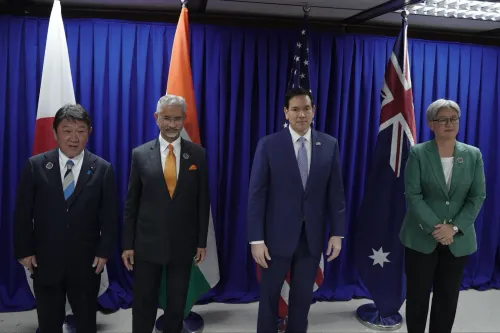
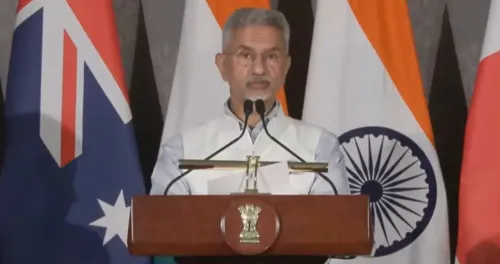
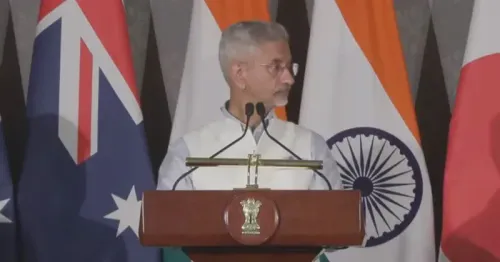
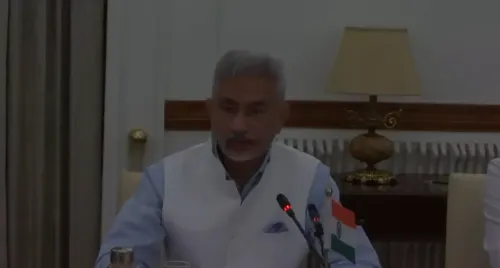
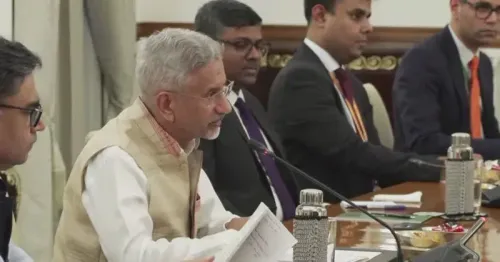
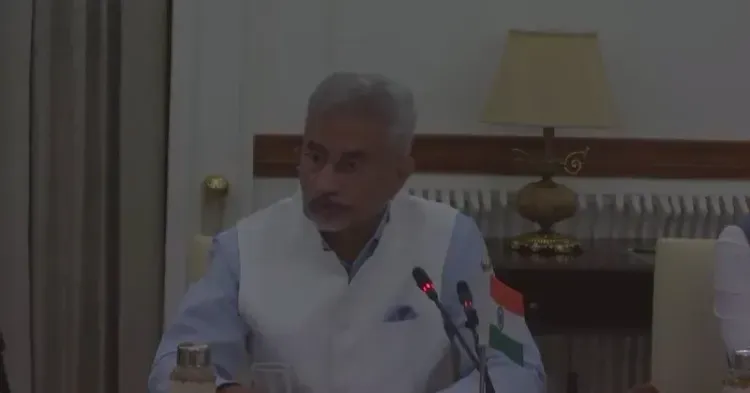
External Affairs Minister Dr. S. Jaishankar delivered his opening remarks at the Quad Foreign Ministers' Meeting on 26 May 2026, joining counterparts from Australia, Japan and the United States in a high-level Indo-Pacific consultation. The minister shared a broadcast of his address on X, underscoring the grouping's growing institutional momentum.
Key Takeaways
Jaishankar delivered his opening remarks at the Quad Foreign Ministers' Meeting on 26 May 2026 .
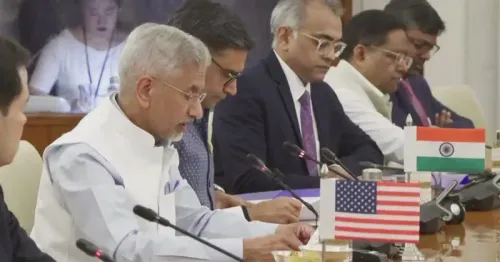
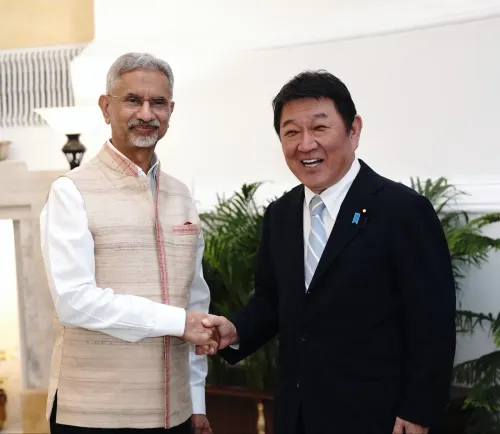
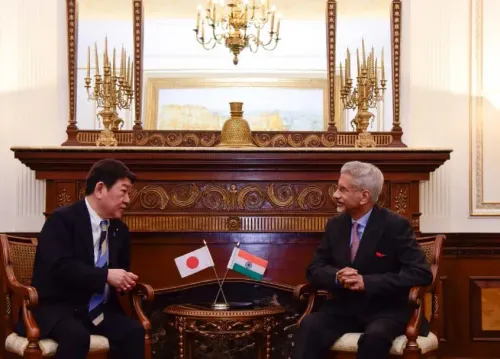
The meeting brought together foreign ministers of India , Australia , Japan , and the United States — the four Quad member nations.
The Quad was revived at foreign-minister level in November 2017 in Manila and elevated to leaders' summit level in March 2021 .
Ministerial consultations focus on regional security, connectivity, technology standards, and supply-chain resilience in the Indo-Pacific.
Jaishankar broadcast his opening remarks publicly via X, signalling transparency around the grouping's deliberations.
Outcomes from the meeting are expected to feed into the next scheduled Quad leaders' summit .
Union External Affairs Minister Dr. S. Jaishankar delivered his opening remarks at the Quad Foreign Ministers' Meeting on Tuesday, 26 May 2026, joining counterparts from Australia, Japan, and the United States for the high-level Indo-Pacific consultation. The minister shared the development on X, flagging the four-nation gathering with the flags of all Quad members.
Context
The Quad — a strategic grouping of India, Australia, Japan, and the United States — has become one of the most consequential multilateral formats shaping Indo-Pacific diplomacy. Dr. Jaishankar posted a link to the live broadcast of his opening address, signalling that the meeting was conducted in an open or partially public format. The minister's post carried the national flags of all four member states, underscoring the grouping's collective identity.
The Quad foreign ministers first convened in Manila in November 2017, reviving the grouping after a decade-long hiatus. Since then, ministerial-level consultations have become a regular feature of the four nations' diplomatic calendar, complementing the leaders' summits that were institutionalised from March 2021 onwards.
Policy Backdrop
Quad ministerial meetings serve as the principal working-level mechanism through which the four capitals coordinate on regional security, connectivity, technology standards, and supply-chain resilience. The format operates alongside bilateral arrangements and broader minilateral frameworks such as the US-led Indo-Pacific Economic Framework and the India-Australia-Japan supply-chain initiative.
For India, participation in the Quad is a central pillar of its multi-alignment posture in the Indo-Pacific — a region New Delhi consistently describes as needing to be 'free, open and inclusive.' Dr. Jaishankar, who previously served as India's Foreign Secretary and as Ambassador to the United States, China, and Singapore, has been a principal architect of India's deepening engagement with the grouping since its revival.
Stakeholders and Impact
The four Quad members collectively represent major democratic economies with overlapping interests in maritime security, critical and emerging technologies, climate resilience, and quality infrastructure across the Indo-Pacific. Diplomatic establishments in all four capitals, as well as Indo-Pacific partner nations that look to the grouping for regional standard-setting, have a direct stake in the outcomes of such ministerial consultations.
Australia has emphasised maritime security and supply-chain diversification within the Quad framework, while Japan has prioritised quality infrastructure and technology governance. The United States has positioned the Quad as a cornerstone of its broader Indo-Pacific strategy. Collectively, the four ministers' deliberations carry significant weight for regional architecture-building.
What's Next
Attention will now turn to any joint statement or communiqué that the four foreign ministers may issue following the meeting, particularly on deliverables in health security, critical infrastructure, or maritime domain awareness. The next scheduled Quad leaders' summit will be closely watched to see whether today's ministerial consultations translate into concrete commitments at the head-of-government level. Dr. Jaishankar's public broadcast of his opening remarks suggests the four nations are keen to signal transparency and momentum in the grouping's work to regional and global audiences.
Point of View
Constructive platform rather than an adversarial bloc — a framing New Delhi has maintained since the Quad's revival. The choice to share the address on X amplifies the meeting's visibility at a moment when the Indo-Pacific architecture is under sustained scrutiny from regional powers. Quad foreign-minister consultations have historically preceded concrete deliverables at the leaders' level, making this session a potential bellwether for the next summit's agenda. The meeting also reinforces Dr. Jaishankar's role as one of the Quad's most institutionally experienced voices, given his diplomatic postings across three of the grouping's member capitals.
NationPress
18 Oct 2026
Frequently Asked Questions
What is the Quad Foreign Ministers' Meeting?
The Quad Foreign Ministers' Meeting is a high-level diplomatic consultation among the foreign ministers of India, Australia, Japan and the United States, held as part of the Quad grouping's regular institutional calendar focused on Indo-Pacific security, connectivity and technology.
What did Jaishankar say at the Quad meeting on 26 May 2026?
Dr. S. Jaishankar delivered his opening remarks at the Quad Foreign Ministers' Meeting on 26 May 2026 and shared a broadcast of his address on X; the specific contents of his remarks were not detailed in the public post beyond the broadcast link.
When was the Quad revived and what is its purpose?
The Quad was revived at foreign-minister level in November 2017 in Manila after a decade-long hiatus, and elevated to leaders' summit level in March 2021; its purpose is to promote a free, open and inclusive Indo-Pacific through cooperation on security, infrastructure, technology and supply chains.
Which countries are members of the Quad?
The four Quad member nations are India, Australia, Japan and the United States.
What are the expected outcomes of the Quad Foreign Ministers' Meeting?
Analysts and diplomatic observers will watch for a joint statement on deliverables in maritime security, health, critical infrastructure or technology standards, with outcomes expected to shape the agenda of the next Quad leaders' summit.