Jaishankar Meets Japan's FM Motegi, Flags India-Japan Ties
Synopsis
External Affairs Minister Dr. S. Jaishankar met Japanese Foreign Minister Motegi Toshimitsu on 25 May 2026, reinforcing the India-Japan Special Strategic and Global Partnership. The meeting underscores sustained high-level diplomatic engagement between the two key Indo-Pacific partners under India's Act East Policy.
Key Takeaways
Jaishankar met Japanese FM Motegi Toshimitsu on 25 May 2026 and shared his remarks publicly.
India and Japan hold a Special Strategic and Global Partnership formalised in 2014 .
Annual Prime Minister-level summits and 2+2 Foreign and Defence Ministerial dialogues have been institutionalised since 2019 .
The partnership spans infrastructure investment, defence cooperation, technology, and maritime security in the Indo-Pacific.
Both nations coordinate within the Quad framework alongside the United States and Australia .
Next key milestones include the annual India-Japan PM-level summit and follow-up on 2+2 dialogue outcomes.
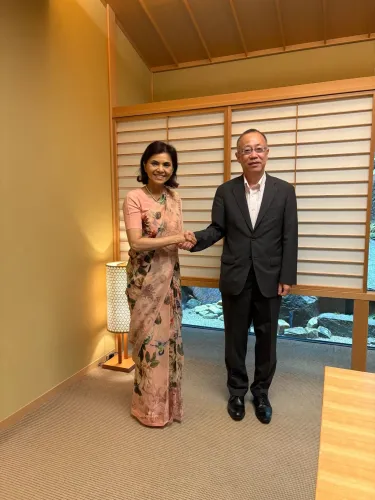
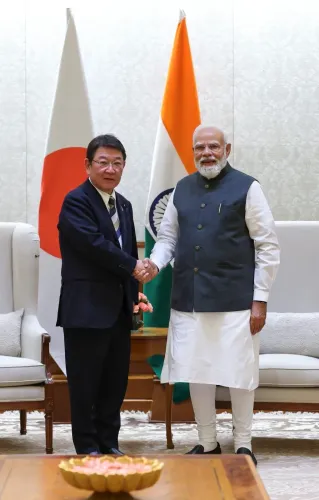
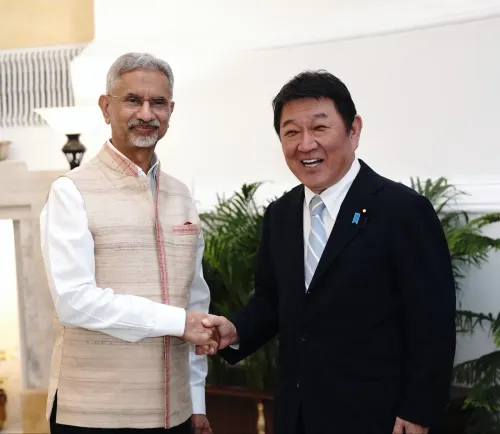
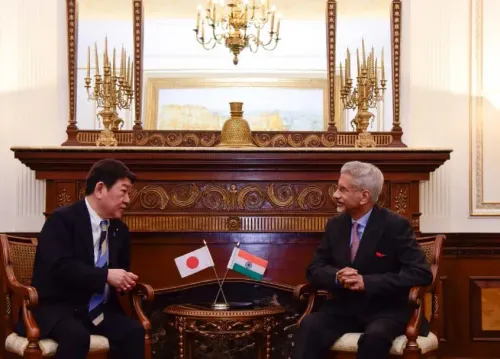
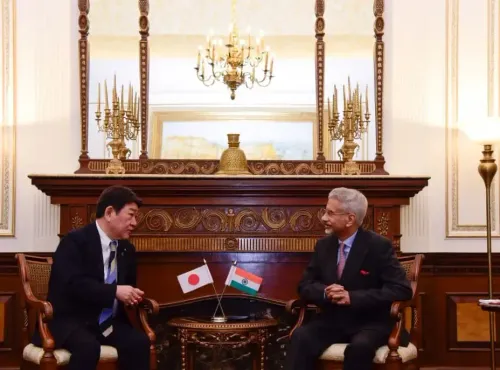
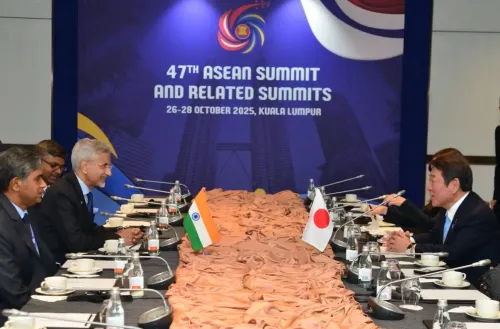
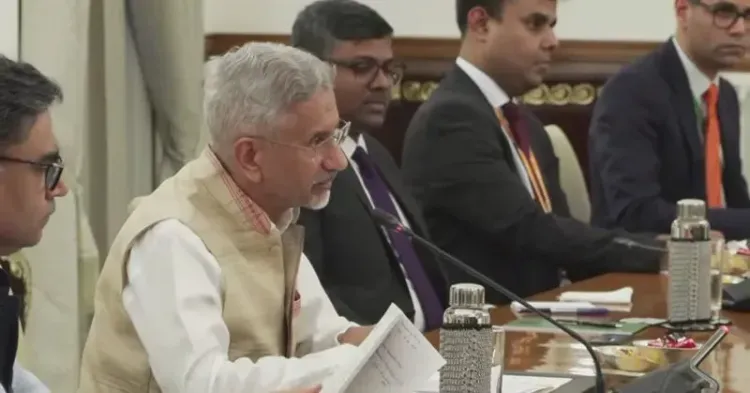
Union External Affairs Minister Dr. S. Jaishankar met with Japanese Foreign Minister Motegi Toshimitsu on Monday, 25 May 2026, sharing his remarks from the bilateral meeting on social media alongside the national flags of both countries.
Context
India and Japan share a Special Strategic and Global Partnership, a designation formalised during the landmark 2014 bilateral summit. The relationship is underpinned by annual Prime Minister-level summits and institutionalised 2+2 Foreign and Defence Ministerial dialogues that were established in 2019. Dr. Jaishankar's engagement with his Japanese counterpart continues a pattern of high-frequency diplomatic contact between the two nations.
The meeting between Dr. Jaishankar and FM Motegi Toshimitsu reflects the sustained momentum in the bilateral relationship, with both sides engaging at the foreign-minister level to advance shared priorities across a range of strategic and economic domains.
Policy Backdrop
India-Japan ties have deepened steadily under India's Act East Policy, with Japan emerging as a critical partner for connectivity, infrastructure investment, and technology cooperation across the Indo-Pacific. The two countries also coordinate closely within the Quad framework — alongside the United States and Australia — on maritime security and regional stability.
Infrastructure investment has been a cornerstone of the partnership, with Japanese official development assistance funding major projects including high-speed rail corridors and urban transit systems in India. Defence industrial cooperation and technology-transfer frameworks have also gained traction in recent years, broadening the partnership beyond its traditional economic foundations.
Stakeholders and Impact
The bilateral relationship directly affects a wide range of stakeholders: Indian defence forces benefit from joint exercises and equipment cooperation, while infrastructure investors from both countries stand to gain from deepened project pipelines. Business communities, particularly in sectors such as semiconductors, green energy, and advanced manufacturing, are closely watching the direction of ministerial-level engagements.
For the broader Indo-Pacific region, a robust India-Japan partnership serves as a stabilising force, reinforcing rules-based norms and providing an alternative framework for connectivity that competes with rival regional initiatives.
What's Next
Attention will now turn to the next India-Japan annual Prime Minister-level summit and any concrete outcomes that follow from the 2+2 dialogue track. Follow-up engagements at the working level are expected to translate ministerial-level discussions into actionable deliverables on defence, trade, and technology.
The trajectory of the partnership suggests further institutionalisation of cooperation mechanisms, with the Quad framework providing an additional multilateral layer through which India and Japan can coordinate on shared regional concerns.
Point of View
A partner central to New Delhi's Indo-Pacific architecture. The meeting fits into a broader pattern of India reinforcing its eastern partnerships at a moment of heightened regional competition. For the Quad framework, sustained India-Japan foreign-minister contact provides the diplomatic scaffolding that gives the grouping operational credibility beyond headline summits. The optics of the dual-flag post — understated yet deliberate — reflect New Delhi's approach of letting the relationship's substance speak for itself.
NationPress
9 Oct 2026
Frequently Asked Questions
Why did Jaishankar meet Japan's FM Motegi Toshimitsu?
Dr. Jaishankar met FM Motegi Toshimitsu to advance the India-Japan Special Strategic and Global Partnership, covering areas including defence, infrastructure, technology, and Indo-Pacific security.
What is the India-Japan Special Strategic and Global Partnership?
It is the highest tier of India's bilateral relationship with Japan, formalised in 2014, and includes annual PM-level summits, 2+2 ministerial dialogues, and cooperation on defence, infrastructure, and technology.
What is India's Act East Policy and Japan's role in it?
India's Act East Policy prioritises engagement with East and Southeast Asian nations; Japan is a cornerstone partner under this policy, contributing to connectivity projects, defence ties, and Indo-Pacific stability.
What is the Quad and how does India-Japan fit into it?
The Quad is a strategic grouping of India, Japan, the United States, and Australia focused on a free and open Indo-Pacific. India-Japan bilateral ties form a key pillar of the Quad's diplomatic and security architecture.
What are the next steps after Jaishankar's meeting with FM Motegi?
The next major milestones include the annual India-Japan Prime Minister-level summit and follow-up engagements on the 2+2 Foreign and Defence Ministerial dialogue track.