PM Modi Meets Japan FM Motegi, Reaffirms Indo-Pacific Partnership
Synopsis
Prime Minister Narendra Modi met Japanese Foreign Minister Toshimitsu Motegi on 26 May 2026, reaffirming the India-Japan Special Strategic and Global Partnership. The two sides underscored the framework's role in advancing peace, stability, and prosperity across the Indo-Pacific, continuing a partnership elevated to its current status in 2014.
Key Takeaways
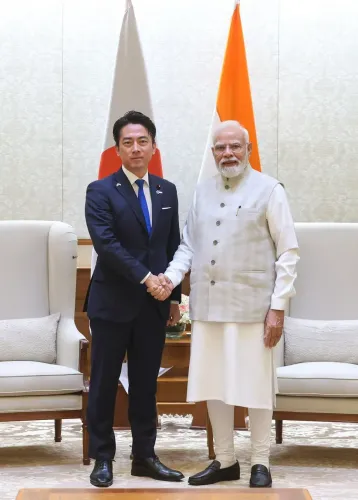
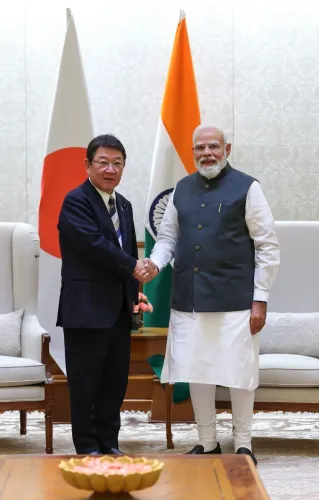
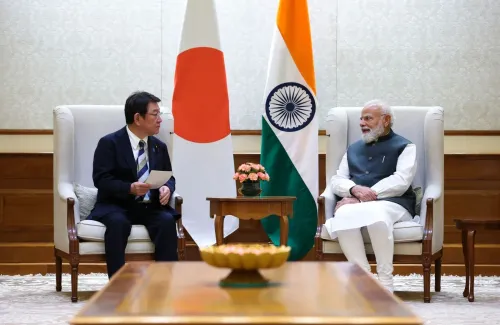
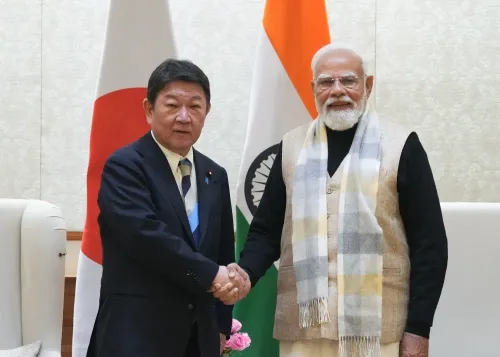
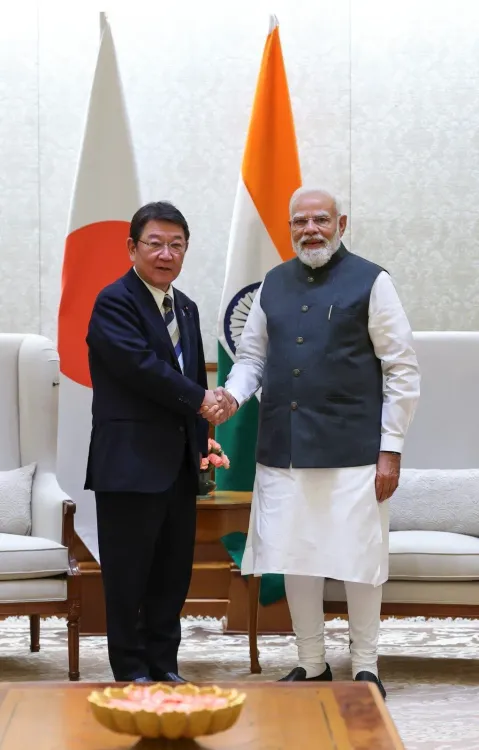
Prime Minister Narendra Modi received Toshimitsu Motegi , Japan's Foreign Affairs Minister, on 26 May 2026 .
Both sides reaffirmed the India-Japan Special Strategic and Global Partnership , the highest tier of bilateral engagement between the two nations.
The partnership was first established in 2006 and upgraded to its current status in 2014 under PM Modi .
The meeting aligns with India's Act East Policy , which places Japan at the core of India's engagement with East Asian partners.
The bilateral relationship operates alongside the Quad framework and covers defence, technology, and infrastructure cooperation.
Follow-up on defence technology transfers and preparations for the annual India-Japan summit are expected next steps.
Prime Minister Narendra Modi met with Toshimitsu Motegi, Minister for Foreign Affairs of Japan, on Tuesday, 26 May 2026, reaffirming the importance of the India-Japan Special Strategic and Global Partnership in advancing peace, stability, and prosperity across the Indo-Pacific and beyond.
Context
The meeting underscores the sustained high-level diplomatic engagement between India and Japan, two of the Indo-Pacific's most consequential democracies. Prime Minister Modi described the bilateral partnership as 'vital' to the shared goal of a free, stable, and prosperous Indo-Pacific region. Motegi, a senior figure in Japanese diplomacy, previously served as Foreign Minister from 2019 to 2021 and has been a consistent advocate of deepening Japan's partnerships across Asia.
Policy Backdrop
The India-Japan Special Strategic and Global Partnership was first established as a Strategic and Global Partnership in December 2006 during the tenure of Prime Minister Manmohan Singh and Shinzo Abe. It was upgraded to its current elevated status in 2014 when Prime Minister Modi visited Tokyo, signalling a qualitative deepening of ties across defence, technology, and economic cooperation. India's Act East Policy, also articulated in 2014, placed Japan at the centre of engagement with East Asian partners, particularly on connectivity and maritime security.
The partnership operates alongside multilateral frameworks including the Quad — comprising India, Japan, the United States, and Australia — which aligns closely with the shared vision of a rules-based Indo-Pacific order. Joint naval exercises and technology collaboration have been recurring pillars of the bilateral relationship in recent years.
Stakeholders and Impact
The bilateral relationship carries direct implications for defence and technology sectors in both countries, as well as for smaller Indo-Pacific nations that benefit from the stability framework both powers support. Regular high-level exchanges — including annual summit mechanisms and 2+2 ministerial dialogues — have institutionalised the partnership beyond individual administrations. Regional stakeholders, particularly in Southeast Asia and the broader Indian Ocean zone, watch these engagements closely given ongoing geopolitical shifts in the region.
For India, deepening ties with Japan also supports domestic objectives around infrastructure financing, semiconductor supply chains, and defence manufacturing — areas where Japanese investment and technology transfer have grown in significance.
What's Next
The meeting is expected to feed into follow-up discussions on defence technology transfers and economic cooperation ahead of any scheduled Quad leaders' meeting or the annual India-Japan summit. Both sides have consistently used high-level diplomatic visits to lay groundwork for concrete deliverables in subsequent multilateral settings. The trajectory of the partnership suggests further announcements on joint initiatives are likely in the near term.
Point of View
Stability and prosperity' — the standard lexicon of the free and open Indo-Pacific vision — reflects alignment with Japan and Quad partners on the rules-based order without naming any adversary. The meeting fits a broader pattern of institutionalising bilateral ties through high-frequency, high-visibility exchanges that build political capital for concrete deliverables such as defence transfers and infrastructure financing. For New Delhi, Japan remains an indispensable partner in balancing strategic autonomy with deep-rooted alignment.
NationPress
10 Oct 2026
Frequently Asked Questions
What is the India-Japan Special Strategic and Global Partnership?
The India-Japan Special Strategic and Global Partnership is the highest framework of bilateral engagement between the two countries, covering defence, technology, infrastructure, and economic cooperation. It was originally established as a Strategic and Global Partnership in 2006 and upgraded to its current status in 2014 during Prime Minister Modi's visit to Tokyo.
Who is Toshimitsu Motegi and why did he meet PM Modi?
Toshimitsu Motegi is a senior Japanese politician who previously served as Japan's Minister for Foreign Affairs from 2019 to 2021. His meeting with PM Modi on 26 May 2026 focused on reaffirming bilateral ties and the shared vision for the Indo-Pacific.
What is India's Act East Policy and how does Japan fit in?
India's Act East Policy, articulated in 2014, prioritises deeper engagement with East and Southeast Asian nations. Japan has been placed at the centre of this policy, particularly on maritime security, connectivity projects, and technology cooperation.
What is the Quad and how does India-Japan cooperation relate to it?
The Quad is a strategic grouping of India, Japan, the United States, and Australia focused on a free and open Indo-Pacific. The India-Japan bilateral partnership complements and reinforces Quad objectives, including joint naval exercises and supply chain resilience.
What are the likely next steps after PM Modi's meeting with Japan's FM?
Follow-up steps are expected to include discussions on defence technology transfers, economic cooperation, and preparations for the annual India-Japan summit, potentially alongside a Quad leaders' meeting.