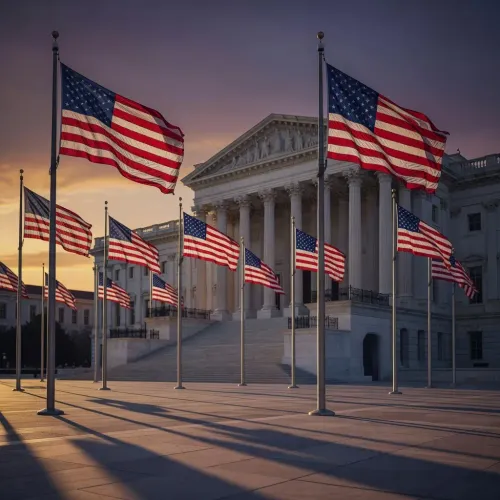
White House Signals Year-Round Patriotic Commitment After July 4

Synopsis
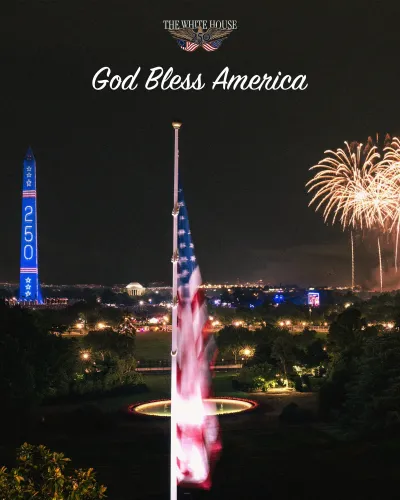
The White House declared 'we're locked in all year' in a brief patriotic post on 13 July 2026, about a week after US Independence Day. The message, carrying American flag and bald eagle symbols, reflects the executive branch's practice of sustaining civic-identity messaging beyond the holiday itself.
Key Takeaways
The White House posted a patriotic message on 13 July 2026 , approximately one week after Independence Day celebrations.
The post stated: 'The 4th of July may be over, but we're locked in all year,' signalling year-round national commitment.
The 4th of July commemorates the 1776 Declaration of Independence , the founding moment of the United States.
The White House included the American flag and bald eagle emojis, both core US national symbols.
No specific policy, legislation, or executive action was referenced in the post.
Executive-branch patriotic messaging after major holidays is consistent with practice across multiple prior administrations.
The White House, the official communications account of the Executive Office of the President of the United States, posted a brief patriotic message on Sunday, 13 July 2026, declaring that American national pride extends well beyond the 4th of July holiday.
The post read: 'The 4th of July may be over, but we're locked in all year,' accompanied by the American flag and bald eagle emojis. The message was issued roughly a week after Independence Day celebrations concluded across the United States.
Context
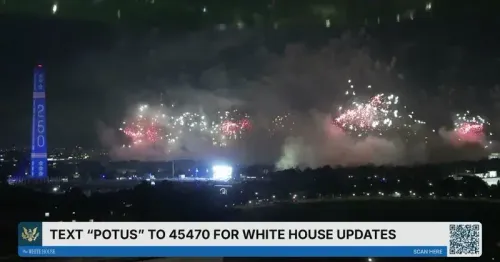
The 4th of July marks the anniversary of the 1776 Declaration of Independence, when the thirteen American colonies formally broke from British rule. It is a federal holiday observed annually with fireworks, public gatherings, and official addresses from the executive branch. The White House post arrives in the days following those celebrations, framing national commitment as a continuous, year-round disposition rather than a single-day observance. The use of national symbols — the flag emoji and the bald eagle, the country's national bird — reinforces that framing.Policy Backdrop
Executive-branch social-media accounts across multiple prior administrations have issued follow-up patriotic messaging after major national holidays. The practice is consistent with a long-standing communications strategy of using official channels to sustain public identification with core civic institutions beyond the holiday calendar. Such messaging does not carry specific legislative or policy content but serves as a signal of institutional continuity and civic engagement. The White House's verified account on X functions as a primary real-time channel for executive communications to both domestic and international audiences.Stakeholders and Impact
The primary audience for the post is the American public, though the White House's global following means the message reaches international observers, including in India, where interest in United States political communication has grown substantially alongside bilateral ties. For Indian audiences, the post offers a window into the civic-messaging culture of the American executive branch — where patriotic identity is actively maintained as a public-facing value independent of specific policy announcements. No concrete policy, legislation, or executive action is referenced in the message.What's Next
Observers tracking White House communications will watch for subsequent posts around upcoming commemorative dates — such as Constitution Day in September or Veterans Day in November — to gauge whether the 'locked in all year' framing signals a sustained messaging theme for the remainder of 2026. The broader pattern of executive-branch civic messaging suggests such posts will continue at regular intervals, reinforcing national-symbol identification as a consistent pillar of official communications strategy through the year.Point of View
But fits a recognisable pattern in which executive-branch accounts treat national symbols as a standing communications asset rather than a seasonal one. For international observers, including in India, it underscores how American executive communications blend institutional symbolism with social-media informality. The 'locked in all year' framing may also foreshadow a year-long messaging cadence tied to the lead-up to future commemorative or electoral milestones.
NationPress
12 Jul 2026
Frequently Asked Questions
What did the White House post on July 13 2026?
The White House posted a short patriotic message saying 'The 4th of July may be over, but we're locked in all year,' accompanied by American flag and bald eagle emojis, about a week after Independence Day.
Why does the White House post patriotic messages after July 4?
Executive-branch accounts across multiple administrations have used follow-up patriotic posts to sustain public identification with national symbols and civic institutions beyond the single holiday.
What is the significance of the 4th of July in the United States?
The 4th of July is a federal holiday marking the 1776 Declaration of Independence , when the United States formally separated from British rule. It is the country's national Independence Day.
Does the White House July 2026 post announce any new policy?
No. The post contains no reference to specific legislation, executive action, or policy initiative. It is a civic-messaging post focused on national pride and year-round patriotic commitment.
How does India relate to White House social media posts?
India's growing bilateral relationship with the United States and a large English-speaking audience mean White House communications on X reach significant Indian readership, making US executive messaging of interest to Indian news consumers.