PM Modi Highlights Deepening India-Japan Ties Across Key Sectors
Synopsis
Prime Minister Narendra Modi on 2 July 2026 highlighted outcomes from India-Japan engagement, reaffirming the Special Strategic and Global Partnership and its focus on growth, innovation, and development across key sectors.
Key Takeaways
Prime Minister Narendra Modi on 2 July 2026 posted on X underscoring outcomes from India-Japan bilateral engagement.
The two countries share a Special Strategic and Global Partnership elevated in 2014 to cover defence, infrastructure, and technology.
Japan agreed in 2015 to finance the Mumbai-Ahmedabad High-Speed Rail Corridor , a flagship connectivity project.
Both nations are members of the Quad , adding a multilateral Indo-Pacific dimension to their bilateral ties.
Key stakeholders include Japanese investors and defence manufacturers with significant interests in Indian infrastructure and advanced manufacturing.
The next India-Japan Annual Summit is expected to formalise follow-up agreements on technology, defence production, and connectivity.
Prime Minister Narendra Modi on Thursday, 2 July 2026, underscored the strength of India-Japan bilateral engagement, stating that recent outcomes reflect a shared commitment to deepening cooperation across key sectors and unlocking new opportunities for growth, innovation, and development.
Context
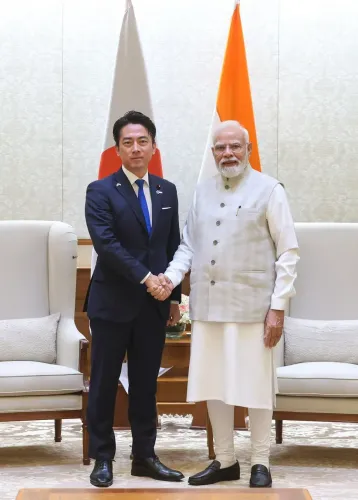
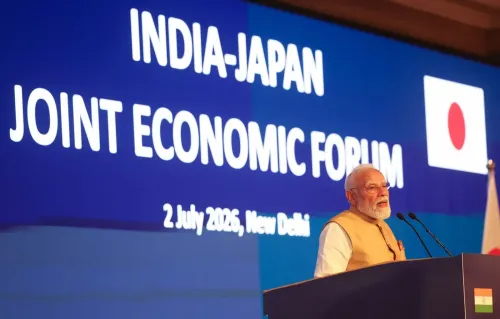
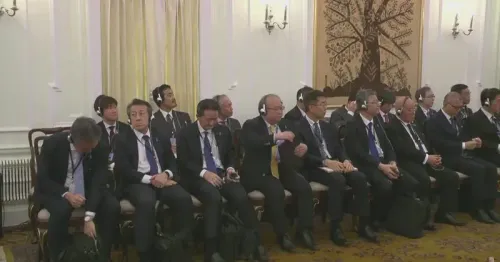
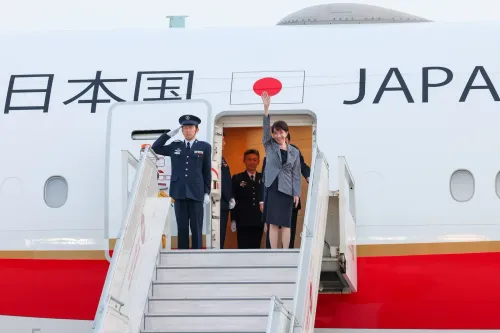
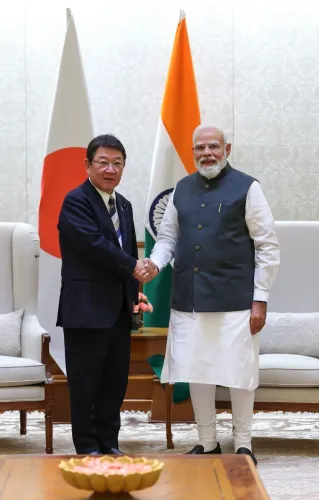
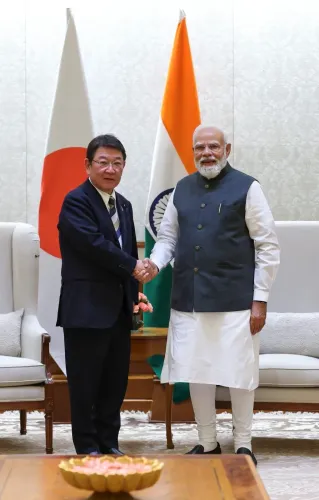
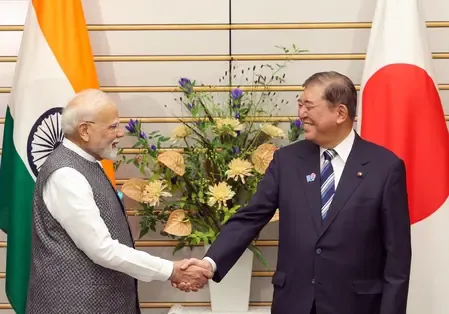
In his post on X, Prime Minister Modi wrote: 'These outcomes reflect the commitment to deepening the India-Japan cooperation across key sectors and unlocking new opportunities for growth, innovation and development.' The message was accompanied by four images, signalling a substantive diplomatic engagement rather than a routine exchange. The post follows a pattern of high-level bilateral interactions that have defined the India-Japan relationship over the past decade.
India and Japan share a Special Strategic and Global Partnership, a framework elevated in 2014 to guide annual summits and sector-specific collaboration. This upgrade placed defence, infrastructure, and technology at the centre of bilateral ties, setting the stage for a series of landmark agreements in the years that followed.
Policy Backdrop
The foundation of modern India-Japan ties was laid in 2006 with the establishment of the Strategic and Global Partnership, which institutionalised annual summits and economic dialogues. The relationship was further deepened in 2014 when Prime Minister Modi visited Tokyo, resulting in the elevation to a Special Strategic and Global Partnership with a sharper focus on defence cooperation and connectivity infrastructure.
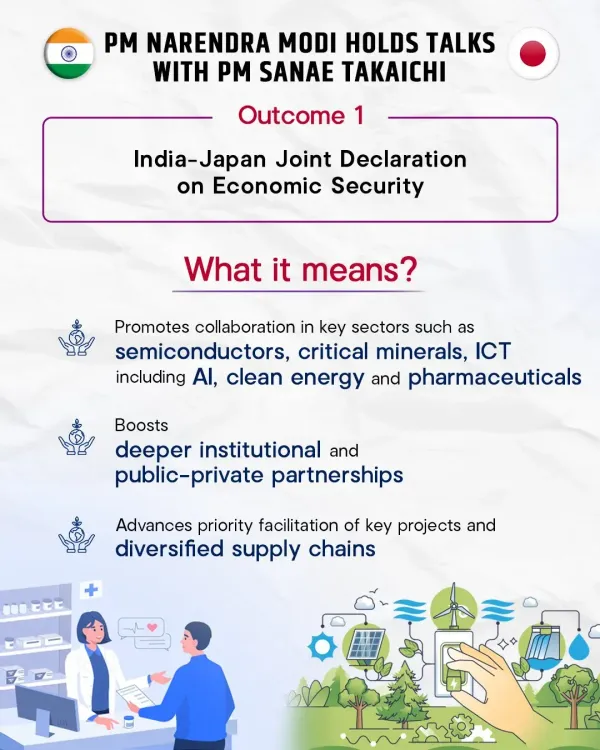
A defining milestone came in 2015, when Japan agreed to finance the Mumbai-Ahmedabad High-Speed Rail Corridor — one of the most ambitious infrastructure projects in India's history. Beyond railways, the two nations have expanded collaboration into semiconductors, clean energy, and supply-chain resilience, reflecting a sustained strategic alignment in the Indo-Pacific region.
Japan is also a fellow member of the Quad — the quadrilateral grouping that includes India, Japan, Australia, and the United States — which has increasingly focused on regional connectivity, technology standards, and supply-chain security. This multilateral dimension adds strategic weight to every bilateral India-Japan outcome.
Stakeholders and Impact
Japanese investors and defence manufacturers are among the principal stakeholders watching the trajectory of this partnership. Japan has been a major source of official development assistance and foreign direct investment for India, particularly in infrastructure and advanced manufacturing. Deeper cooperation in these areas has direct implications for employment generation and industrial capacity in both countries.
For India, the partnership offers access to Japanese technology and capital at a time when the country is aggressively pursuing its manufacturing ambitions. For Japan, a stronger India relationship diversifies its strategic partnerships in the Indo-Pacific and reduces dependence on a single regional axis.
What's Next
Attention will now turn to the next India-Japan Annual Summit, where follow-up agreements on technology transfer, defence production, and connectivity projects are expected to be formalised. Progress on the Mumbai-Ahmedabad High-Speed Rail Corridor and any new semiconductor or clean-energy pacts will serve as key indicators of how the outcomes highlighted by Prime Minister Modi translate into on-ground delivery. The sustained cadence of high-level engagement between New Delhi and Tokyo suggests that the bilateral relationship will continue to deepen, with the Indo-Pacific strategic framework providing the overarching direction.
Point of View
With 'outcomes' suggesting signed agreements or joint statements rather than a courtesy exchange. This fits a deliberate pattern of India cultivating like-minded Indo-Pacific partners to diversify technology access and supply chains — a strategy that has accelerated since 2020. The reference to 'growth, innovation and development' tracks closely with India's domestic industrial priorities, particularly semiconductors and clean energy, where Japanese capital and expertise are critical. Sustained high-level cadence with Tokyo also reinforces India's Quad commitments without requiring explicit security language.
NationPress
1 Oct 2026
Frequently Asked Questions
What is the India-Japan Special Strategic and Global Partnership?
The Special Strategic and Global Partnership is the highest tier of bilateral relations between India and Japan, established in 2014 during PM Modi's visit to Tokyo. It provides a framework for annual summits and cooperation across defence, infrastructure, technology, and economic sectors.
What did PM Modi say about India-Japan relations on 2 July 2026?
PM Modi stated that recent outcomes 'reflect the commitment to deepening the India-Japan cooperation across key sectors and unlocking new opportunities for growth, innovation and development,' posting the message alongside four images on X.
What is the Mumbai-Ahmedabad High-Speed Rail project?
The Mumbai-Ahmedabad High-Speed Rail Corridor is a flagship India-Japan connectivity project. Japan agreed to finance it in 2015, making it one of the most significant bilateral infrastructure undertakings between the two countries.
Is India part of the Quad with Japan?
Yes. India, Japan, Australia, and the United States form the Quad — a quadrilateral grouping focused on Indo-Pacific connectivity, supply-chain resilience, and technology standards. This multilateral forum complements the India-Japan bilateral partnership.
What sectors does India-Japan cooperation cover?
India-Japan cooperation spans infrastructure, defence, railways, semiconductors, clean energy, and economic investment. Japan is one of India's largest sources of official development assistance and foreign direct investment in advanced manufacturing.