PM Modi Meets Japan PM Takaichi in Delhi, Eyes 10-Trillion-Yen Investment
Synopsis
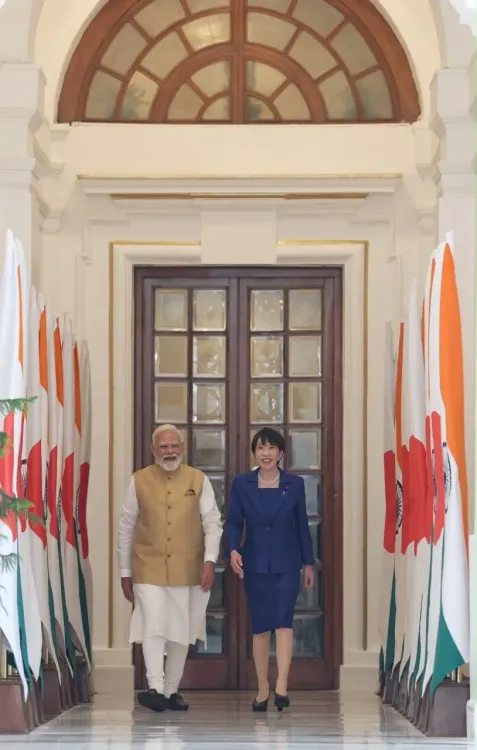
Prime Minister Narendra Modi hosted Japanese PM Sanae Takaichi in New Delhi on 2 July 2026, announcing a landmark goal of 10 trillion yen in Japanese investment and a doubling of Japanese companies in India over ten years, with talks spanning AI, defence, and pharmaceuticals.
Key Takeaways
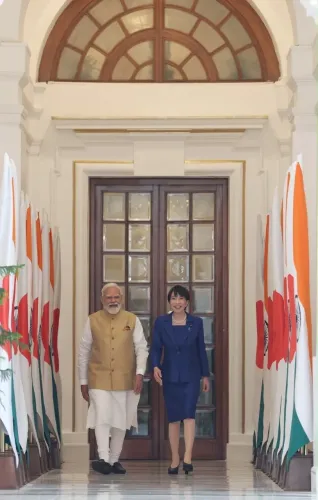
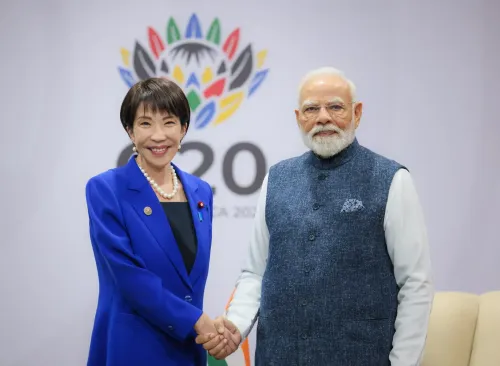
PM Modi met Japanese Prime Minister Sanae Takaichi in New Delhi on 2 July 2026 under the India-Japan Special Strategic and Global Partnership framework.
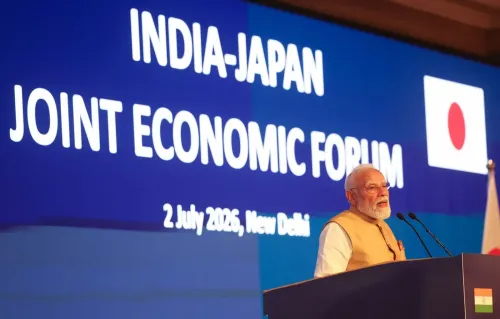
The two leaders set a target of 10 trillion yen in Japanese investment into India over the next ten years .
Both sides aim to double the number of Japanese companies operating in India within the same period.
Key topics included technology, AI, innovation, defence, security, and pharmaceuticals .
The meeting builds on a partnership elevated in 2014 and annual 2+2 ministerial dialogues in place since 2019 .
The investment pledge is the most ambitious bilateral target set between the two nations to date, surpassing previous benchmarks of 3.5 trillion yen and 5 trillion yen .
Prime Minister Narendra Modi met Japanese Prime Minister Sanae Takaichi in New Delhi on 2 July 2026, holding wide-ranging talks under the framework of the India-Japan Special Strategic and Global Partnership. The two leaders discussed technology, innovation, artificial intelligence, defence, security, and pharmaceuticals, and set an ambitious investment target for the decade ahead.
Context
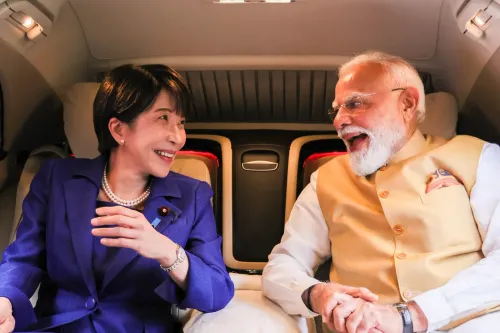
Posting on X after the bilateral meeting, Modi described the talks as covering 'the full range of the India-Japan Special Strategic and Global Partnership.' He welcomed Takaichi warmly, writing: 'It is wonderful to meet Prime Minister Sanae Takaichi in Delhi. Japan is an important partner of India and we are confident that our ties will get even stronger in the times to come.'
The meeting underscores the sustained momentum in India-Japan ties that has characterised both nations' foreign policy postures in the Indo-Pacific region. Japan remains one of India's most consequential strategic partners, with cooperation spanning infrastructure, clean energy, and high-technology manufacturing.
Policy Backdrop
The India-Japan Special Strategic and Global Partnership was elevated to its current status in September 2014, accompanied at the time by a pledge of 3.5 trillion yen in Japanese investment over five years. Subsequent summits progressively revised that target upward, reaching 5 trillion yen over a five-year window by the early 2020s.
The two countries have also held annual 2+2 ministerial dialogues on defence and foreign affairs since 2019, institutionalising security coordination at the ministerial level. Recent joint initiatives have focused on supply-chain diversification, semiconductors, smart cities, and high-speed rail — providing the policy scaffolding on which today's AI and defence discussions rest.
India's Act East Policy and Japan's Free and Open Indo-Pacific vision have served as complementary strategic doctrines, aligning both nations' interests in maritime security and critical-technology cooperation.
Stakeholders and Impact
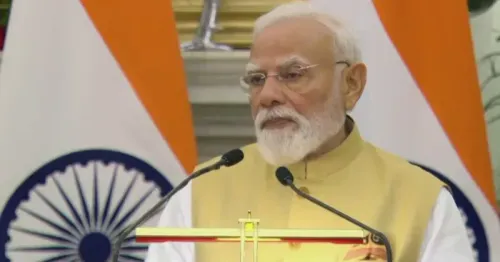
Modi announced a headline economic goal: '10 trillion yen of Japanese investment into India and doubling the number of Japanese companies in India' over the next ten years. If realised, this would represent the most ambitious bilateral investment target the two countries have set, roughly doubling the previous benchmarks.
The pledge carries direct implications for Japanese investors, India's technology and pharmaceutical sectors, and defence manufacturers in both countries. An expanded Japanese industrial footprint in India would also support New Delhi's broader goal of positioning the country as a global manufacturing hub.
Discussions on AI and innovation signal that the partnership is evolving beyond traditional infrastructure cooperation toward frontier technologies, reflecting global competition over semiconductor supply chains and next-generation defence systems.
What's Next
Analysts will watch closely for follow-through on the 10-trillion-yen investment pledge at the next annual India-Japan leadership summit, as well as any new memoranda of understanding on semiconductor co-production or joint defence manufacturing. The pharmaceutical dimension of today's talks may also yield bilateral agreements on supply-chain resilience, an area both governments have prioritised since the disruptions of the early 2020s.
With both leaders signalling confidence that ties 'will get even stronger,' the onus now falls on implementation — translating summit-level ambition into on-ground investment flows and technology partnerships.
Point of View
Signalling that both governments see the bilateral relationship as a strategic priority rather than a routine diplomatic engagement. The inclusion of AI and defence in the same breath as pharmaceuticals and infrastructure reflects a deliberate effort to future-proof the partnership against technology-competition headwinds. For India, a deepened Japanese commitment also reinforces New Delhi's positioning as the preferred destination for supply-chain diversification away from China. The real test will be whether the investment pledge translates into on-ground flows before the next leadership summit.
NationPress
1 Oct 2026
Frequently Asked Questions
What did PM Modi and Japanese PM Takaichi discuss in Delhi?
The two leaders discussed the full range of the India-Japan Special Strategic and Global Partnership, covering technology, AI, innovation, defence, security, and pharmaceuticals, and announced a target of 10 trillion yen in Japanese investment into India over ten years.
What is the 10-trillion-yen India-Japan investment target?
Prime Minister Modi announced a goal for Japan to invest 10 trillion yen in India over the next ten years, alongside doubling the number of Japanese companies operating in India — the most ambitious bilateral investment target the two countries have set.
What is the India-Japan Special Strategic and Global Partnership?
It is the highest-level bilateral framework between India and Japan, established in 2014, encompassing security, economic, and technology cooperation. It is supported by annual leadership summits and 2+2 ministerial dialogues on defence and foreign affairs.
How does today's summit fit into India's broader foreign policy?
The meeting aligns with India's Act East Policy and Japan's Free and Open Indo-Pacific vision, both of which prioritise deeper ties in the Indo-Pacific region covering maritime security, supply-chain diversification, and critical technologies.
Who is Sanae Takaichi?
Sanae Takaichi is a senior Japanese Liberal Democratic Party politician who has held multiple cabinet positions, including minister of internal affairs and communications, and is currently serving as Prime Minister of Japan.