Rijiju Shares Live Feed of PM Modi's Joint Presser With Japan PM
Synopsis
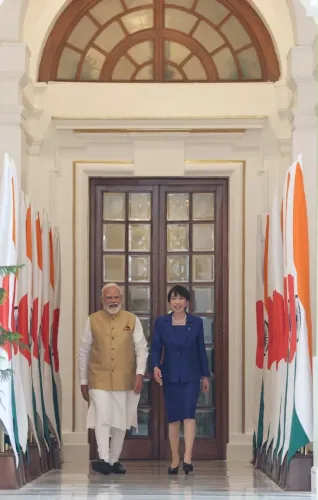
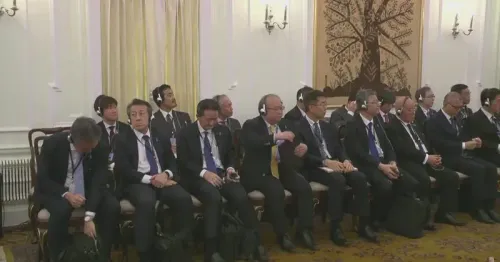
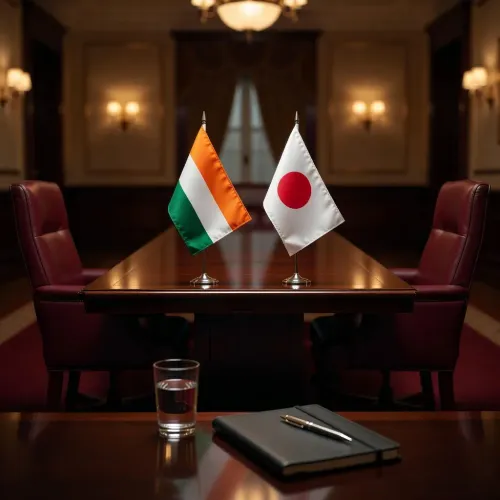
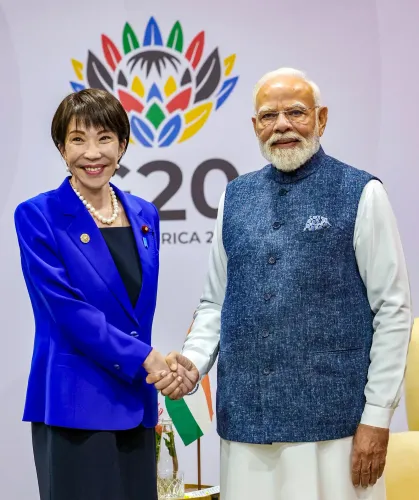
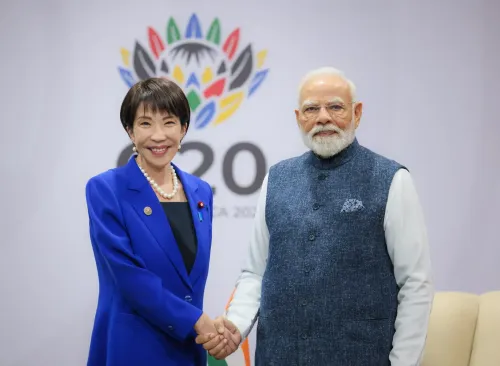
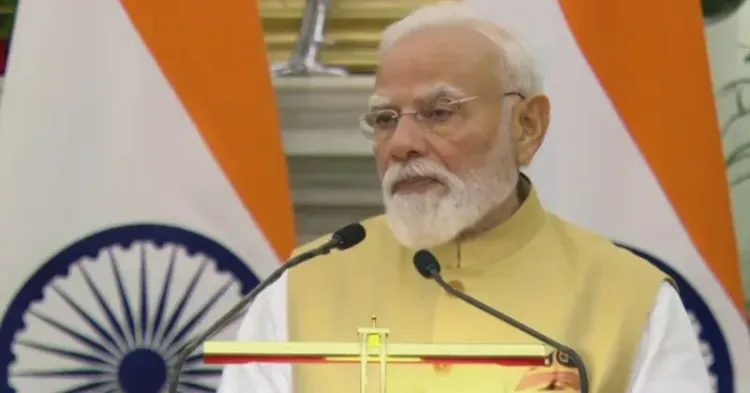
Union Parliamentary Affairs Minister Kiren Rijiju on July 2, 2026 shared a live broadcast of PM Modi's joint press meet with Japanese PM Sanae Takaichi in New Delhi, spotlighting a high-stakes India-Japan bilateral summit rooted in a two-decade strategic partnership.
Key Takeaways
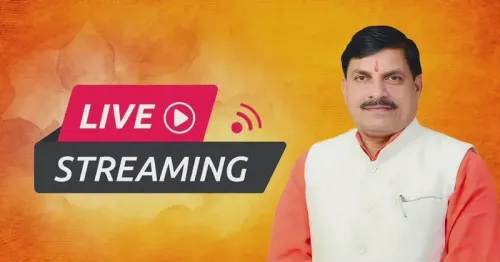
Minister Kiren Rijiju shared a live stream link on July 2, 2026 for PM Modi's joint press meet with Japanese PM Sanae Takaichi .
The bilateral meeting was held in New Delhi , India's capital and the standard venue for visiting heads of government.
India and Japan have held annual prime ministerial summits since formalising a strategic partnership in 2006 .
The relationship was upgraded to a Special Strategic and Global Partnership in 2016 , covering defence, infrastructure and maritime security.
Outcomes of the summit — including possible MoUs on rail, defence or technology — are expected to be detailed by the Ministry of External Affairs.
Any treaty-level agreements could see parliamentary action during the upcoming monsoon session of Parliament.
Union Parliamentary Affairs Minister Kiren Rijiju on Thursday, July 2, 2026, shared a live broadcast link on X inviting audiences to watch Prime Minister Narendra Modi address a joint press meet with Japanese Prime Minister Sanae Takaichi in New Delhi.
Context
Rijiju's post, tagged #WatchLive, directed followers to a live stream of the bilateral press conference, signalling the government's push to amplify high-profile diplomatic events in real time on social media. Joint press meets of this nature typically follow closed-door talks between the two leaders and serve as the official platform for announcing agreements, memoranda of understanding, or shared positions on regional issues.
The meeting took place in New Delhi, which regularly hosts visiting heads of government for bilateral summits. Japan is among India's most consequential strategic partners, and leader-level engagement between the two countries has been a consistent feature of Indian foreign policy for over a decade.
Policy Backdrop
India and Japan formalised a strategic partnership in 2006, with both sides committing to annual prime ministerial summits. The relationship was significantly deepened in 2014 when PM Modi held his first summit with Japanese leadership in Tokyo, expanding cooperation on defence equipment and high-speed rail infrastructure — most notably the Mumbai-Ahmedabad High Speed Rail corridor.
The partnership was further elevated to a Special Strategic and Global Partnership during the 2016 summit, reflecting convergence on maritime security, economic connectivity, and Indo-Pacific stability. Subsequent summits have produced agreements spanning semiconductor supply chains, defence manufacturing, and Official Development Assistance for infrastructure projects across India.
India's Act East Policy, a central pillar of its foreign policy architecture, has consistently identified Japan as a priority partner, with bilateral engagement extending into multilateral frameworks such as the Quad.
Stakeholders and Impact
Defence industries and infrastructure developers in both countries watch India-Japan summits closely, as these meetings frequently produce project-level announcements with long procurement and construction cycles. Agreements on rail, port development, and clean energy have direct implications for Indian states along proposed project corridors.
Parliamentary stakeholders are also attentive: any treaties or MoUs signed during bilateral visits may require ratification or legislative follow-through, making Rijiju's ministry — which manages parliamentary business — directly relevant to the diplomatic calendar. The monsoon session of Parliament, typically convened in July, could see related business tabled if agreements require legislative action.
What's Next
Detailed outcomes of the Modi-Takaichi summit — including any joint statement, project announcements, or MoUs — are expected to be released by the Ministry of External Affairs following the press conference. Observers will watch for fresh commitments on rail, defence co-production, semiconductor resilience, or technology partnerships that have characterised recent India-Japan summits.
With Parliament's monsoon session approaching, any treaty-level agreement emerging from the talks could enter the legislative pipeline in the weeks ahead, adding a parliamentary dimension to what is primarily a diplomatic event.
Point of View
Converting bilateral summits into broad public communications moments. The India-Japan relationship has been one of the most institutionally dense in India's foreign policy — with annual summits, Quad alignment, and infrastructure pipelines — making this meeting a natural focal point for the government's Act East narrative. The timing, ahead of the monsoon session of Parliament, also hints at potential legislative follow-through on any agreements signed. Rijiju's ministry sits at the intersection of diplomacy and parliamentary business, giving his amplification of the event a subtle administrative signal beyond mere social media outreach.
NationPress
30 Sept 2026
Frequently Asked Questions
Why did PM Modi meet Japanese PM Sanae Takaichi in New Delhi?
PM Modi met Japanese PM Sanae Takaichi in New Delhi as part of the long-standing India-Japan bilateral summit framework, which has produced annual leader-level meetings since 2006 to advance cooperation on defence, infrastructure, and economic ties.
What is India's relationship with Japan?
India and Japan share a Special Strategic and Global Partnership established in 2016, covering defence manufacturing, high-speed rail, maritime security, and Indo-Pacific cooperation frameworks including the Quad.
Who is Sanae Takaichi?
Sanae Takaichi is a senior politician of Japan's Liberal Democratic Party who has held ministerial roles including internal affairs and communications, and serves as Japan's Prime Minister at the time of this summit.
What could come out of the Modi-Takaichi summit?
Likely outcomes include joint statements, MoUs, or project announcements on areas such as high-speed rail, defence co-production, semiconductor supply chains, or clean energy, based on the pattern of previous India-Japan summits.
What is India's Act East Policy and how does Japan fit in?
India's Act East Policy prioritises deeper engagement with Asia-Pacific nations, with Japan identified as a key partner for infrastructure investment, defence ties, and multilateral Indo-Pacific frameworks.