PM Modi Meets Japan PM Takaichi, Vows Deeper Trade Ties
Synopsis
Prime Minister Narendra Modi held talks with Japanese Prime Minister Sanae Takaichi on the G7 sidelines on 17 June 2026, reaffirming trade and investment as priority pillars of the India-Japan strategic partnership and pledging deeper cooperation across diverse sectors.
Key Takeaways
PM Modi met Japanese PM Sanae Takaichi on 17 June 2026 on the sidelines of a G7 -related engagement.
Both leaders agreed to deepen cooperation across diverse sectors, with trade and investment identified as priority areas.
The India-Japan Comprehensive Economic Partnership Agreement has been in force since 2011 , underpinning bilateral economic ties.
India and Japan have held annual bilateral summits since 2006 under their strategic and global partnership framework.
Key sectors expected to benefit include manufacturing, semiconductors, clean energy, infrastructure, and defence.
Follow-up through bilateral working groups and G7 outreach channels will determine concrete policy outcomes.
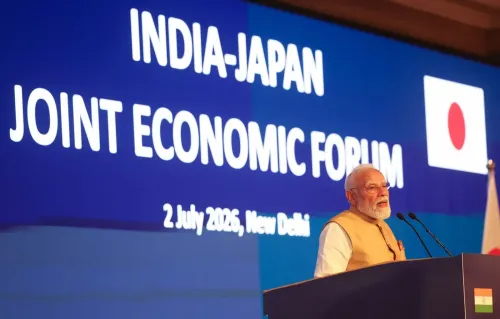
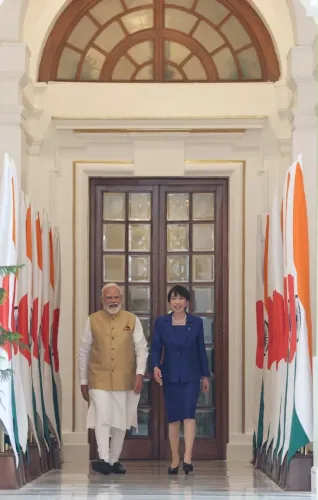
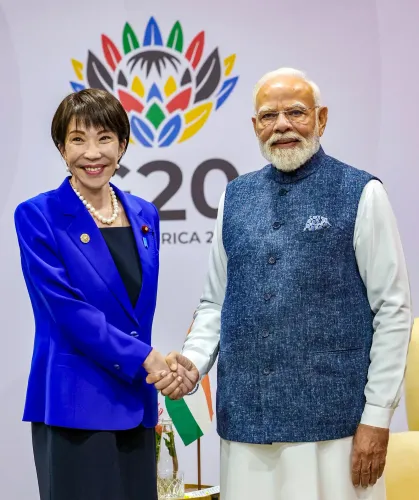
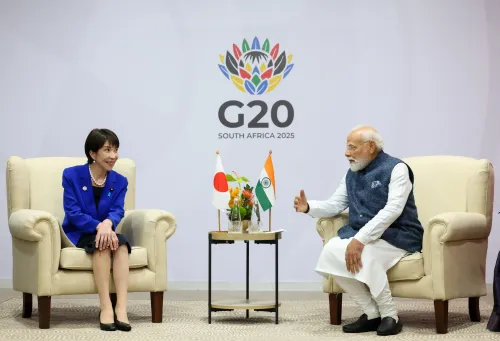
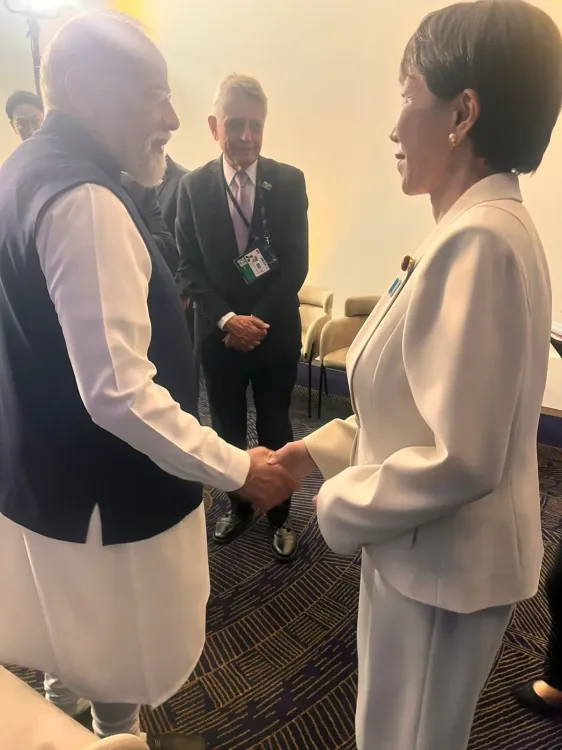
Prime Minister Narendra Modi on Wednesday, 17 June 2026 held talks with Japanese Prime Minister Sanae Takaichi on the sidelines of a G7-related engagement, describing the exchange as productive and reaffirming India's commitment to deepening bilateral cooperation across multiple sectors.
Posting in Japanese on X, Modi wrote: '高市早苗首相と素晴らしい意見交換を行いました' ('I had a wonderful exchange of views with Prime Minister Sanae Takaichi'), adding that India and Japan would continue to deepen cooperation across diverse fields with trade and investment as priority areas.
Context
The meeting took place in the context of a G7 summit or related ministerial gathering, where India has increasingly participated as an outreach partner. Sanae Takaichi is a senior leader of Japan's Liberal Democratic Party who has held multiple cabinet portfolios including internal affairs and economic security. The two leaders' engagement underscores the continued high-level political attention both nations are investing in the bilateral relationship.
Policy Backdrop
India and Japan have maintained a framework of annual bilateral summits since 2006 to review their strategic and global partnership. The India-Japan Comprehensive Economic Partnership Agreement, in force since 2011, provides the foundational architecture for trade and investment flows between the two countries. Under successive governments, the two nations have expanded cooperation into supply-chain resilience, infrastructure investment, technology, and defence, making the relationship one of India's most consequential bilateral partnerships in the Indo-Pacific.
The explicit mention of trade and investment as 'priority areas' in Modi's post aligns closely with the long-standing emphasis in India-Japan joint statements, signalling continuity in the strategic direction even as leadership transitions occur in Tokyo.
Stakeholders and Impact
Indian and Japanese businesses operating in manufacturing, semiconductors, clean energy, and infrastructure stand to benefit most directly from any follow-through on the commitments signalled in the meeting. The Quad grouping — which includes both India and Japan alongside the United States and Australia — also provides a parallel track for coordinating on technology and security issues that complement the bilateral agenda. Sectors such as defence manufacturing, digital infrastructure, and green hydrogen have featured prominently in recent India-Japan cooperation frameworks.
For Indian exporters and Japanese investors, a renewed political signal at the leaders' level typically accelerates ongoing negotiations and unlocks project approvals that may be pending within bureaucratic pipelines.
What's Next
Attention will now turn to whether the Modi-Takaichi meeting produces a formal joint statement or a specific deliverable — such as a new investment target, a technology-cooperation roadmap, or an update to the existing economic partnership framework. Follow-up mechanisms through bilateral working groups on economic security and technology cooperation, as well as G7-related outreach channels, are the most likely venues for translating the leaders' conversation into concrete policy outcomes. The next scheduled India-Japan annual summit will be a key milestone to watch for any formalisation of the commitments made.
Point of View
Conducted in a G7 setting, is a signal that India's engagement with the world's most advanced economies is intensifying at the leaders' level — not merely at the bureaucratic tier. By explicitly naming trade and investment as priority areas, Modi is reinforcing a consistent foreign-policy posture: that economic interdependence is the scaffolding on which India's strategic partnerships are built. The meeting also reflects a broader pattern of India using multilateral forums to conduct high-value bilateral diplomacy, maximising diplomatic bandwidth. Whether this encounter translates into measurable deliverables — investment commitments, technology-transfer agreements, or a revised CEPA — will be the real test of its significance.
NationPress
16 Sept 2026
Frequently Asked Questions
What did PM Modi and Japanese PM Takaichi discuss?
PM Modi and Japanese PM Sanae Takaichi held a bilateral meeting on 17 June 2026 on the G7 sidelines, focusing on deepening India-Japan cooperation with trade and investment as priority areas.
Who is Sanae Takaichi?
Sanae Takaichi is a senior leader of Japan's Liberal Democratic Party who has held multiple cabinet portfolios including internal affairs and economic security.
What is the India-Japan Comprehensive Economic Partnership Agreement?
The India-Japan Comprehensive Economic Partnership Agreement is a bilateral trade and investment framework that entered into force in 2011, providing the foundation for economic cooperation between the two countries.
Why is India invited to G7 meetings?
India participates in G7 summits as an outreach partner, reflecting its growing economic weight and strategic importance in the Indo-Pacific. The G7 has increasingly engaged India on issues such as supply-chain resilience, clean energy, and technology governance.
What are the key areas of India-Japan cooperation?
India and Japan cooperate across trade, investment, defence manufacturing, digital infrastructure, clean energy, and semiconductor supply chains, coordinated through annual bilateral summits and multilateral forums such as the G7 and the Quad.