CM Saini Hails India-Japan Ties, 10 Trillion Yen Investment Goal
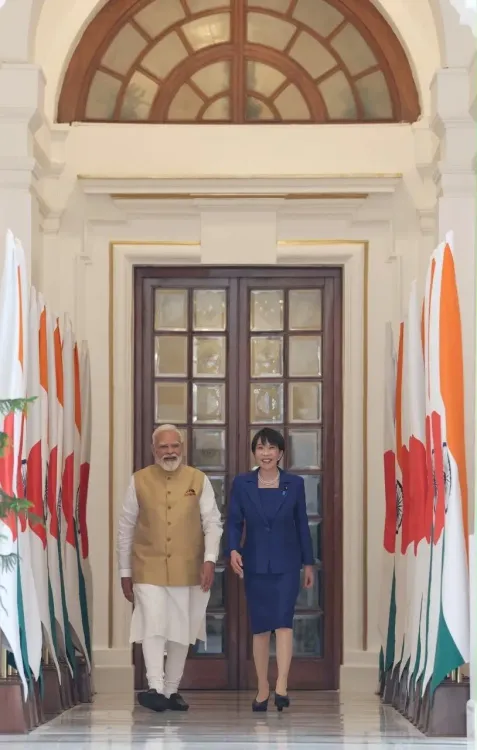
Synopsis
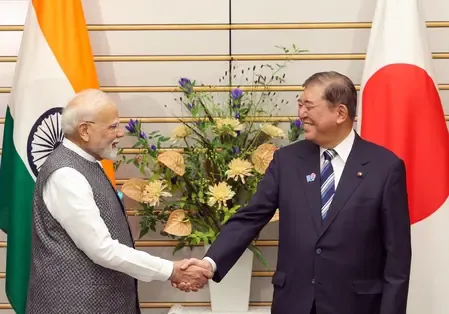
Haryana Chief Minister Nayab Singh Saini on 3 July 2026 praised the India-Japan Special Strategic and Global Partnership, highlighting targets of 10 trillion yen in Japanese investment and doubling of Japanese companies in India over the next decade as proof of PM Modi's global vision.
Key Takeaways
Haryana CM Nayab Singh Saini on 3 July 2026 publicly endorsed the deepening India-Japan strategic partnership on X.
He cited a target of 10 trillion yen in Japanese investment into India over the next ten years .
A goal to double the number of Japanese companies operating in India was also highlighted.
Cooperation areas named include AI, technology, innovation, defence, energy, and economic collaboration .
The India-Japan relationship is a Special Strategic and Global Partnership backed by annual summits since 2006 and a 2+2 dialogue since 2019 .
Both nations cooperate within the Quad framework on Indo-Pacific stability and supply-chain resilience.
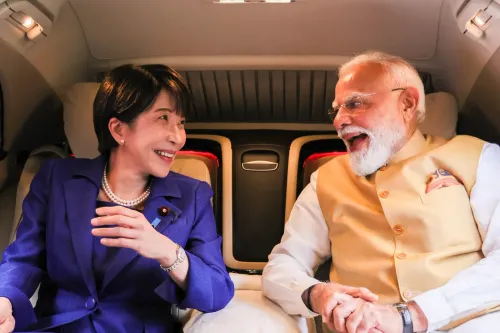
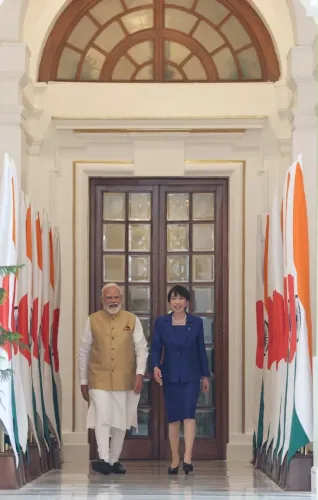
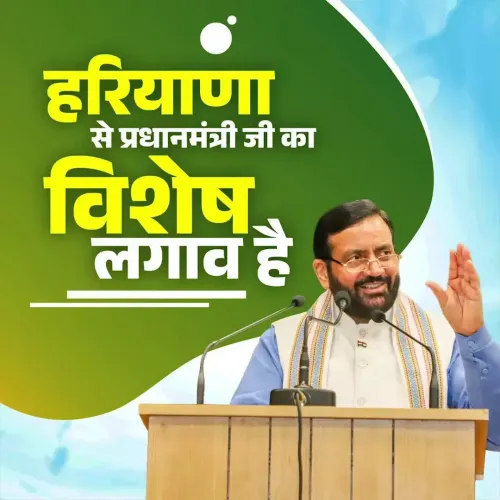
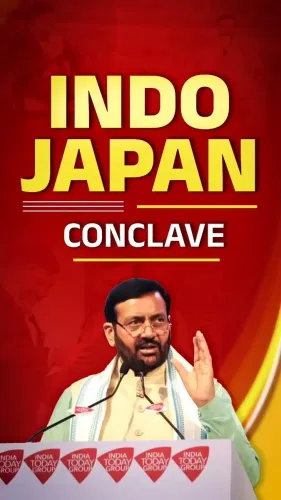
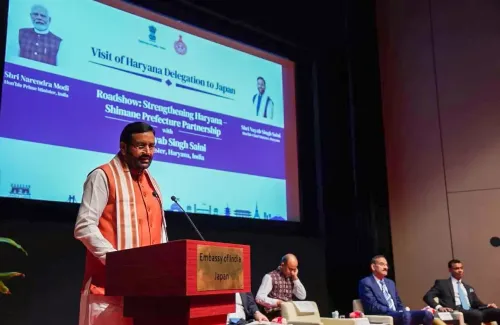
Haryana Chief Minister Nayab Singh Saini on Friday, 3 July 2026, praised the deepening strategic partnership between India and Japan, crediting Prime Minister Narendra Modi's vision for elevating India's global stature across technology, defence, energy, and economic cooperation.
Posting in Hindi on X, CM Saini described the strengthening bilateral relationship as a 'reflection of India's growing role on the world stage and Prime Minister Modi's far-sighted leadership.' He highlighted that growing collaboration in fields such as प्रौद्योगिकी, कृत्रिम बुद्धिमत्ता (technology and artificial intelligence), innovation, defence, energy, and economic cooperation would 'give new heights to bilateral relations and provide a new direction to shared prosperity and global stability.'
Crucially, Saini pointed to a target of 10 trillion yen in Japanese investment into India over the next ten years, alongside a goal to double the number of Japanese companies operating in India — steps he described as central to positioning India as a 'leading global hub for investment and innovation.'
Context
India and Japan have maintained an Annual Leaders' Summit framework since 2006, with the relationship formally elevated to a Special Strategic and Global Partnership. The two countries deepened their security architecture further in 2019 by instituting a 2+2 Foreign and Defence Ministers' Dialogue, bringing their coordination closer to that shared between Japan and its closest Western allies.
Economic ties have similarly evolved. The two nations signed a Comprehensive Economic Partnership Agreement in 2011, and Japan committed to landmark infrastructure projects in India, including the Mumbai-Ahmedabad high-speed rail corridor — modelled on Japan's iconic Shinkansen — announced during the 2015 summit. These projects have served as anchors for broader Japanese private-sector interest in the Indian market.
Policy Backdrop
India's engagement with Japan sits within a wider strategic recalibration under the Act East Policy and the country's Indo-Pacific framework. Both nations are members of the Quad — alongside the United States and Australia — coordinating on regional stability, supply-chain resilience, and emerging technology standards.
The emphasis on AI, defence technology, and clean energy in CM Saini's post mirrors a broader evolution in the partnership: from primarily infrastructure-led economic cooperation toward comprehensive strategic and technology collaboration. Japan's participation in India's Make in India initiative has been a key vehicle for channelling Japanese manufacturing investment and expertise into Indian industry.
Stakeholders and Impact
The investment and company-doubling targets, if realised, would have significant implications for Indian manufacturing, defence production, semiconductor supply chains, and clean energy sectors. Japanese firms already have a substantial presence in India's automotive and electronics industries, and expanded investment would deepen technology transfer and job creation.
For states like Haryana — which hosts major Japanese automotive suppliers and manufacturers in its industrial corridors — increased Japanese corporate presence could translate directly into investment, employment, and technology upgradation at the state level, giving CM Saini a direct stake in the national foreign-policy outcome he is championing.
What's Next
The concrete test of the targets cited by CM Saini will come at the next India-Japan Annual Leaders' Summit and any follow-up investment promotion forums or joint technology initiatives. Tracking actual foreign direct investment inflows from Japan and the operational expansion of Japanese firms across Indian states will be the key metric against which these ambitions are measured.
As India positions itself as an alternative manufacturing and innovation hub in an era of global supply-chain diversification, the depth and pace of Japan's commitment will be a significant indicator of how effectively New Delhi is translating strategic goodwill into on-the-ground economic transformation.
Point of View
Visionary governance ahead of electoral cycles. The fact that a Haryana CM — whose state hosts significant Japanese industrial investment — is the messenger also suggests a deliberate bridging of national diplomacy and subnational economic interest.
NationPress
2 Oct 2026
Frequently Asked Questions
What did Haryana CM Nayab Singh Saini say about India-Japan relations?
CM Nayab Singh Saini praised the deepening India-Japan strategic partnership on 3 July 2026, calling it a reflection of PM Modi's far-sighted leadership and highlighting targets of 10 trillion yen in Japanese investment and doubling of Japanese companies in India over the next decade.
What is the 10 trillion yen India-Japan investment target?
The target refers to a goal of attracting 10 trillion yen in Japanese investment into India over the next ten years, alongside an aim to double the number of Japanese companies operating in India, positioning the country as a global investment and innovation hub.
What is the India-Japan Special Strategic and Global Partnership?
It is the highest tier of the bilateral relationship between India and Japan, covering defence, technology, economic cooperation, and strategic coordination. The two countries have held Annual Leaders' Summits since 2006 and a 2+2 Foreign and Defence Ministers' Dialogue since 2019.
How does Japan fit into India's Indo-Pacific strategy?
Japan is a key partner in India's Indo-Pacific strategy. Both nations are members of the Quad alongside the United States and Australia, coordinating on regional stability, supply-chain resilience, and emerging technologies such as AI and semiconductors.
What sectors are covered under India-Japan cooperation?
Key sectors include artificial intelligence, technology and innovation, defence, clean energy, and broader economic cooperation. Japan has also been a major partner in Indian infrastructure, including the Mumbai-Ahmedabad high-speed rail corridor.