Jaishankar joins Quad FMs' press address with Australia, Japan, US
Synopsis
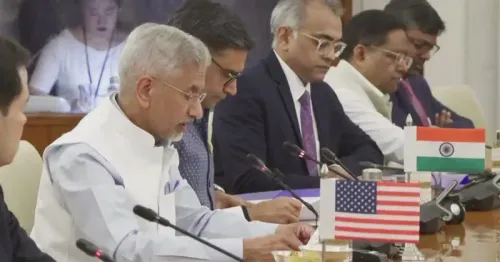
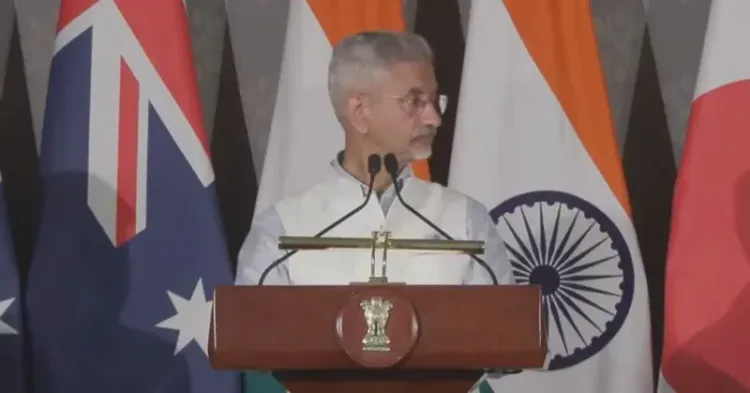
External Affairs Minister Dr. S. Jaishankar joined Australian FM Penny Wong, Japanese FM Toshimitsu Motegi, and US Secretary of State Marco Rubio at a joint press address following the Quad Foreign Ministers' Meeting on 26 May 2026, reaffirming the four-nation grouping's diplomatic momentum in the Indo-Pacific.
Key Takeaways
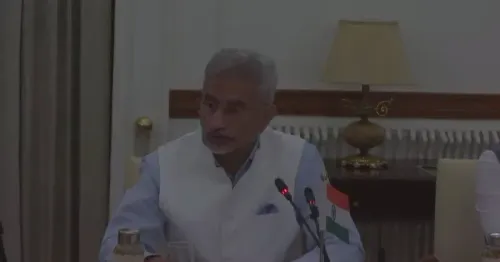
Jaishankar addressed the press alongside the foreign ministers of Australia , Japan , and the United States after the Quad Foreign Ministers' Meeting on 26 May 2026 .
The four participants were Senator Penny Wong (Australia), Toshimitsu Motegi (Japan), Secretary of State Marco Rubio (USA), and Dr.
The Quad was first convened at foreign ministers' level in person in 2019 and elevated to leaders' level with a summit hosted by the United States in 2021 .
The grouping coordinates on maritime security , critical technologies , health security , and supply-chain resilience across the Indo-Pacific.
Observers will watch for a joint statement, new working-group deliverables, and any announcement on the next Quad Leaders' Summit .
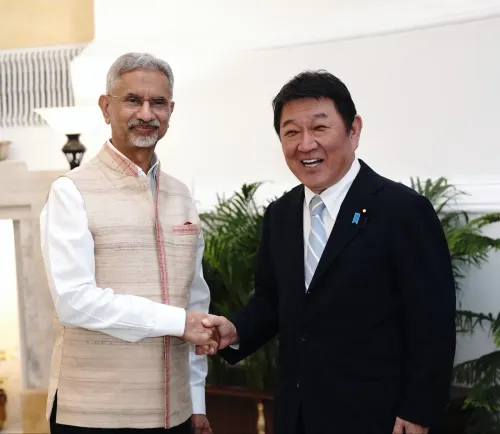
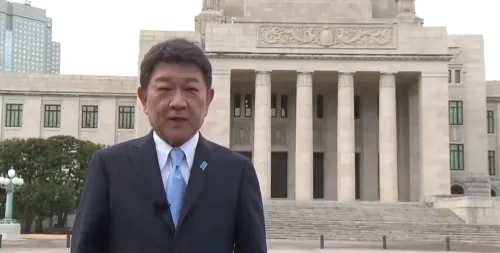
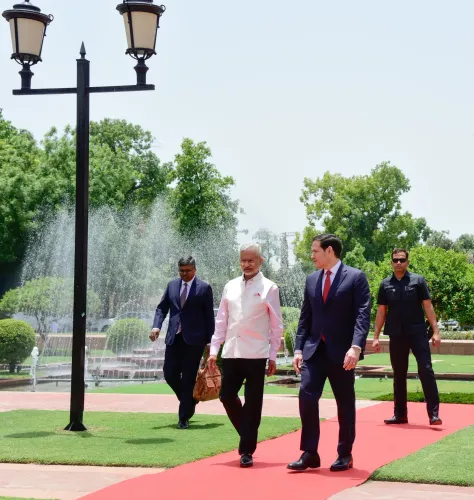
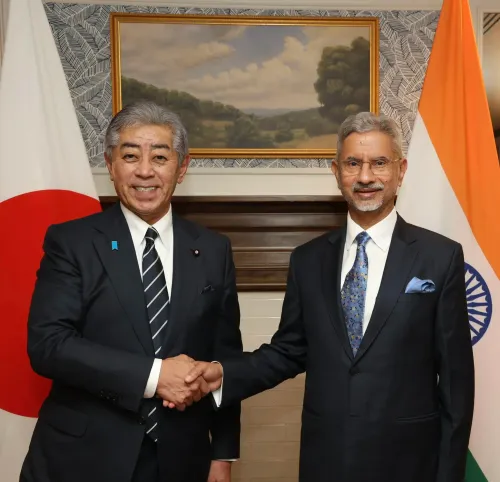
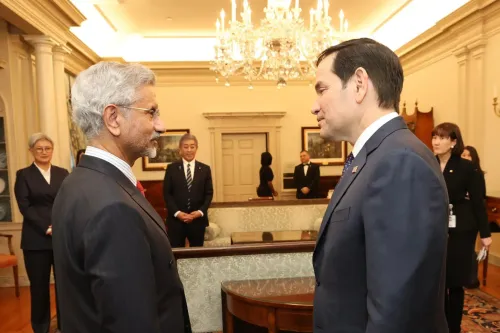
Union External Affairs Minister Dr. S. Jaishankar addressed the press alongside the foreign ministers of Australia, Japan, and the United States on Tuesday, 26 May 2026, following the Quad Foreign Ministers' Meeting. The joint press appearance brought together Australian Foreign Minister Senator Penny Wong, Japanese Foreign Minister Toshimitsu Motegi, and US Secretary of State Marco Rubio — marking a significant convening of the four-nation grouping's top diplomats.
Context
Dr. Jaishankar posted on X that he was 'addressing the press alongside FM Senator Wong of Australia, FM Toshimitsu Motegi of Japan and Secretary Rubio of the USA after the Quad Foreign Ministers' Meeting.' The post was accompanied by the flags of all four Quad nations — India, Australia, Japan, and the United States — signalling the multilateral character of the engagement.
The Quadrilateral Security Dialogue, commonly known as the Quad, is a strategic grouping of four Indo-Pacific democracies that coordinates on maritime security, critical and emerging technologies, health security, and supply-chain resilience. Its foreign ministers' meetings have become a regular feature of high-level diplomatic calendars.
Policy Backdrop
The Quad held its first in-person foreign ministers' meeting in 2019 on the margins of the UN General Assembly in New York. The grouping was subsequently elevated to leaders' level when the first Quad Leaders' Summit was hosted by the United States in 2021, cementing its status as a premier platform for Indo-Pacific coordination.
Since then, successive ministerial and leaders' meetings have expanded the grouping's working groups and joint initiatives. The overarching framework has consistently centred on advancing a free, open, and rules-based Indo-Pacific — a formulation that all four member governments have endorsed across administrations and election cycles.
Dr. Jaishankar has been a consistent and prominent voice for India's Indo-Pacific engagement, having previously served as Foreign Secretary and as India's ambassador to the United States, China, and Singapore. His participation in this ministerial-level press address underscores India's continued centrality within the Quad architecture.
Stakeholders and Impact
The meeting's outcomes carry direct implications for Indo-Pacific nations watching the Quad's evolving agenda. Governments in Southeast Asia and the broader region closely track Quad ministerial statements for signals on maritime norms, technology partnerships, and infrastructure financing alternatives.
The four member governments — whose combined economic and strategic weight spans the Pacific and Indian Oceans — are the primary stakeholders. Domestic audiences in each country, as well as multilateral bodies such as ASEAN and the UN, will look to any joint statement or communiqué for concrete deliverables and new working-group mandates.
What's Next
Attention will now turn to whether a joint statement or new initiative-level announcements emerge from this ministerial meeting, and whether a date for the next Quad Leaders' Summit is confirmed. The scheduling of a leaders'-level meeting would represent the highest-profile deliverable from this diplomatic round.
For India, the ministerial engagement reinforces New Delhi's positioning as a pivotal node in the Indo-Pacific security and economic architecture — a role that Dr. Jaishankar has consistently articulated as central to India's foreign policy vision.
Point of View
Even as Indo-Pacific tensions and great-power competition evolve. For India, the image of Dr. Jaishankar standing alongside his Australian, Japanese, and American counterparts reinforces New Delhi's self-positioning as an indispensable partner in the rules-based Indo-Pacific order — not a peripheral player. The Quad's trajectory from an informal dialogue to a structured ministerial and leaders' forum represents one of the more consequential shifts in India's multilateral posture over the past decade. The durability of this format across multiple governments in all four capitals suggests the grouping has moved beyond any single administration's foreign-policy preference.
NationPress
9 Oct 2026
Frequently Asked Questions
What is the Quad Foreign Ministers' Meeting?
The Quad Foreign Ministers' Meeting is a high-level diplomatic gathering of the top diplomats of India, Australia, Japan, and the United States, held to coordinate on Indo-Pacific security, technology, health, and supply-chain issues. The first in-person meeting took place in 2019 on the sidelines of the UN General Assembly.
Who represented each country at the Quad Foreign Ministers' Meeting on 26 May 2026?
India was represented by External Affairs Minister Dr. S. Jaishankar, Australia by Foreign Minister Senator Penny Wong, Japan by Foreign Minister Toshimitsu Motegi, and the United States by Secretary of State Marco Rubio.
What does the Quad focus on?
The Quad focuses on advancing a free, open, and rules-based Indo-Pacific through cooperation on maritime security, critical and emerging technologies, health security, and supply-chain resilience.
When was the Quad elevated to a leaders' summit?
The Quad was elevated to leaders' level in 2021, when the United States hosted the first Quad Leaders' Summit, following the inaugural in-person foreign ministers' meeting in 2019.
What should we watch for after the Quad Foreign Ministers' Meeting?
Key things to watch include any joint statement or communiqué from the meeting, announcements of new working-group initiatives, and confirmation of a date for the next Quad Leaders' Summit.